Kenworth C500 Review
A Detailed Look at Its Engines, Heavy-Haul Capability, Engineering, and Maintenance

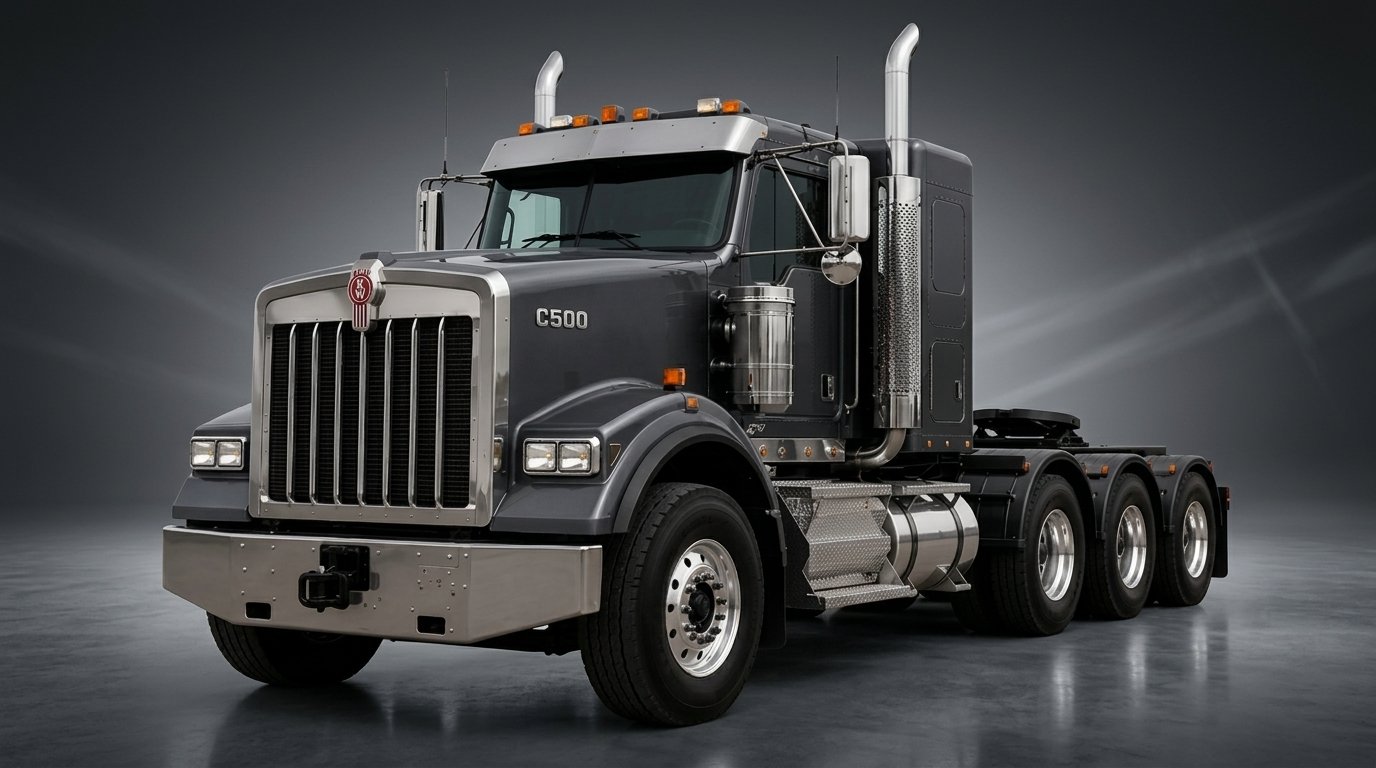
The Kenworth C500 belongs to a corner of trucking that most highway drivers never see. Introduced in 1972, according to Kenworth’s own history, it became a staple of mining, oilfield work, logging, heavy equipment transport, and prime mover duty, often in places where roads end and the job continues. It is a long-hood conventional built around a heavy frame rather than around fuel economy or sleeper comfort, and its reputation rests on the work it does when a standard tractor would be outmatched.
That reputation can mislead, because the Kenworth C500 is not one truck with one specification. Engines, transmissions, auxiliary gearboxes, axles, frame construction, suspension, fuel arrangements, cooling modules, and weight ratings all changed across production generations, and each build was specified for a particular job. A tandem steer oilfield winch truck, a triple rail heavy-haul prime mover, and a service body truck share a family name and a basic architecture, but not a spec sheet. This review therefore ties every figure to the document or customer truck it comes from.
The truck deserves a careful look now for practical reasons. Kenworth has announced that the C580 replaces it and that C500 production sunsets during 2026, which turns the C500 into a used and fleet-maintenance subject. Anyone evaluating one needs to understand what the platform was designed to do, which configurations carry which ratings, and which questions to ask before trusting a particular truck.
Our Take
The C500’s defining strength is a chassis that can be configured around the job. Kenworth’s ATK Oilfield Transportation case study describes a frame rail that runs straight to the front of the truck, a strong foundation for winch work and for recovering stuck equipment. Historical options include several engines, manual and Allison automatic transmissions, auxiliary gearboxes, single and tandem front axles, planetary hub reduction axles, and frames strengthened with inserts or a third rail. Few trucks can be specified this way, and fewer have documented customer builds that show the choices working in extreme conditions.
The same traits create real compromises. A truck built for oilfield rig moves or superloads is heavy, mechanically complex, and dependent on specialized components that need knowledgeable service. It may use more fuel and demand more maintenance attention than a conventional tractor, and for ordinary highway freight it is simply excessive. Our assessment draws on Kenworth documentation and customer case studies, not on driving or owning one: the C500 is a superb answer to a narrow set of problems, and a poor answer to most others.
Kenworth C500 Design and Intended Applications
The C500 is a conventional with a long hood, built as part of Kenworth’s severe-duty vocational lineup, and it sits at the extreme end of that group. Kenworth’s 2009 product description pitched it at dump, mixer, heavy haul, oilfield, mining, and logging work, with straight-through frame rails and a cab reinforced for rough environments. Its announcement of the C580 describes the C500 as a truck that has worked in Arctic oilfields, in Borneo hauling logs and coal, and in Asian mining operations.
Three kinds of truck are easy to confuse here. A conventional highway tractor is optimized for efficient, repeatable freight on paved roads. A vocational truck is built around a body or an application, such as a mixer or a dump body, and its chassis is shaped by that equipment. A heavy-haul prime mover exists to pull or push a combination far beyond ordinary weights, usually alongside engineered trailers and permits. The C500 spans the second and third categories, which is why two C500s can look nothing alike.
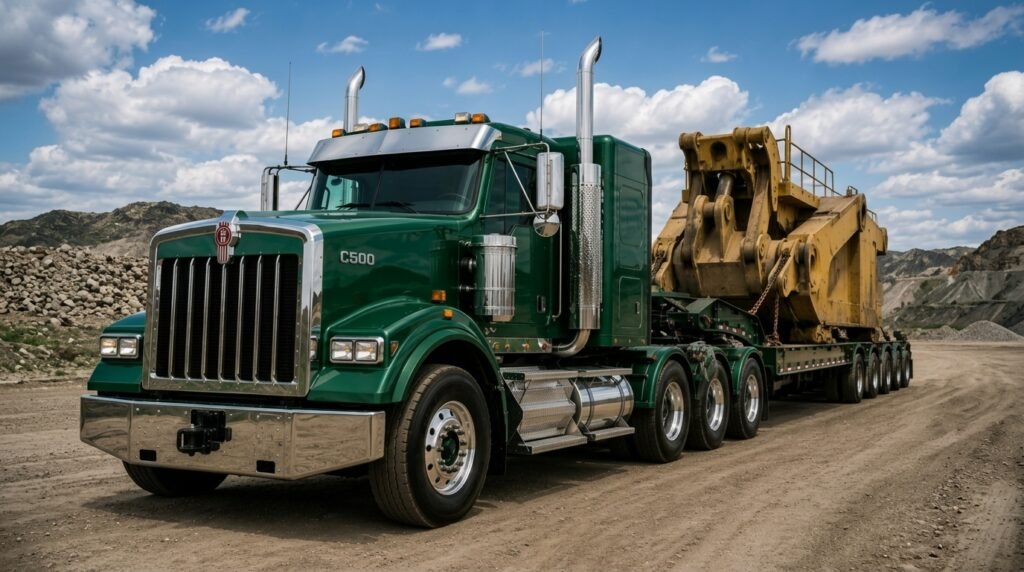
Kenworth’s customer stories show the range. ATK Oilfield Transportation, which launched in 2010 with new C500s and later described a fleet of 65, specifies tandem steer, tandem drive trucks with a 430-inch wheelbase and a long bed for dismantling drilling rigs, plus winch tractors that mostly run highways between rig sites. Edwards Moving and Rigging uses C500s as over-the-road prime movers for turbines and refinery towers, and says the roughly 8-1/2-foot width of the truck avoids the conditional use restrictions that wider specialized prime movers face. Being able to make long road movements is not the same as being economical for routine freight, and none of these sources offers fuel or operating cost figures, so none are given here.
Chassis, Frame, and Structural Engineering
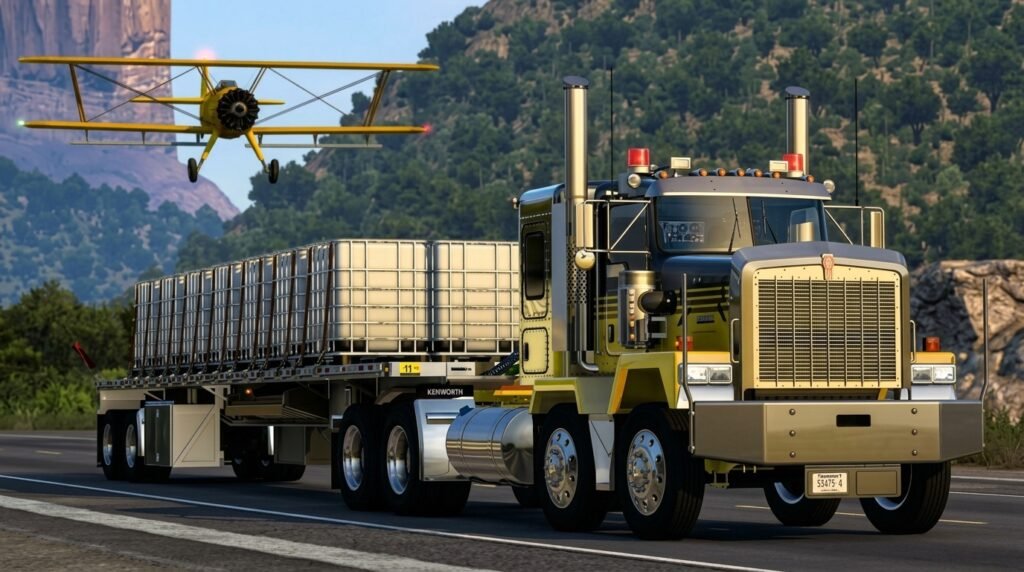
Everything about a C500 starts with the frame. Kenworth’s 2009 description said buyers could choose among three frame rail sizes with up to two inserts, with an extended front frame available, to balance strength against weight. The Omega Morgan heavy-haul truck sits at the far end of that range: it was built on a triple rail steel frame with a 200,000-pound gross combination weight chassis rating. A reinforced frame resists bending and twisting when carrying a heavy body, a crane, or high axle loads, and spreads concentrated loads from winches, fifth wheels, and pump mounts into the structure.
Frame length and axle placement then determine how the truck behaves. A long wheelbase, such as the 430 inches ATK describes for its tandem steer, tandem drive winch trucks, gives room for a long bed and spreads weight over more axle spacing, but it enlarges the turning circle and affects clearance on break-over angles. Those 430 inches describe ATK’s trucks, not a typical C500. Tandem steer layouts change steering geometry and tire loads, and every driven axle adds driveline length and service points.
Kenworth also documented front engine power takeoff provisions, often called FEPTO. The 2012 C500 brochure notes that with FEPTO the parent frame rail has a small cutout for the cooling module, a reminder that auxiliary equipment and chassis design interact. Winches, cranes, pumps, and heavy bodies must be matched to frame strength, crossmember layout, and mounting points through application-specific engineering, not bolted on by assumption, and Kenworth’s truck resources page collects the brochures and body-builder documentation that engineering starts from.
Engines and Power Delivery
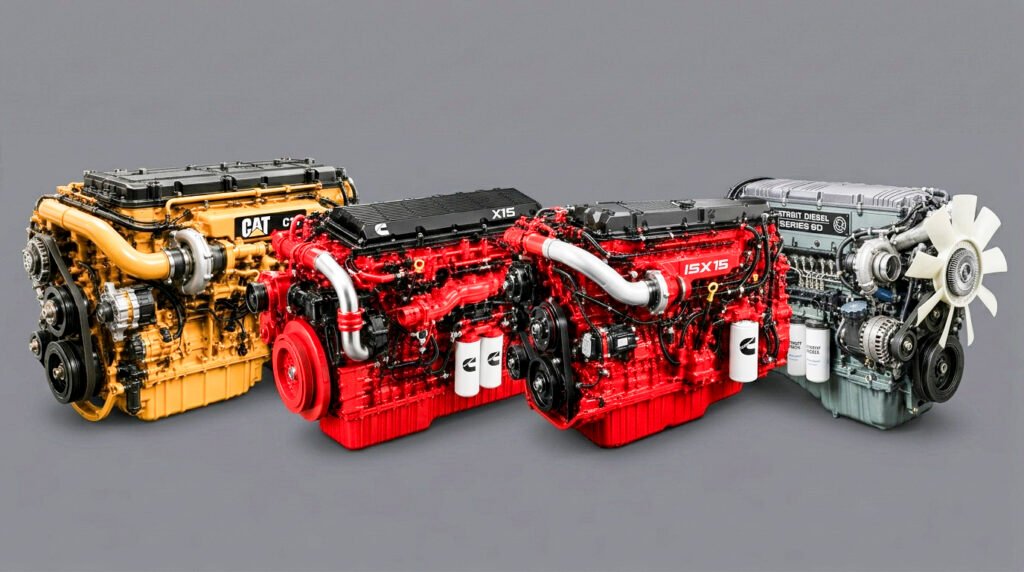
C500 engines have to be understood by era. The Caterpillar C15 and Detroit Diesel Series 60 are historical options associated with earlier generations of the truck, and Kenworth’s C500 technical brochure is the document to consult for which versions were listed. This review will not assign either engine a rating, displacement, model year, or emissions classification, because the documents consulted do not tie those details to a specific C500 configuration. Verifying which version is installed is the first task for anyone considering such a truck.
The Cummins ISX15 is the best documented example. ATK specifies its largest bed trucks with ISX15 engines rated at 600 horsepower, as Kenworth’s ATK case study reports, and Kenworth’s 2010 cooling update cited 600 horsepower and 2,050 lb-ft as the maximum available for stationary pumping. These are documented customer and Kenworth figures, not ratings for every ISX15. Edwards, for example, describes newer trucks with 15-liter, 550-horsepower engines, and Omega Morgan chose a 550-horsepower engine, and neither story names the engine brand in that passage.
The Cummins X15 is a distinct engine family from the ISX15 and needs separate care. This review has not found Kenworth C500 documentation that identifies which X15 ratings, if any, were offered in a particular C500 production year, so it makes no claim about X15 availability by year. Kenworth’s C580 announcement lists X15 ratings up to 605 horsepower and 2,050 lb-ft of torque, but that describes the C580. Cummins publishes different X15 ratings by series and model year; its X15 Performance Series page for 2024, for example, lists 525 to 565 horsepower for those ratings and describes up to 605 horsepower for Productivity Series ratings. Do not assign any of these figures to an older C500.
For heavy work, torque matters because it is the twisting force available to start a load and hold it on a grade, while horsepower reflects how quickly that force can be sustained. The useful questions are how broad the engine’s working speed range is, how strong the engine brake is on descents, and whether the cooling system can handle sustained load. Horsepower alone does not set legal weights. Those depend on the full vehicle, installed components, trailer, ratings, and jurisdiction.
Transmission and Driveline
Kenworth’s 2009 description said manual or automatic transmissions were available to handle engines up to 600 horsepower. The better documented heavy-haul trucks use Allison automatics. ATK pairs its largest trucks with Allison automatics and four-speed auxiliaries. Omega Morgan specified an Allison 4700 RDS seven-speed automatic with a four-speed air shift auxiliary transmission, and Edwards chose the same Allison model for its newest trucks. These are specific documented configurations, not standard equipment for every C500.
An auxiliary transmission multiplies the main gearbox’s ratios, giving a very low range for moving a combination slowly and a higher range for travel between sites. Together with axle ratio, it determines startability, grade performance, and the speed at which equipment can work. Edwards’ equipment manager points out another advantage of the automatic: when several C500s pull and push one load, synchronized shifting is easier and the combination does not lurch. The sources give no gear ratios, fluid capacities, or lubricant grades, so none are offered. Eaton UltraShift is not claimed for any C500 version, because the documents reviewed do not confirm it.
Axles, Steering, Suspension, and Tires
C500 axle layouts range from single steer trucks to twin steer trucks, and Kenworth’s 2009 description notes front axles that may be driving or non driving. Which drive layouts were actually offered on a given truck should be confirmed against Kenworth’s C500 technical brochure and the truck’s own build record, and no layout announced for the C580 should be read back onto the C500. The 2009 description gave single front axle ratings from 12,000 to 40,000 pounds and described tandem front axles as exceeding 40,000 pounds, without making clear whether that is a per axle or a combined figure. Because of that ambiguity, this review does not treat any front axle number as universal. The same description listed carrier reduction rear axles to 70,000 pounds tandem and 69,000 pounds tridem, and planetary hub reduction axles to 150,000 pounds tandem or 105,000 pounds tridem. Those rear figures describe axle groups in a particular era.
Customer builds show how this plays out. ATK’s winch trucks use Dana 22,000-pound steer axles and Kessler rear axles rated at 90,000 pounds, though the story does not say whether that figure covers the group. Omega Morgan’s prime mover used a 22,000-pound front axle with 24,000-pound front slipper springs and Sisu planetary tridem axles rated at 105,000 pounds with cross locks and a 7.01 ratio. Edwards describes two-speed tandem rear axles and tandem planetary hubs. Each is an individual build. Planetary hub reduction multiplies torque at the wheel ends, which helps low speed heavy work but adds components that need inspection.
Suspension and tires follow the axle choices. Kenworth’s C500 technical literature identifies tires from Michelin, Bridgestone, and Goodyear and aluminum or steel wheels. Because no universal size, load index, or inflation pressure exists, the installed tire must be checked against the manufacturer’s data for the axle, load, and speed. Legal axle loads and spacing also vary by jurisdiction and often require permits.
GVWR, GCWR, and Heavy-Haul Capability
These abbreviations describe different things. GVWR is the rating of the individual truck, GAWR the rating of an axle or axle group, and GCWR, or GCW in some sources, the rating for the truck and trailer combination. None of them is payload. When a number appears, the useful question is what it describes.
The documented figures show why. Kenworth’s 2010 cooling update allowed the C500 to be offered across the board for gross combination weights up to 200,000 pounds, and Omega Morgan’s triple rail build carries a 200,000-pound GCW chassis rating. A 2021 Kenworth announcement describes the C500 as the company’s largest workhorse truck with a GCWR up to 500,000 pounds. Edwards describes combinations up to 900,000 pounds or more, and ATK recounts being stuck with 230,000 pounds of gross weight. These are different contexts, and none is the truck’s own GVWR.
The Omega Morgan move shows how combinations work. The haul involved a 460,000-pound transformer on a 360-foot trailer with 48 axles, weighing 484,000 pounds, over 47 miles. A C500 pulled and two Kenworth T800s pushed, and a fourth truck was tethered to add traction on a 15 percent gravel grade. The trucks supplied pull and push while the trailer carried the transformer, and the route needed widened roads, hydraulic dollies, tillers, and months of planning. A single C500 did not carry that load, and it would be wrong to say so.
Cooling, Fuel, and Auxiliary Equipment
Cooling decides how much a truck can do at low speed or standing still. Kenworth’s 2009 description listed three radiator sizes, with the published text naming 1,430 and 1,520 square inches. In 2010 the company introduced a 1,780-square-inch cooling module with a revised hood, and the 2012 brochure says the module was used across the board in that generation, with aluminum fins in place of copper-brass. Kenworth said the added capacity allowed stationary pumping at maximum horsepower and GCWs up to 200,000 pounds. These figures come from different publications and builds, and no single truck should be assumed to carry all of them. Frontal area helps, but the complete cooling system’s condition, including fan, shroud, coolant, and charge air cooler, decides actual performance.
Fuel tank arrangements are also configuration dependent. Kenworth’s C500 technical brochure describes aluminum tanks ranging from 56 to 150 gallons in particular options, with more arrangements possible, so there is no universal capacity, and no range can be calculated without consumption data for a given truck. PTO driven equipment such as winches, pumps, and cranes must be matched to the engine, transmission, cooling system, frame, and mounting points, with engineering approval for the application.
Cab Design and Driver Environment
Kenworth’s 2010 update and the 2012 brochure describe a standard day cab, an extended day cab, a 38-inch AeroCab FlatTop sleeper, and a 42-inch sleeper. The extended day cab adds 6 inches of cab length and 5 inches of height compared with the traditional day cab, with up to 21 degrees of seat recline. A day cab suits a truck that returns to base or is a mobile work platform, while a sleeper helps operators who travel between sites. Those descriptions apply to the documented generation, not all years. Edwards’ drivers cite a quiet cab and well placed controls for pusher, tag axle, and planetary hubs, which is a customer comment, not a measurement. Practical operation also depends on visibility, access, and serviceability around a long hood.
Braking, Stability, and Operational Safety
Heavy combinations depend on the entire braking system, with the tractor’s air system, tires, axle layout, and trailer all working together. In 2021 Kenworth announced Bendix ESP as an option for the C500 in a 6S/6M configuration with six sensors and six modulators, including Smart ATC automatic traction control. The full stability system monitors lateral acceleration, steering angle, and vehicle direction, and can reduce engine torque and selectively apply tractor and trailer brakes if stability is threatened. Bendix stresses that these systems complement safe driving and do not remove driver responsibility. It is an option for particular configurations, and no collision prevention is promised. Omega Morgan’s drivers used engine braking and trailer brakes on descents, a reminder that heavy-haul safety rests on specification, maintenance, training, route planning, permits, and load distribution.
Maintenance, Lubrication, and Ownership
Maintenance data has to come from the installed components. Oil specification and capacity, coolant capacity, filters, intervals, and transmission and differential lubricants depend on the specific engine, the production version, and the duty. For Cummins engines, use the documentation for the exact X15 or ISX15 model and duty classification, and for Caterpillar C15 and Detroit Series 60 engines use service literature identifying the version. Kenworth’s operator manual covering the W900, T660, T800, C500, and 963 points owners to the applicable engine manual for lubrication details and recognizes component manufacturers’ requirements. No one oil viscosity or service interval fits every truck.
Duty cycle matters because low speed severe work, long idling, PTO use, sustained high load, and harsh environments tend to change service needs. ATK notes that winch trucks that work on location accumulate fewer miles, while the highway hauling trucks accumulate more, and that it rebuilds the heavy bed trucks roughly every ten years. That is one operator’s practice, not a standard.
A buyer should confirm the engine through its identification plate and serial number, review service records, and inspect the cooling system, engine, filtration, main and auxiliary transmissions, driveline, differentials, planetary hubs, suspension, steering, brakes, wiring, and PTO equipment. The frame deserves particular attention, including crossmembers and mounting points for any added equipment. Parts availability and a mechanic with severe-duty experience matter as much as the truck. No repair cost averages or reliability percentages are offered, because the sources do not support them.
Long-Distance Road Use and Real-World Applications
The documented examples show C500s moving heavy equipment on public roads as well as working off them. ATK’s winch tractors travel highways taking rigs between locations. Edwards used three C500s, with a fourth as backup, to move a 187-ton turbine 230 miles over the Adirondack and Pocono mountains in a combination with a gross weight of 900,000 pounds. Omega Morgan’s prime mover handled steep grades and tight turns with a multi truck crew.
Those are specialized journeys. A truck can be capable of moving a heavy combination without being the best value for regional distribution or ordinary freight, and no cruising speed, range, or cost per mile is offered here. Suitability for a route depends on axle and tire selection, combination weight, gearing, cooling capacity, maneuverability, legal dimensions, permits, and service support. Edwards also notes that planning and permits for a single move can take up to two years.
Comparison With the Freightliner 114SD Plus
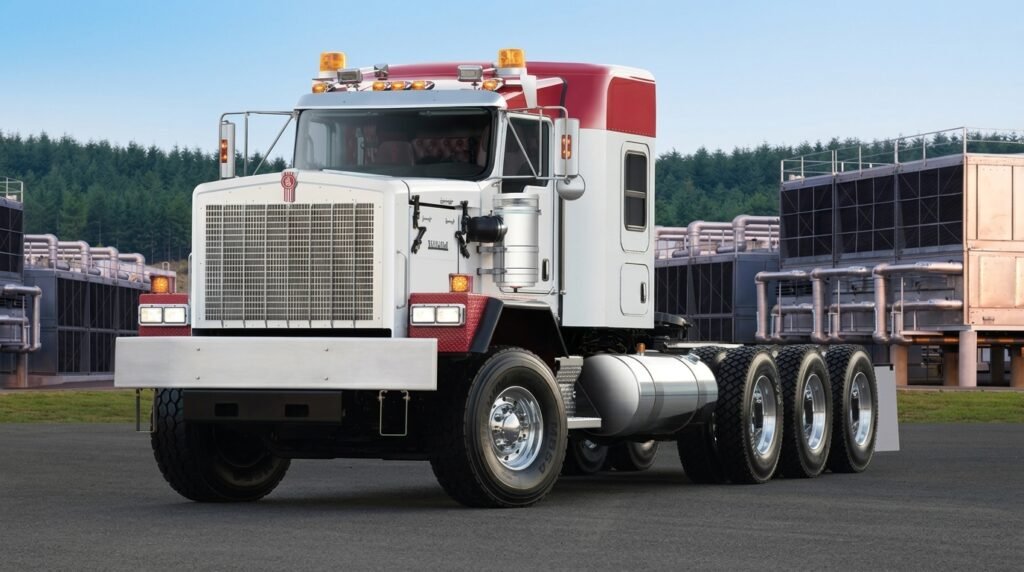
Both the C500 and the Freightliner 114SD Plus serve severe duty work, but their engineering histories, configurations, and intended roles are not identical. The Freightliner profile is a useful companion for readers who want to see how another manufacturer approaches vocational chassis. The C500’s distinguishing documentation concerns extreme heavy haul, tandem steer layouts, and planetary axle options, which should not be assumed for another model. Readers also sometimes confuse severe duty with simply heavy, and the International CV Series medium-duty truck profile shows where a lighter vocational truck fits far below the C500’s territory.
Production History and the Kenworth C580
Kenworth traces the C500 to 1972. Kenworth unveiled the C580 as the C500’s successor at CONEXPO-CON/AGG in Las Vegas, and the official announcement states that C580 production is scheduled to begin in January 2027 and that the C500 sunsets in 2026. That is the manufacturer’s published production schedule. It does not mean every C500 is unavailable or that dealer inventory is gone, and this review makes no claim about current stock.
The C580’s figures belong to the C580. Its announced ratings, X15 engine range, and cab are not transferable to the C500. The older truck remains relevant to buyers researching used trucks, fleets maintaining existing equipment, restorers of specialized vehicles, and operators planning severe duty work, since many C500s have long service lives and customers like ATK describe rebuilding them.
Who Should Consider a Used Kenworth C500?
A used C500 makes sense for businesses with genuinely specialized needs, such as heavy industrial equipment transport, oilfield work, demanding vocational service, or extreme heavy haul. Its suitability depends on the actual engine, transmission, auxiliary transmission, axle layout and ratings, tires, suspension, frame construction, cooling package, and approved operating limits. A truck that suits one job may be wrong for another.
The opposite risk also exists. A C500 can be needlessly heavy and complex for routine freight, while a lighter truck may be inadequate for an exceptional load without engineering and approvals. This review makes no claims about purchase prices, resale values, or repair costs, since reliable figures are not available.
Conclusion
The Kenworth C500 earned its place through a chassis that could be specified around the work: frames strengthened by inserts or a third rail, engines from several manufacturers across its history, Allison and manual transmissions with auxiliaries, a wide range of axles from conventional to planetary, and cooling modules that grew to support stationary work. Customer builds from ATK, Edwards, and Omega Morgan show those choices applied in oilfields and on superloads, and the 2021 Bendix option shows the platform adding stability technology late in its life.
None of this adds up to a single specification. What a particular C500 can do depends on its engine, chassis, axles, transmission, cooling system, installed equipment, trailer combination, and operating approvals. As Kenworth moves to the C580, anyone evaluating an older truck is best served by documentation, a configuration specific inspection, and maintenance references that match the installed components. The C500 will leave production having been judged less by a brochure than by the specific trucks that kept working.