Semi Truck Power Inverters for OTR Drivers
Practical power inverter options for OTR drivers, with guidance on wattage, pure sine wave output, battery demand, and sleeper-cab use.

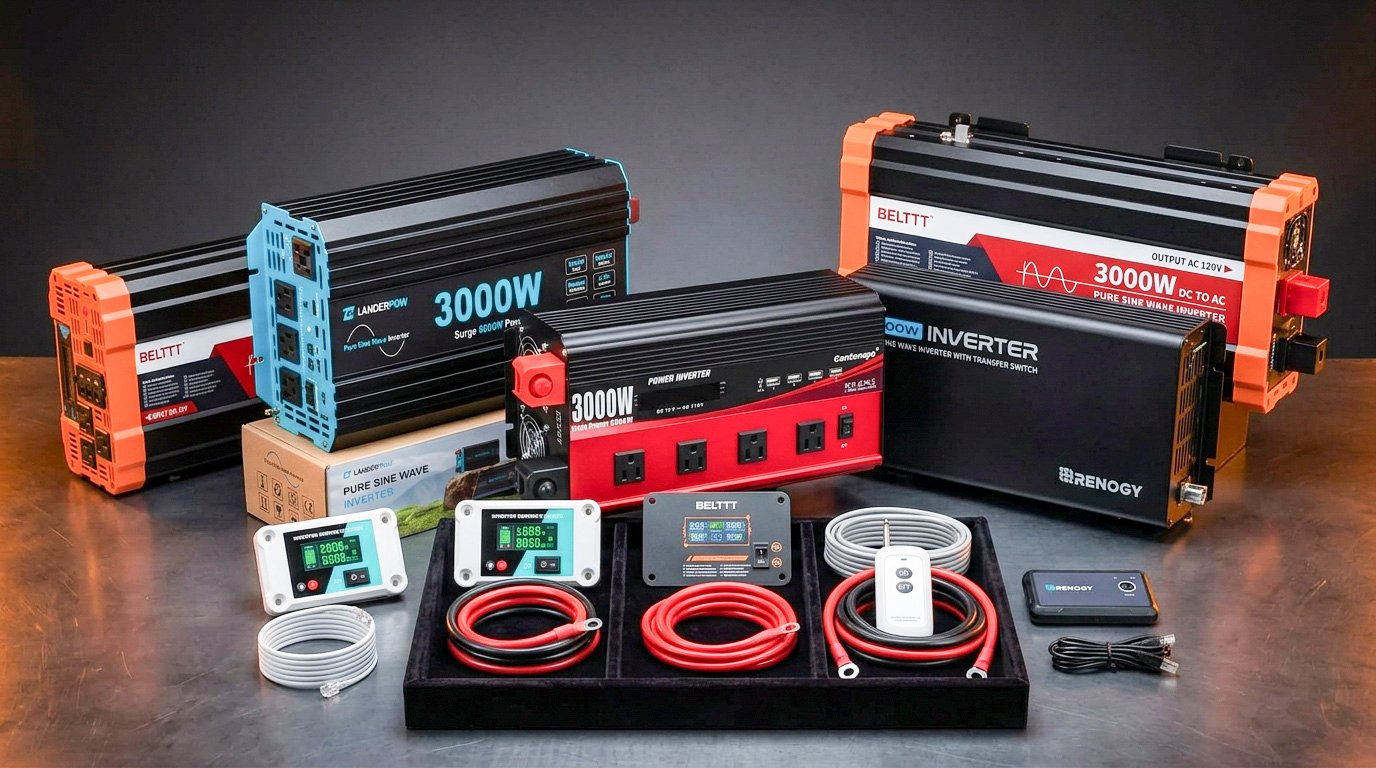
Semi truck power inverters turn the 12V battery power in your sleeper into the household style AC that laptops and TVs and microwaves expect. After a few weeks out you stop thinking of that as a luxury. It decides whether you eat a hot meal at 2 a.m. or catch up on paperwork without hunting for a plug at a crowded truck stop.
The problem is that the sleeper cab is not a kitchen or an office. It is a small space running on a battery bank that also has to start a big diesel engine in the morning. Charging a phone and a laptop asks very little of that system. Running a microwave and a coffee maker back to back asks a great deal. Plenty of drivers buy the biggest number on the box and then discover that wattage was only one piece of the puzzle. This article works through the real decision first and the five featured inverters second.
What Actually Matters on the Road
Continuous wattage is the number that counts. It tells you what the inverter is rated to supply for as long as you need it. A 2000W unit is built to carry roughly 2000 watts of load steadily and a 3000W unit roughly 3000. Everything else on the spec sheet is secondary to that figure.
Peak or surge wattage is extra capacity meant for short duration startup and transient demands. Motors and compressors pull a spike when they first kick on. A small refrigerator or a power tool can demand much more for a moment than it needs once running. How long an inverter can sustain its surge rating and how it behaves when it reaches that limit varies from one inverter to the next so the manufacturer’s specifications for the actual product are the only reliable guide. Treat surge capacity as a cushion for brief events and never as extra continuous power.
Pure sine wave output produces a smooth waveform close to what a wall outlet delivers. Laptops and chargers and CPAP machines and anything with a motor or sensitive electronics generally run better on it. Modified sine wave output is a cruder approximation. Some loads tolerate it without complaint and others can run hotter or louder or less efficiently or not run at all. Drivers who plan to keep expensive electronics plugged in nightly have good reason to favor pure sine wave.
12V input and battery demand deserve more respect than they get. Inverters do not create power. They draw it from the batteries. At a full 3000W load a 12V system would theoretically draw 250 amps before conversion losses so the actual battery side current will be higher. That is a serious demand on cables and connections and on the batteries themselves. Even a 2000W unit at full load calls for well over 160 amps on the same basis.
Cables and connections carry that current. Undersized or loose cables heat up and waste power and become a hazard. Wire gauge and fusing and terminal quality are not areas for guessing. Follow the inverter maker’s instructions and verify what your truck manufacturer allows or use a qualified installer.
Protection features are the quiet insurance. Overload and low voltage and over temperature protection can shut the unit down before something fails. Low voltage protection in particular can reduce the risk of draining the batteries too far. It is not a guarantee that the truck will keep enough power to start. Battery condition and battery capacity and the truck’s configuration and the size of the load and the cutoff threshold all play a part.
Outlets and extras shape daily use. Count the AC outlets you actually need. USB ports are handy for phones. A remote switch helps if the inverter lives in a storage compartment or behind the seat and you want to switch it from your bunk.
Space and cooling and noise are real sleeper cab constraints. Inverters get warm under load and many use fans. A unit stuffed into a cramped cubby with no airflow will run hotter and louder. Fan noise matters more when the unit sits a few feet from your pillow.
What to Consider Before Buying
Start with your appliances and not the inverter. Find the wattage label on each device you plan to run. Add up only the things that will run at the same time. That sum is your working load.
A phone charger might pull ten or twenty watts. A laptop often lands somewhere between sixty and a hundred. A small TV is usually modest. Those loads together fit comfortably on almost any inverter here. The picture changes with heating and cooking gear. Microwaves and coffee makers and hot plates and kettles can draw a thousand watts or more each. A microwave labeled with cooking power also draws more from the wall than that number suggests so read the input rating on the label. Exact draw varies by model so check your own appliance rather than trusting a rule of thumb.
This is where 2000W versus 3000W becomes a real question. A 2000W inverter can handle a laptop and a TV and chargers and a compact microwave on its own. It gets tight when you stack a microwave on top of other loads. A 3000W unit gives you room to run a heavier appliance alongside normal electronics without sitting at the limit. It also asks more of your cables and batteries and wallet. Bigger capacity does not help if your electrical system cannot feed it.
Startup surge is the quiet trap. A device may run fine at its labeled wattage yet trip an inverter on startup. A planning margin above your expected running load is a sensible way to avoid operating continuously at the inverter’s limit. How much margin makes sense depends on the actual appliances and on the inverter’s specifications and there is no single number that fits every setup. Running an inverter near its ceiling for hours is simply harder on it than running it with room to spare.
Battery condition matters as much as inverter size. Tired batteries sag under load and can trigger low voltage shutdowns early. A healthy and well charged bank gives the inverter stable input. Engine running time and charging habits affect how long you can safely run higher loads. Runtime depends on battery capacity and condition and load and efficiency so no honest article can promise a number. Watch your battery voltage and learn how your own system behaves.
Installation quality decides whether any of this is safe. Do not connect high draw equipment through unsuitable wiring. Do not run heavy loads through light extension cords. And never assume a number on a box means your truck can supply it. This is why “3000W” alone is not enough information. You also need to know the waveform and the protections and the input requirements and what your batteries and wiring can really deliver.
Realistic Truck Setups and Use Cases
The electronics setup. Phone and laptop and tablet and maybe a small TV. Total load stays under a few hundred watts. Here a 2000W inverter is already more than enough and a bigger one adds cost without adding benefit.
The everyday sleeper setup. Add a microwave or a small coffee maker for occasional use. Not everything runs together. A 2000W inverter can serve this driver well provided the appliances are modest and used one at a time.
The higher demand appliance setup. This driver runs heavier kitchen gear or a larger microwave and wants to use it with other devices still plugged in. A 3000W inverter makes sense because it keeps normal operation away from the ceiling.
The long haul multi device setup. Several devices over many hours with overlapping loads and a system that runs warm. Headroom matters more here and so does airflow and a healthy battery bank. Charging ports and outlet count start to matter too.
The managed power setup. A driver who thinks of the cab as a small electrical system and wants monitoring and some control over how power is delivered. Here the extra features of a system minded inverter can count for as much as the wattage.
The point is to match the unit to the load. A 2000W inverter is not a compromise for a driver with modest needs. It is the correct size. A 3000W inverter earns its place only when your loads or your habits justify it.
If you are thinking about this as part of a bigger sleeper build it is worth reading Long Haul Truck Cab Essentials for Drivers alongside this one. Power is only one piece of how a cab actually lives.
The Five Inverters in Detail
BELTTT 2000W Pure Sine Wave Inverter

- 【POWERFUL DC to AC CONVERTER】: This solar inverter delivers 2000W of continuous battery DC 12V to AC 110V 120V power and…
- 【PURE SINE WAVE INVERTER】: The power inverter output waveform is consistent with the AC waveform of the utility grid and…
- 【INTELLIGENT LCD DISPLAY】: This 2000Watt inverter comes with a high-brightness real-time smart screen that simultaneousl…
This is the lower capacity option in the group and that is its strength. It is rated at 2000W continuous with pure sine wave output and 12V DC input and 120V AC output. It also carries a 4000W peak rating for startup events. For a large share of OTR drivers that covers laptops and a TV and chargers and a modest microwave with clean power and a sensible margin.
The practical features matter here more than the spec line. It offers AC outlets and USB connectivity and remote control and hardwire capability. The remote helps when the unit is tucked out of reach. Hardwire capability gives a driver the option of a more permanent installation instead of relying on a plug in connection. That suits someone who wants a tidy and fixed setup.
The advantage over the 3000W models is not that it somehow uses less battery power because its rating is lower. Battery draw follows the load you connect and not the label on the inverter. The advantage is that a lower rated unit lets you build a less demanding maximum load setup when your real needs are modest. Cabling and fusing and battery planning can all be scoped to a smaller ceiling.
The limit is obvious. Stack a heavy appliance on top of other devices and you will run close to the ceiling. A driver who already knows they want to run a larger microwave and other gear together should look higher.
This model suits the driver who wants clean power for electronics and light appliances without overbuilding the system.
BELTTT 3000W Pure Sine Wave Inverter

- 【PURE SINE WAVE INVERTER】: The power inverter output waveform is consistent with the AC waveform of the utility grid and…
- 【POWERFUL DC to AC CONVERTER】: This solar inverter delivers 3000W of continuous battery DC 12V to AC 110V 120V power and…
- 【INTELLIGENT LCD DISPLAY】: This 3000Watt inverter comes with a high-brightness real-time smart screen that simultaneousl…
Same brand and same waveform as the model above with a step up in capacity. It is rated at 3000W continuous with a 6000W peak and 12V DC input and 120V AC output. AC outlets and USB connectivity and hardwire capability and remote control carry over from the smaller unit.
The jump from 2000W to 3000W is really a question of headroom. A driver who runs a microwave and a coffee maker at separate times and charges electronics around them may be perfectly well served by the 2000W unit. A driver who overlaps those loads or runs a heavier appliance alongside normal gear will appreciate having a full thousand watts of continuous capacity in reserve. The higher peak rating also gives more room for startup events though it remains a short duration allowance.
The trade-off is demand on the electrical system. Larger capacity does not make a weak battery bank stronger. It makes cable quality and fusing and installation more critical. Verify the input requirements in the manual and do not treat the headline number as permission to push the truck’s wiring harder.
This model fits the driver who wants pure sine wave and real power headroom in a straightforward package and is prepared to install it properly.
LANDERPOW 3000W Pure Sine Wave Inverter

- 【𝟑𝟎𝟎𝟎 𝐖𝐚𝐭𝐭 𝐈𝐧𝐯𝐞𝐫𝐭𝐞𝐫】— This pure sine wave inverter can provide 3000W continuous clean DC to AC power (6000W surge) wit…
- 【𝐏𝐨𝐰𝐞𝐫 𝐈𝐧𝐯𝐞𝐫𝐭𝐞𝐫 𝐏𝐮𝐫𝐞 𝐒𝐢𝐧𝐞 𝐖𝐚𝐯𝐞】— LANDERPOW inverter delivers the same as grid-quality Pure Sine Wave AC power, outperf…
- 【𝟑 𝐀𝐂 𝐎𝐮𝐭𝐥𝐞𝐭𝐬+𝐅𝐚𝐬𝐭 𝐂𝐡𝐚𝐫𝐠𝐢𝐧𝐠 𝐔𝐒𝐁/𝐔𝐒𝐁-𝐂+𝐇𝐚𝐫𝐝𝐰𝐢𝐫𝐞𝐝 𝐀𝐂 𝐓𝐞𝐫𝐦𝐢𝐧𝐚𝐥】— This All-in-One Power Inverter features 3 AC Outlets + 1…
The LANDERPOW shares the 3000W continuous rating and pure sine wave output and 6000W peak with the larger BELTTT. It also takes 12V DC and delivers 120V AC. What sets it apart is the output side. It offers three AC outlets plus USB connectivity and a 30W USB-C port. It also supports hardwire installation and remote control.
The USB-C port is the detail that matters most to a multi device sleeper. A 30W port can charge a phone or tablet quickly and in some cases help with smaller laptops without taking up an AC outlet. That leaves the three AC outlets for things that truly need them. For a driver juggling a laptop and a TV and a few chargers the layout reduces the need for adapters and power strips and that means fewer loose connections behind the bunk.
Compared with the BELTTT 3000W the capacity and waveform are the same on paper so the choice comes down to how you plug things in. The LANDERPOW leans toward drivers who want more built in charging flexibility. The trade-off is that three AC outlets can run out quickly if you want several heavier appliances in reach at once. And as with any 3000W unit the battery bank and cabling still set the real ceiling.
It makes more sense for the driver running a crowded sleeper with many small devices than for one who simply wants the most outlets for appliances.
Cantonape 3000W Power Inverter
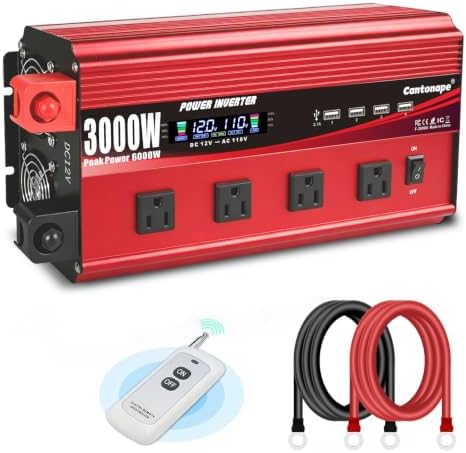
- POWERFUL OUTPUT: Convert power of DC 12V to AC 110V/120V 60Hz. Provides 3000 Watts continuous modified sine wave power a…
- INTELLIGENT LCD DISPLAY: In normal working state, the LCD Display will display the input/output voltage, battery capacit…
- REMOTE CONTROL: A remote controller comes with the inverter, very easy to control the inverter ON/OFF. (without batterie…
This is the outlier and the article should say so plainly. The Cantonape uses modified sine wave output while the other four inverters here use pure sine wave. It is rated at 3000W continuous with a 6000W surge and provides four AC outlets and USB ports.
Modified sine wave output is a stepped approximation of the smooth waveform from a wall outlet. Many simple loads can run on it. It can be a less suitable choice for sensitive electronics and for some motor driven or appliance loads which may run less efficiently or hotter or not behave as designed. Which specific devices will or will not work depends on the device and the manufacturer’s documentation so check the equipment you plan to plug in before you commit.
What you get in return is capacity and outlet count. Four AC outlets is the most generous layout in the group and the 3000W rating matches the others. For a driver whose loads are simple and tolerant and who wants plenty of outlets that can be an attractive trade. It is far less appealing for someone who intends to run a laptop and a CPAP and other sensitive gear every night.
The Cantonape does not compete on equal technical terms with the pure sine wave models. It makes sense for a narrower set of drivers and the waveform is the first thing they should weigh and not the last.
Renogy 3000W Inverter PUH

- 【Easy connection and power worry-free】Renogy inverter PUH has an on-grid transfer switch, so you can seamlessly switch b…
- 【Enjoy a smarter, more convenient life】This power inverter is equipped with built-in Bluetooth and a wired remote switch…
- 【Optimize efficiency】Pure sine wave inverter, exceeding 92% inverter efficiency, while power consumption is less than 18…
This is not merely another 3000W inverter. It offers pure sine wave output and a 6000W surge rating on 12V DC input with 120V AC output. What sets it apart is the system oriented design. It includes a UPS transfer switch and built in Bluetooth along with monitoring and control functionality.
The UPS transfer switch matters for a driver who sometimes has access to shore or external AC power. Instead of juggling connections the inverter can pass external power through to the loads and switch over when that source drops. For a sleeper that is plugged in at some stops and not at others the idea is to keep equipment running with less manual fuss.
Bluetooth and monitoring change how you live with the unit. Instead of guessing at what the inverter is doing you can check its status and in some cases adjust settings from a phone. That suits a driver who treats the cab as a small managed power system and wants visibility into load and battery behavior. It also pairs naturally with someone building out batteries and charging along with the inverter.
The trade-off is complexity. A driver who just wants to plug in a laptop and a TV may never use the monitoring or the transfer function and would be paying for features that do not change their nights. And the usual rule still holds. The inverter cannot make up for a weak battery bank or poor wiring.
This model favors the driver who wants control and visibility and is thinking about the whole system and not just the plug.
Real World Comparison
2000W versus 3000W is the first split. The BELTTT 2000W stands alone as the lower capacity option while the other four all offer 3000W. For electronics and occasional modest appliance use the smaller unit is not a lesser choice. It is a better fit. More inverter capacity does not automatically mean better battery performance. The truck’s battery bank and cabling and fusing and electrical configuration must support whatever load you intend to run and the smaller unit simply asks less of all of that at its ceiling.
Headroom versus unnecessary capacity. The 3000W units shine when your running load regularly sits above what a 2000W inverter should carry. They do not shine when your real draw is a few hundred watts. Paying for capacity you never use and feeding it with cables and batteries sized for it is a poor trade.
Startup loads and multiple devices. A refrigerator or microwave that starts while other gear is running can push an inverter hard. The 3000W models handle those overlaps with more comfort. That advantage is real but it is bounded by the surge rating and by what the batteries can deliver in the moment.
Pure sine wave versus modified sine wave. Four of the five inverters here are pure sine wave. The BELTTT 2000W and the BELTTT 3000W and the LANDERPOW 3000W and the Renogy 3000W all fit sensitive electronics and varied appliance use with fewer worries. The Cantonape 3000W is modified sine wave and that makes it a different kind of purchase. It can suit simpler loads. It is the weaker choice for sleepers full of electronics and for motor driven or appliance loads that prefer a clean waveform. This distinction should weigh heavily in the decision.
Features that change daily life. The LANDERPOW stands out for its USB-C charging and three AC outlets. The Cantonape offers four AC outlets. The BELTTT units add remote control and hardwire capability at either capacity. The Renogy leans toward managed power with its UPS transfer switch and Bluetooth monitoring. Pick the one whose features match how you actually use the cab.
System considerations. The inverter is only one component. Battery condition and available battery capacity and the charging system and wiring and ventilation and installation and the actual load all matter. A great inverter on a tired battery bank with marginal cabling is still a poor setup.
Long haul practicality. Over weeks on the road the quiet features matter. Fan noise and heat management and a convenient way to switch the unit on and off all become daily factors. Compare those details across listings and not just the wattage.
Driver type and power strategy. The lighter user fits the BELTTT 2000W. The headroom driver looks at the BELTTT 3000W or the LANDERPOW. The driver running many small devices leans toward the LANDERPOW. The driver with simple loads and a tolerance for modified sine wave may consider the Cantonape. The driver building a managed system may lean toward the Renogy. None of these is a universal winner.
Setup and Usage Tips
Pick a mounting location with good airflow. A cramped compartment traps heat and shortens the life of the unit. Secure it firmly so it cannot shift on rough roads and keep it away from moisture and anything that could block the vents.
Follow the manufacturer’s requirements for cable size and fusing and keep cable runs as short as those instructions allow. This is not an area for improvising. Requirements vary by inverter and by truck so verify what the truck manufacturer allows or hire a qualified installer.
Watch battery voltage. A simple voltmeter or monitor tells you how the bank is holding up under load. Learn what your inverter’s low voltage protection does and when it triggers so a shutdown does not surprise you. Remember that protection reduces risk and does not guarantee the truck will start. Do not treat it as a reason to run the batteries down on purpose.
Avoid stacking loads. Run the microwave and then the coffee maker rather than both at once. Switch high draw appliances off when you are finished with them. Do not use thin or overloaded extension cords for heavy appliances.
Manage heat on long sessions. If the unit feels hot or the fan runs constantly consider reducing the load or improving ventilation. Prolonged heavy use is harder on everything.
Not every device needs the inverter at all. A 12V fan runs directly from the truck’s system and skips conversion losses entirely. That is worth keeping in mind when reading Best Sleeper Fans for Long Haul Truck Drivers. Reserve the inverter for the things that truly need AC.
If you are still sorting out the rest of your cab setup How to Choose the Right Accessories for a Long Haul Truck covers how to weigh gear before you buy it.
Recommendations by Driver Type
Mostly electronics and chargers. The BELTTT 2000W is the sensible fit. It handles the usual devices with room to spare and does not overbuild the system.
Several devices at once. A driver running laptops and a TV and other gear together may still be well served by the 2000W unit if no heavy appliance is in the mix. Add a heavy appliance or many chargers and the LANDERPOW or the BELTTT 3000W becomes more appealing.
Occasional higher draw appliances. If you use a microwave or similar gear now and then and want comfort margin the 3000W pure sine wave units make sense. The decision still depends on whether your electrical setup can support them.
Extra power headroom. The BELTTT 3000W and LANDERPOW fit best here. Pick between them on outlet layout and charging options.
Long parked sessions with ongoing loads. Look closely at battery capacity first and inverter second. The Renogy suits a driver who wants monitoring and a transfer switch as part of a larger managed system.
Simple loads and a tolerant setup. The Cantonape can fit a driver with basic equipment and a need for plenty of outlets as long as modified sine wave output is acceptable for everything being plugged in.
A conservative setup. Choose the smaller inverter and size it to your actual load. For many drivers the 2000W unit is exactly that.
If your broader plan is to build out a full kit it also helps to see Choosing the Right Gear for Long Haul Trucking so the inverter fits into a wider set of priorities.
Final Word
Start with the load and not the box. Add up what will really run at the same time and leave a sensible margin for startup surge. If that total is modest a 2000W inverter is the right answer and it is not inferior to anything bigger. A 3000W unit earns its place when you genuinely need the headroom for heavier appliances or overlapping loads.
Pure sine wave is generally the more suitable choice for sensitive electronics and varied appliance use. Four of these five inverters offer it. The Cantonape is materially different because it uses modified sine wave output and that trade should be made knowingly and not by accident.
Then respect the system behind the inverter. Battery condition and cabling and fusing and ventilation matter as much as the headline wattage. Semi truck power inverters are only as good as the battery bank and wiring feeding them. The right inverter is the one that fits your actual setup and your actual loads and not the one with the largest number on the box.