Peterbilt 389X Review Design Engines and Used Truck Value
A look at the numbered limited edition of the Model 389, what it adds, what it inherits, and what a used buyer needs to verify.

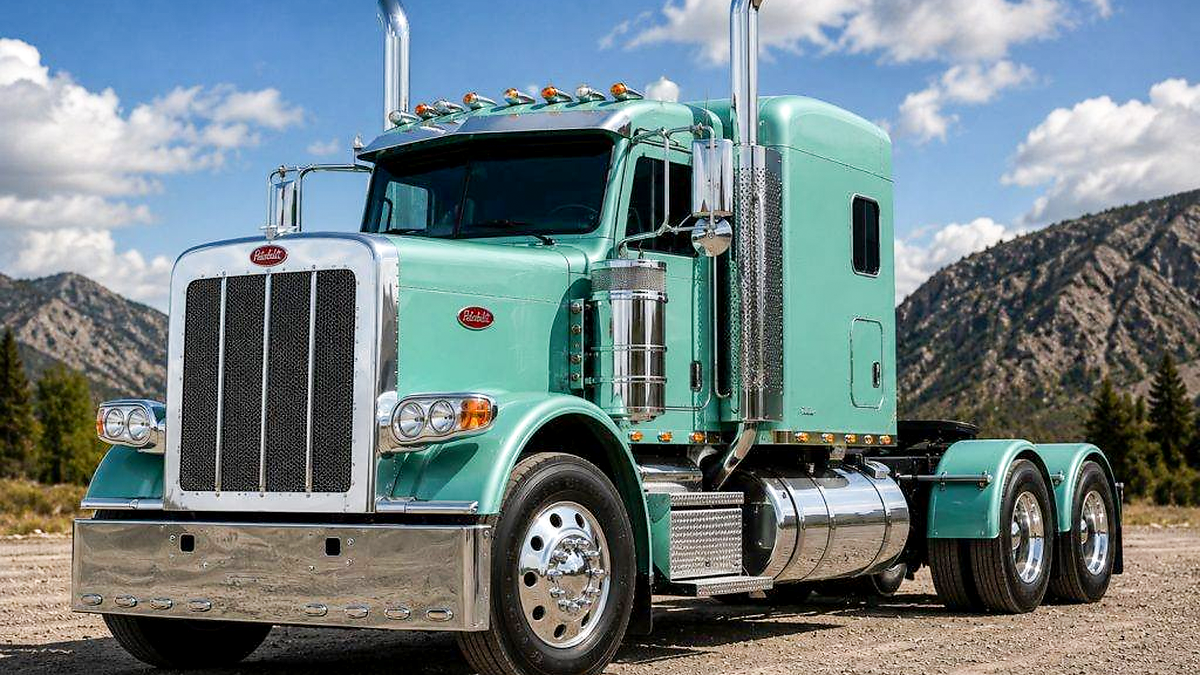
The Peterbilt 389X is a Class 8 conventional highway tractor, and the name describes a special edition more than a separate truck. Peterbilt introduced it in 2022 as a tribute to the Model 389, the long hood flagship that carried the brand’s traditional look through the modern emissions era. The company’s official Model 389X overview now lists it as no longer in production, which places it in the used market alongside ordinary 389 trucks that look similar at a glance.
That similarity is the central issue for anyone researching one. The 389X is defined by a package of exterior and interior details and a numbered badge. How it works, hauls, shifts, and wears depends on the engine, transmission, axles, chassis, and sleeper that were ordered. Two trucks with the same badge can be quite different machines, and a plain 389 with aftermarket chrome can pass for one from across a truck stop lot.
Peterbilt’s conventional trucks have always appealed to drivers who want a tall hood, a long nose, and a cab that looks the way a big American truck is supposed to look. The 389 carried that look forward until it was replaced by the Model 589. The 389X is the last formal celebration of that generation. This review separates what is unique to the edition from what comes from the underlying platform, because that separation is where the value, and the risk, for a buyer lies.
Our Take
The appeal of the 389X is clear. It takes a truck that already had a strong following and gives it a deliberate finish: extra polish, special trim, and a number that ties each truck to a place in a documented build sequence. For an owner operator who takes pride in a truck’s appearance, or an enthusiast who wants a piece of Peterbilt’s conventional lineage, that is a legitimate reason to care. Appearance matters in this part of the industry. A truck that earns attention at a shipper’s gate or a show has real value to its owner, even if it does not show up in a fuel report.
The practical side requires more discipline. The special edition package is largely cosmetic and interior trim. Nothing in Peterbilt’s published description of it suggests more horsepower, higher capacity, better durability, or lower fuel use than an ordinary Model 389 built with the same drivetrain. A 389X with a modest engine rating and a plain highway spec is not more capable than a standard 389 with the same equipment. A buyer who pays for the edition should be paying for the look, the scarcity, and the documentation, and should judge the mechanical side on its own terms.
The trade offs are the familiar ones for traditional long hood trucks. A long nose and upright cab are not designed around aerodynamics first, and longer wheelbases affect maneuverability in tight yards. Chrome and polished surfaces need constant attention, and some special edition parts may be harder to replace than standard components. On the other side of the ledger, the Model 389 platform offers a choice of proven diesel engines, manual and automated transmissions, and a driver environment with a traditional layout that many professionals prefer.
Limited production does not guarantee appreciation. Market value will follow condition, mileage, specification, documentation, buyer demand, and region, as it does for any used commercial truck. Used examples may carry different engines, transmissions, axle ratios, sleeper choices, modifications, and service histories. The sound way to approach a 389X is to treat it as a Model 389 first, then decide whether the edition features justify any premium.
Peterbilt 389X Design and Limited Edition Heritage
Peterbilt announced the edition in September 2022 and described a production plan of 1,389 trucks, with each truck receiving a numbered badge tied to its place in the build run. The official announcement introducing the 389X lays out the original concept and styling package. The planned figure is a program target. Without reliable official evidence of the final count, it is safer to say Peterbilt planned 1,389 units than to claim every one was built.
The look comes from the Model 389 itself: a long hood, an upright stance, a tall louvered grille inspired by Peterbilt’s earlier designs, and a clear visual link to the conventional trucks of previous decades. The company’s heritage article on the 389X explains the thinking behind the edition and the meaning of the numbered identity. The idea is continuity. The truck is meant to feel connected to the long line of American conventionals that built Peterbilt’s reputation.
The special equipment is detailed in the official 389X brochure. It includes unique hood trim, a polished grille crown, a chrome bumper, polished fenders and cowl skirts, special finishes on the fuel tanks and battery box, an extended stainless steel sunvisor, seven inch chrome exhaust stacks, and LED accent lighting. The truck also carries its own 389X badging. Taken together, these items make the edition easy to recognize.
It helps to be exact about what this package does. Chrome stacks, polished panels, and accent lighting change how the truck looks and what it costs to keep up. They do not change the engine, drivetrain, frame, or axle ratings. The badge identifies a build position and a package, not a performance level. Styling preferences are subjective, and some drivers prefer a plainer, more aerodynamic tractor. Still, the cultural pull of a traditional long hood is real. For many owners, the truck is also a rolling business card and a personal statement, and that is a legitimate part of why this edition exists.
Dimensions, Chassis, and Maneuverability
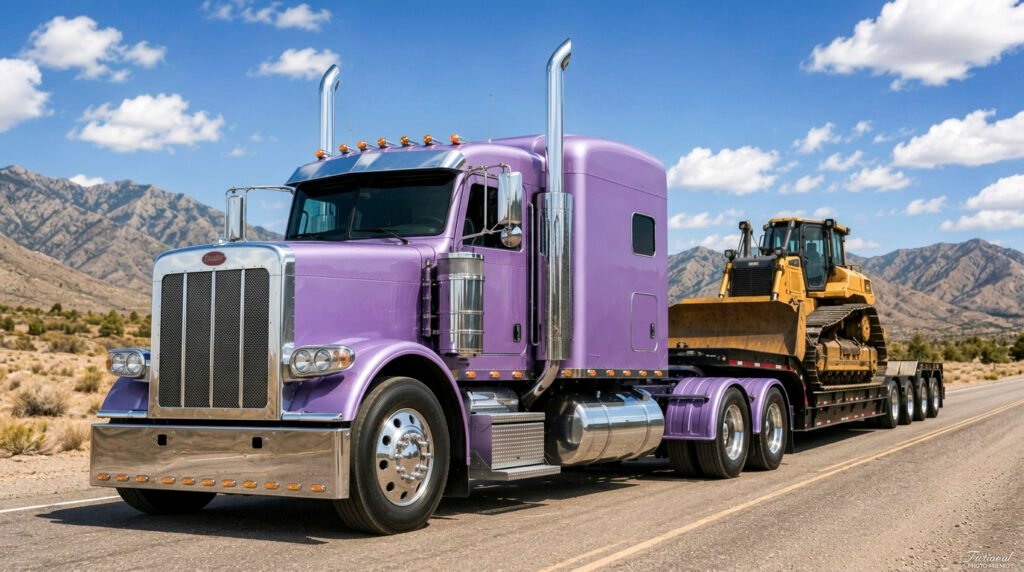
On a conventional tractor, bumper to back of cab, or BBC, is the measurement from the front bumper to the rear of the cab. It captures hood length and cab position in a single figure, and it influences turning behavior, how much room the truck needs in a yard, and how the tractor and trailer work together. Peterbilt’s Model 389 platform page publishes 123 inch and 131 inch BBC configurations. Those are platform figures. The correct measurement for a given 389X must be confirmed from its build documentation, not assumed from the brochure or a listing.
BBC is only part of the picture. Wheelbase, fifth wheel position, axle layout, tire size, and sleeper configuration all affect the truck’s overall dimensions. A longer wheelbase can improve stability and allow more flexibility in trailer weight distribution, but it widens the turning circle and makes tight docking harder. Fifth wheel placement affects how weight is shared between steer and drive axles, and it must be matched to the trailer’s length and the legal limits in the states where the truck runs. A long sleeper adds length behind the cab, which changes the way the tractor behaves in a yard and with certain trailer combinations.
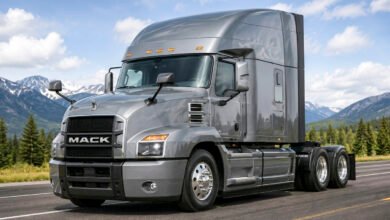
In practice, a long hood tractor asks more of the driver when backing and turning. Visibility over a long nose differs from that of a shorter cab design, and in a crowded loading yard that can be the deciding factor. Routes that are mostly open highway with predictable docks suit the layout well. Operations with frequent tight maneuvering deserve a harder look. For readers weighing that tradeoff, the Mack Anthem review covers a design built with more emphasis on regional haul maneuverability, which is a different approach rather than a direct equivalent.
Peterbilt describes the Model 389 cab and hood as aluminum construction. Aluminum resists corrosion and keeps weight down compared with steel panels, which matters on a truck that may carry heavy chrome and accessories. It is not a guarantee against damage. Dents, fatigue at mounting points, and corrosion where dissimilar metals meet can still appear, and structural design and mounting matter as much as the material. A buyer should inspect the cab and hood for prior repairs and alignment problems regardless of the metal.
Axle and suspension choices shape the truck’s character. Front axle ratings, drive axle layout, and suspension type affect load distribution, traction, ride quality, and maintenance. Air ride suspensions are common for highway freight because they improve ride and protect cargo and equipment, while other configurations may be chosen for heavier or more demanding work. Those are platform options. The axle ratings on a specific truck are on its build record and data plate. An axle rating is also not the same as gross vehicle weight, gross combination weight, payload, or legally permitted operating weight. Axle capacity sets one limit among several, and no universal payload figure applies to every 389X.
Engine Options and Power Delivery
The Model 389 platform has been offered with PACCAR and Cummins diesel power. Peterbilt’s general platform specifications list outputs from 400 to 605 horsepower and torque from 1,450 to 2,050 lb ft. Those numbers describe the whole range across the platform and do not establish that every 389X had a particular rating. Availability varied by model year and specification, and the exact engine in a given truck must be verified from its build information.
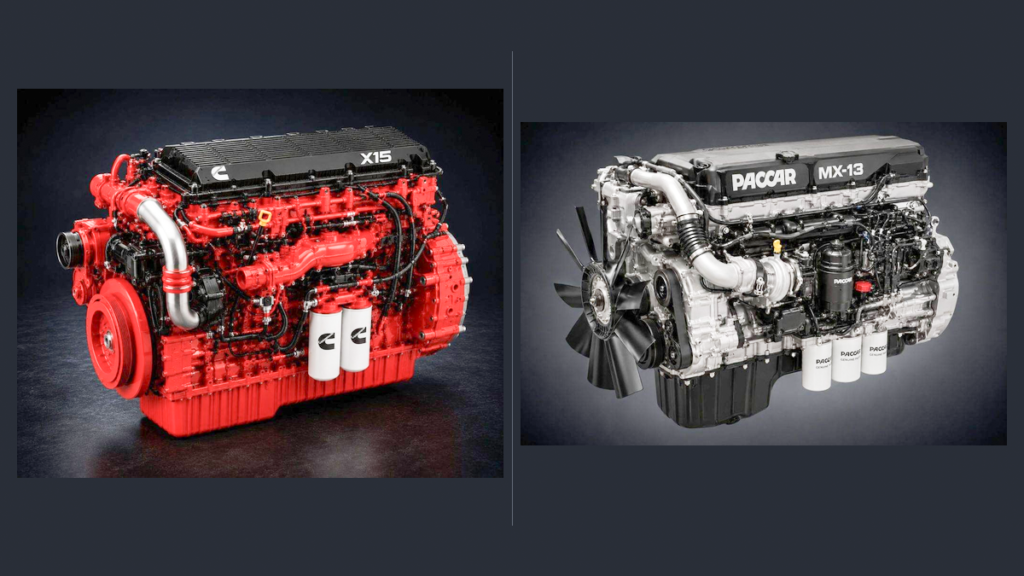
The PACCAR MX 13 is a 12.9 liter inline six cylinder diesel. Peterbilt’s MX 13 specification sheet shows ratings that reach 510 horsepower and 1,850 lb ft at the top of the documented range. The engine is built around a compact displacement and the efficiency goals of a modern highway diesel, and it is closely tied to PACCAR’s own transmissions and connected systems. For a driver, the practical result is an engine that fits long haul work where steady cruising matters more than maximum displacement.
The Cummins X15 is a 15 liter inline six cylinder diesel. Cummins describes its ratings in the X15 Performance Series documentation, and the configuration listed for the Model 389 reaches 605 horsepower and 2,050 lb ft. The documentation is for the 2024 series, so a buyer shopping for an earlier truck should not assume those figures apply. Cummins has revised the X15 across model years, and the rating on a 2022 or 2023 build must be checked against that truck’s own documentation. The larger displacement offers more reserve for heavy loads and long grades, with the tradeoffs of weight and fuel appetite that come with a bigger engine.
Horsepower and torque are easy to misread. Horsepower reflects how quickly the engine can do work, which matters for sustained speed on a grade. Torque reflects twisting force, which governs loaded acceleration and the ability to pull at lower engine speed. The shape of the torque curve matters as much as the peak number. An engine that makes strong torque across a wide band lets the driver hold gears longer, shift less, and keep the engine in an efficient range. A high peak rating that arrives only in a narrow band is less useful in the real world.
Both engines use modern turbocharging, high pressure fuel injection, electronic engine management, and exhaust aftertreatment to meet current emissions rules, and both offer engine braking to help control the truck on descents. The details differ by model year and rating, so owners should rely on the documentation for their specific engine. Neither is universally better. A lighter, steadier highway operation may suit the MX 13, while heavier loads, steeper terrain, or a driver who wants more reserve may lean toward the X15. Gearing, payload, route, maintenance quality, and operator habits all influence the right choice. The 605 horsepower rating on the current platform page is not proof that any given original 389X had it.
Transmission and Drivetrain
The Model 389 platform has been documented with both manual and automated manual transmissions. Examples include PACCAR TX series transmissions, Eaton manual units, and Eaton Endurant or UltraShift options. Availability depended on model year and engine pairing, so none of these should be attributed to a particular 389X without checking its build record. A current platform list is not a record of what was offered in 2022 or 2023.
A manual transmission gives the driver direct control over gear selection and a connection to the truck that many experienced drivers prefer. It also asks for skill and attention, and fatigue in heavy traffic is a real consideration. An automated manual transmission handles shifting electronically, which tends to produce smoother, more consistent operation and reduces the workload in traffic. Low speed maneuvering and starting on grades behave differently between the two, and drivers who are used to one style may need time to adjust to the other. Neither is automatically more efficient in every setting, because results depend on calibration, driver habits, and the route.
Gearing ties everything together. Transmission ratios, the number of gears, the rear axle ratio, and tire size together determine engine speed at a given road speed. A numerically lower axle ratio generally lets the engine turn slower at highway speed, while a higher ratio favors pulling power and acceleration. Engine torque must be matched to those choices. A tractor built for routine highway freight may be specified quite differently from one set up for heavier loads or steep terrain, and a mismatch can cost fuel, reduce drivability, or add wear. When evaluating a used truck, the combination matters more than any single component.
Fuel Economy and Operating Costs
No single MPG figure applies to every Peterbilt 389X, and an honest review should not offer one. Fuel economy is the product of many variables: engine choice and rating, transmission type, rear axle ratio, cruising speed, vehicle weight, tire selection, maintenance condition, aerodynamic drag, trailer matching, terrain, and how the driver operates the truck. Two identical trucks can return different results on different routes.
A traditional conventional tractor generally trades some aerodynamic efficiency for its upright, classic shape. The size of that tradeoff depends on the configuration, trailer, and speed, and it is better described as a real but variable factor than as a fixed percentage. Peterbilt’s general materials do not provide an independent test result for the 389X, and any manufacturer fuel claim should be treated as the manufacturer’s claim, not as measured proof. Good practice, such as moderate speed, correct tire pressure, proper alignment, and a well matched drivetrain, narrows the gap more than most owners expect.
Operating cost is broader than fuel. It includes scheduled service, repairs, tires, downtime, insurance where relevant, and residual value. Decorative features add their own maintenance, since polished and chromed parts need cleaning and care and may be costly to repair or replace. A buyer should build a realistic budget from quotes and records for the specific truck, not from generalized numbers.
Cab Interior, Sleeper Options, and Driver Environment
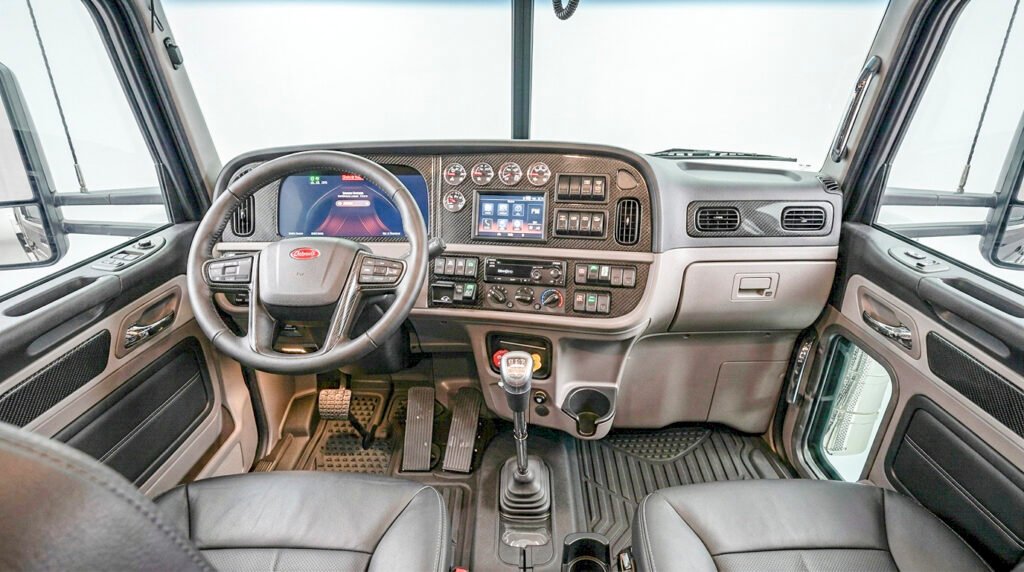
The Model 389 cab keeps a traditional layout, with a flat panel dashboard, a straightforward arrangement of gauges and switches, and controls placed for access from the driver’s seat. Many drivers value that clarity. Visibility over the long hood requires some adjustment, and mirror setup is important. Heating and air conditioning, storage, and seating options vary by build, and the seats and trim in a particular truck should be inspected for wear because they are the part of the truck the driver touches every day.
The 389X adds its own interior details. These include a Black Pearl burl woodgrain dashboard finish, chrome instrument bezels, interior chrome accents, embroidered branding, and a numbered chrome badge. They set the cabin apart visually and tie the interior to the exterior package. They are trim and finish items and do not add digital displays or advanced driver assistance. The truck should not be described as having a modern digital dashboard or driver assistance technology unless the build record for that model year confirms it.
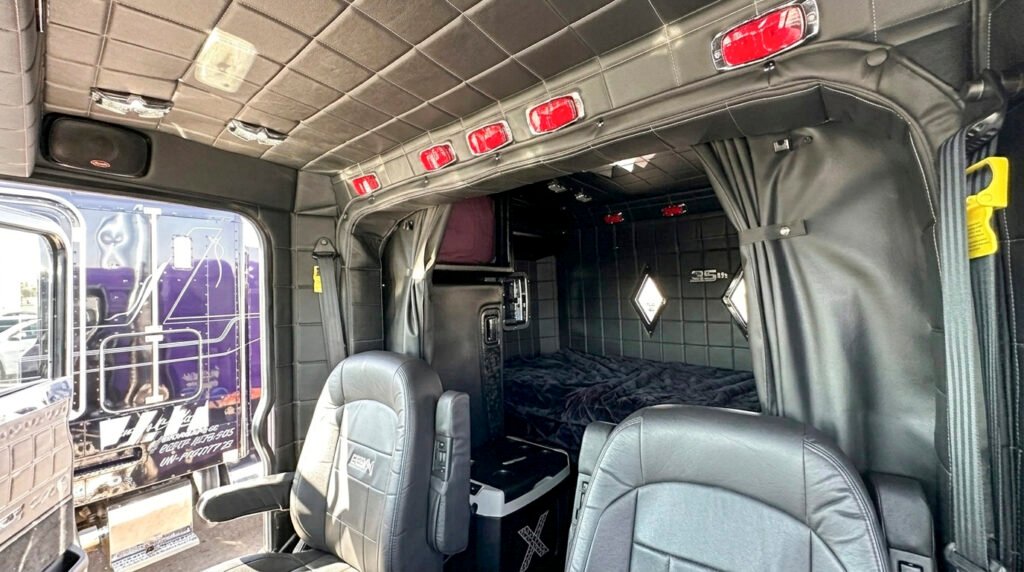
Cab and sleeper configuration matters because it shapes daily life on the road. A day cab suits local and regional work where the driver returns home each night. A sleeper serves drivers who spend nights away, and its size affects usable space, storage, comfort during required rest periods, and the weight and length of the tractor. Peterbilt’s current platform page shows a broader range of sleeper options than the original launch material documented, so a buyer should confirm the actual sleeper on the truck instead of relying on the current menu. The best sleeper is the one that fits the driver’s route pattern and time away from home.
Axles, Suspension, Brakes, and Application Capability
Axle and suspension configuration helps define a truck’s role. Front axle capacity, drive axle layout, suspension type, wheel and tire choices, steering, and brakes all influence how the tractor distributes weight, handles traction, rides, and wears over time. The platform lists multiple options, but the options on a given 389X are set by its build. A highway tractor specified for ordinary freight has different needs from a tractor set up for heavier or specialized work.
Axle capacity alone does not tell a buyer how much cargo the truck can legally carry. Legal weight depends on the combination of axle ratings, tire ratings, tractor and trailer configuration, bridge formulas, and local regulations. Chassis strength and brake capacity must also be adequate for the intended load. Maintenance requirements follow the configuration, including lubrication, bearing service, brake wear, and suspension inspection.
Not every 389X should be called a severe duty or heavy haul truck simply because some Model 389 configurations can be built for demanding applications. That judgment depends on the actual chassis, axle ratings, drivetrain, approved weights, trailer compatibility, and applicable law. Vocational severe duty trucks are engineered with different priorities. The Kenworth C500 review shows why specialized severe duty and oilfield trucks require a different engineering focus, and the 389X should not be treated as equivalent to that kind of truck.
Connected Technology and Safety
Peterbilt’s connected services, described on its connected services page, include SmartLINQ remote diagnostics. Documented functions include fault code notifications, vehicle tracking, fuel economy information, idle time data, and software updates. These tools can help with maintenance planning and fleet oversight by giving owners an earlier view of problems and a record of how the truck is used. They do not guarantee lower downtime or prevent mechanical failures.
Availability depends on model year, installed equipment, activation, and subscription terms, so a used buyer should confirm what is actually installed and active on the truck. The presence of the hardware does not mean the service is enabled. Modern driver assistance features should not be assumed on any particular 389X without specific evidence for that truck.
Safety on a truck like this rests heavily on fundamentals. Braking systems need regular inspection and adjustment. Mirror setup and visibility are critical on a long hood tractor. Lighting, including the extra LED accent lighting on the special edition, should be checked so that decorative additions do not interfere with required lighting. Tires deserve close attention for wear, pressure, and age. A disciplined pre trip inspection routine is worth more than any single feature.
Maintenance, Reliability, and Ownership Considerations
Ownership begins with following the correct service schedule for the installed engine, transmission, axle configuration, and emissions system. Intervals differ between an MX 13 and an X15 and between transmission types, so there is no universal schedule. Engine and drivetrain service, aftertreatment condition, tires, brakes, suspension, steering, and corrosion all need regular attention. The aftertreatment system in particular can become a significant expense when neglected.
The decorative parts need their own inspection. Polished fenders, chrome bumpers, special trim, and exterior fittings can pit, scratch, or corrode, and some are specific to this edition. Parts availability and dealer support should be verified before purchase, and a buyer should not assume that every 389X specific decorative piece remains readily available. Standard mechanical parts for the Model 389 platform are easier to source than special trim.
Reliability belongs to the individual truck. It reflects history, maintenance quality, use, operating conditions, and installed components. The limited edition designation does not guarantee better mechanical condition, and a documented, well maintained standard 389 may be a sounder purchase than a neglected 389X. Repair costs and service intervals vary too widely to quote responsibly.
Buying a Used Peterbilt 389X
Because the model is no longer in production, buying one means verifying it. A numbered badge by itself is not sufficient evidence of authenticity, since badges and chrome can be added to an ordinary Model 389. A buyer should compare the badge number against the VIN, request the documented build specification and original equipment records, and ask the dealer or Peterbilt for confirmation where possible. Service history strengthens the case.
Beyond authenticity, verify the actual engine model and rating, the transmission, axle ratios and ratings, sleeper configuration, emissions equipment, and any modifications. Do not accept a listing description at face value, because used trucks are often described loosely and may have been changed after delivery.
A pre purchase inspection should include a diagnostic scan, an engine and transmission evaluation, a check of the frame and cab for structural damage, brake and suspension inspection, tire assessment, and a review of maintenance records. Past heavy hauling, accidents, prolonged idling, poor maintenance, and major modifications all affect condition and cost. Hours and mileage tell only part of the story.
Pricing deserves restraint. Market value depends on condition, mileage, mechanical specification, originality, documentation, buyer demand, and region. A buyer should compare real listings and sold examples for the specific configuration instead of relying on assumptions about collector value, and should not treat the truck as an investment.
Model 389X, Model 389, and the Model 589 Successor
The three names describe a family and a timeline. The Model 389 is the platform. The 389X was a limited edition built on it. The Model 389 has since been discontinued, and Peterbilt introduced the Model 589 as its successor. The company’s Model 589 announcement establishes that transition and gives January 2024 as the start of production.
The 389 also reached a milestone worth noting. Peterbilt marked the 100,000th Model 389 built at its Denton plant, and that truck was presented with the 389X special edition package, as described in the company’s production milestone release. That milestone underlines how the edition was positioned as a capstone for the platform.
The 589 is not simply the same truck with a different badge, and its specifications should not be applied to a 389X. For a buyer, the relevant point is simple: the 389X belongs to the earlier platform, and its equipment should be judged on its own record.
Applications and Who Should Consider the Peterbilt 389X
A 389X suits conventional highway freight and long distance road transport, provided its configuration matches the work. Engine choice, sleeper size, axle layout, gearing, payload requirements, and the truck’s actual approved configuration all matter. A sleeper truck with a well matched drivetrain fits long haul work, while a day cab setup may fit regional runs.
Buyers who value traditional styling, customization opportunities, a numbered limited edition identity, and the familiarity of the Model 389 platform are the natural audience. Owner operators who care about appearance, and enthusiasts who want a documented piece of Peterbilt history, will find the most to like.
Other buyers should look elsewhere. An operation that needs a vocational severe duty chassis should consider trucks built for that work, such as those discussed in the Freightliner 114SD Plus overview, where chassis, axle, and operating requirements differ from those of a conventional on highway tractor. A business whose loads are better suited to a medium duty vehicle should start with the class, and the International CV515 review explains the difference between medium duty trucks and Class 8 highway tractors. Choosing the right vehicle class should come before comparing individual specifications. The 389X is a traditional highway tractor, and it should not be treated as suitable for every heavy hauling job.
Final Assessment
The Peterbilt 389X is best understood as a well finished edition of a capable platform. What is special about it is the numbered identity, the polished exterior package, and the distinctive interior trim. What it inherits from the Model 389 is everything that determines how it works: the engine, transmission, axles, chassis, cab, and sleeper. Keeping those two lists apart is the most useful habit a buyer can have.
Its strengths are real. The traditional long hood design has lasting appeal, the platform offered proven engine and transmission choices, and the cab keeps a clear, driver focused layout. Its limits are equally real. The styling carries aerodynamic and maneuverability tradeoffs, decorative parts add upkeep, and the limited edition label says nothing about mechanical condition.
For the right buyer, a verified, well documented, well maintained 389X is a satisfying truck that offers both work capability and pride of ownership. For a buyer focused only on cost per mile or heavy specialized work, a standard 389 or a different class of truck may make more sense. Buy the specification and the service record first, and let the badge be the finishing touch.