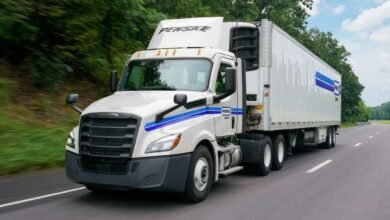
Dry Van Trailers Dimensions Capacity and Design
A detailed look at enclosed freight trailer construction, interior dimensions, payload considerations, axle systems, cargo securement, and the technology behind modern American dry vans.

Dry Van Trailers are the enclosed workhorses of American general freight, and their design reflects decades of refinement around one practical goal: moving palletized, packaged cargo from a shipper’s dock to a receiver’s dock with the least handling and the most protection. Behind a highway tractor, a dry van links manufacturing plants, distribution centers, warehouses, and retail supply chains across interstate corridors and regional routes. Unlike a refrigerated trailer, which carries an insulated body and an active cooling unit, and unlike an open deck trailer, which exposes freight to the weather, a dry van is a sealed rectangular box that shields cargo from rain, snow, dust, and road debris without controlling its temperature. That simple concept rests on a demanding set of engineering characteristics, including a floor that survives forklift traffic, sidewalls that resist dock impacts, a roof that stays watertight, a tandem axle group that manages legal weight distribution, and an interior sized around the standard pallet. This article examines how those elements are designed, how they work together, and how operators should evaluate them.
What a Dry Van Trailer Is and How It Connects to the Tractor
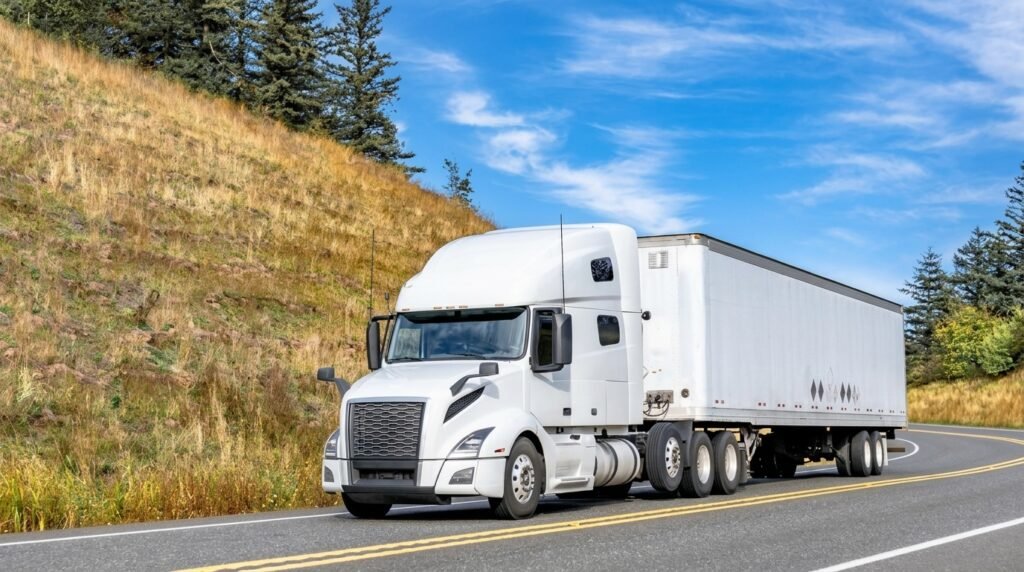
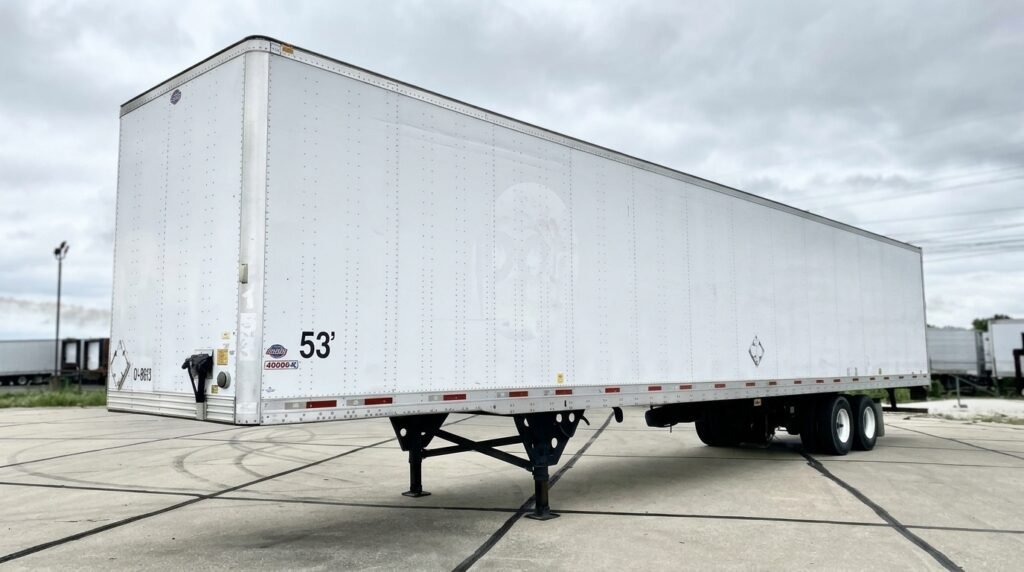
A dry van trailer is an enclosed commercial semitrailer built to carry general freight and nonperishable cargo. Its body consists of a structural frame, sidewalls, a front wall, a roof, a floor, and rear doors that provide the loading opening. The trailer has no engine and no front axle. Its front end rests on the tractor through a kingpin that drops into the tractor’s fifth wheel, while landing gear supports the front when the trailer is parked. Because the tractor carries part of the trailer’s weight through that coupling, the two machines function as one articulated vehicle, and the trailer’s design must account for the way load transfers forward onto the tractor and rearward onto the trailer’s own axles.
The enclosed body is what separates weather protection from temperature control. A conventional dry van keeps water and dust out, but it holds no refrigeration system and does not maintain a set internal temperature. That makes it well suited to consumer goods, packaged dry food, paper, and manufactured parts, and unsuitable for any cargo that requires continuous refrigerated transport. Everything that follows in the trailer’s engineering, from lining to door seals, serves this role as a dependable, dry, secure container for general commerce.
Dry Van Trailers: Dimensions, Design, and Construction Basics
The 53 foot dry van dominates American long haul freight because it offers the largest floor area that fits the national freight network. The 48 foot trailer, once the standard, remains in service for operators who value shorter length, and the 28 foot pup trailer is typically used in pairs behind a single tractor or in regional and parcel style operations where maneuverability matters more than single trailer capacity. Interior measurements always run smaller than exterior ones, since insulation, sidewall posts, and lining take up space, so readers should compare interior length, interior width, interior height, rear door opening, and cubic volume rather than exterior numbers alone.
Hyundai Translead’s current product pages offer a useful set of reference points, with the caveat that each belongs to a specific model rather than to dry vans in general. The Hyundai Original is a conventional 53 foot configuration with a 52 foot 6 inch interior length, a 102.36 inch exterior width, a 98.5 inch interior width measured lining to lining, a 13 foot 6 inch exterior height, a 110 inch interior height, and roughly 3,950 cubic feet of cargo volume. Its GVWR is 68,000 pounds, its tare weight is 13,510 pounds, and its floor rating is 18,000 pounds.
The HY Cube keeps the same 53 foot exterior and 52 foot 6 inch interior length but widens the interior to 101 inches and uses HDPE interior panels, which raises published cargo volume to 4,050 cubic feet. Its tare weight is 13,855 pounds, with the same 68,000 pound GVWR and 18,000 pound floor rating. The added interior width improves floor utilization and can support double deck freight arrangements. The Composite model lists a 101.5 inch interior width, 4,070 cubic feet of volume, a 13,350 pound tare weight, a 68,000 pound GVWR, and an 18,000 pound floor rating. The Composite XT is published with approximately the same interior dimensions and volume and a tare weight of approximately 13,460 pounds. Because options, production configurations, and revisions change final measurements and weight, these figures should be confirmed against current manufacturer information before purchase.
Federal Size Rules and Why 53 Feet Became the Standard
Federal size rules shape these dimensions. According to the FHWA federal truck size and weight regulations, vehicles operating on the National Network are subject to a 102 inch width standard, and states must allow semitrailers of at least 48 feet on that network, subject to statutory qualifications and state grandfather rights. Many states allow longer trailers, and the 53 foot length became common because it maximizes floor space while remaining practical on highways and at docks. Height is different. No single federal maximum height applies to every road, since states set their own limits and individual routes carry their own restrictions. A 13 foot 6 inch trailer is a common industry height, not a universal legal ceiling, so operators still need route awareness for low bridges and local rules.
Tare Weight, GVWR, and Payload Capacity
Weight terminology causes more confusion than any other subject in trailer specifications, so precision matters. Tare weight is the empty weight of the trailer in its stated configuration. GVWR is the manufacturer’s maximum rated gross weight for the individual trailer. Payload capacity is what remains available for freight after accounting for empty weight, installed options, load distribution, axle ratings, and legal limits. Gross combination weight is the actual weight of the loaded tractor and trailer together, and the gross combination weight rating is the maximum the manufacturer allows for that combination, while axle weight ratings limit what each axle group may carry.
The Hyundai Original shows why these terms must stay separate. With a 13,510 pound tare weight and a 68,000 pound GVWR, it would be a serious mistake to read the difference as available freight, because the legal weight of the entire combination, not the trailer’s rating, usually controls how much a driver can haul. A practical estimate often used in the industry puts freight payload for some 53 foot dry van operations in the range of about 42,000 to 45,000 pounds. That is only an approximate operational figure, not a specification or a guaranteed legal payload, and it shifts with tractor weight, fuel load, cargo type, and axle arrangement.
Interstate Weight Limits and the Bridge Formula
The federal Interstate framework generally limits a single axle to 20,000 pounds, a tandem axle group to 34,000 pounds, and gross vehicle weight to 80,000 pounds. Those limits work alongside the Federal Bridge Formula, which sets allowable weight according to the number of axles in a group and the distance between the outermost axles. The FHWA bridge formula guidance explains that wider spacing allows more weight because the load is spread over a longer stretch of bridge. Meeting the 80,000 pound limit therefore does not prove compliance, since a combination can be under gross weight and still exceed an axle group limit or violate the formula. Grandfathered state exceptions and oversize or overweight permits can change the picture in specific jurisdictions, which is another reason operators cannot treat the federal numbers as the last word.
This is where tractor choice matters. A modern sleeper tractor such as the International LT Series carries its own weight, fuel, and cab equipment onto its steer and drive axles, and every one of those pounds counts against the same gross and axle limits the trailer shares. The weight a trailer can legally carry is therefore always a combination question.
Pallet Capacity and Cargo Volume
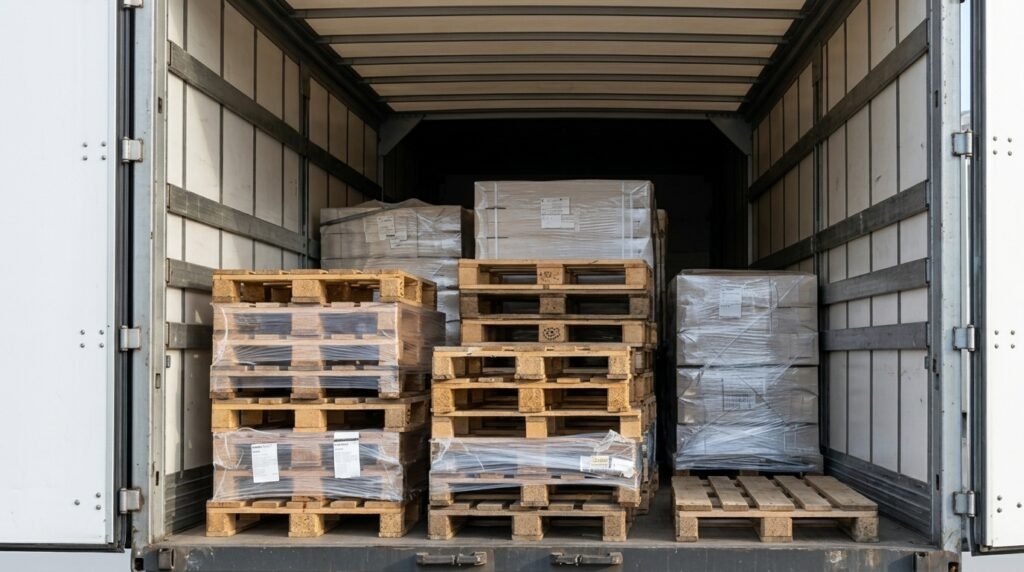
Floor planning starts with the standard GMA pallet, which measures 48 by 40 inches. On a conventional 53 foot dry van with roughly 52 feet 6 inches of interior length and an interior width near 98.5 to 101.5 inches, three common arrangements apply. Straight loading places the 40 inch side across the width, using about 48 inches of length per row for roughly 26 pallets. Turned loading rotates the pallets so the 48 inch side spans the width, using only 40 inches of length per row and reaching up to about 30 pallets, though it leaves little lateral clearance and demands careful loading. Pinwheel loading alternates orientations to interlock the pallets and typically yields about 28. These are illustrative single layer figures, not guaranteed capacities.
Real results depend on forklift access, pallet condition, cargo overhang, door clearance, weight distribution, and load restraint. Double deck systems and double stacking can raise the number of loaded positions, but they depend on package strength, interior height, load stability, floor loading, and proper securement. Cubic capacity and weight capacity also differ. Light freight can fill the trailer’s volume well before reaching a weight limit, while dense freight can reach a limit with empty space still visible. Maximum floor positions are never the same thing as maximum legal payload.
Sheet and Post and Composite Body Construction
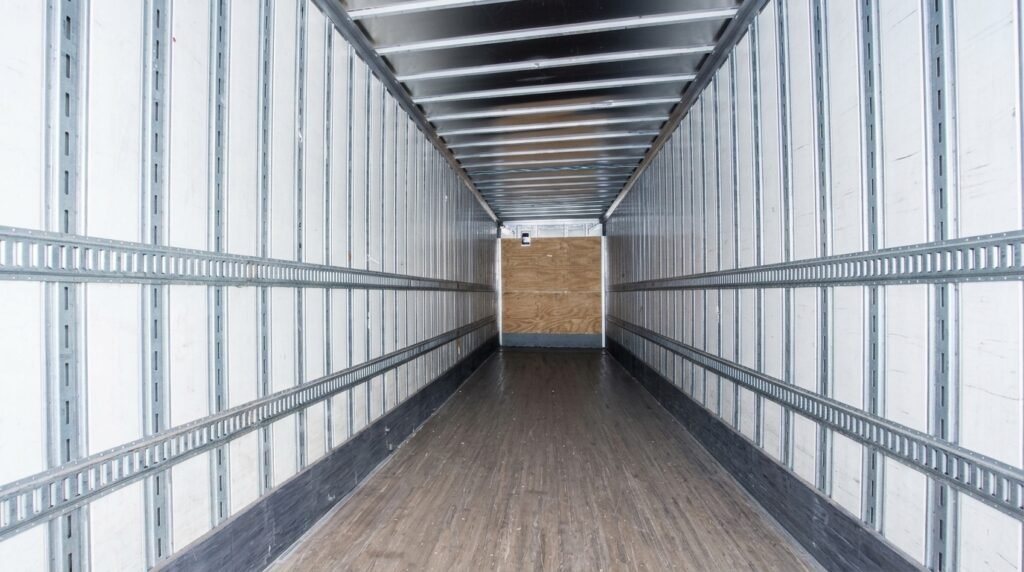
Trailer bodies follow two main approaches. Sheet and post construction uses exterior sheets, usually aluminum, riveted or fastened to vertical posts, with a reinforced framework behind them. The Hyundai Original uses 0.05 inch prepainted white aluminum side sheets with galvanized steel posts on 24 inch centers, with closer spacing over the coupler and landing gear areas where loads concentrate. The posts carry the structural role of the sidewall, and operators can choose interior lining such as plywood or HDPE, along with scuff protection. The design is familiar to repair shops and tolerant of customization.
Composite construction replaces that arrangement with engineered panels that bond multiple material layers into a structural wall, which can lower tare weight, improve impact resistance, and allow individual panels to be replaced. Composition and repair methods vary by builder. Hyundai’s Composite is designed so individual side panels can be replaced without removing the sidewall stiffeners, while Utility Trailer’s 4000D X Composite uses a polyurethane foam core composite sidewall aimed at strength, lower tare weight, and optimized cubic capacity. Wabash takes a different path with DuraPlate, a cellular core panel. The DuraPlate HD configuration advertises a weight reduction of approximately 300 pounds per 53 foot trailer compared with the manufacturer’s reference design, and it adds a 22 inch aluminum baseplate in the lower sidewall, a published 20,000 pound floor rating, and flush mount intermediate logistics options on 16.6 inch and 25 inch centers that reduce cargo snagging. Those are DuraPlate HD figures, not universal Wabash specifications, and a manufacturer stated weight saving matters because less tare weight can give more payload flexibility when the whole combination and axle distribution still stay within ratings.
Flooring and Structural Support
Floor construction may be the most consequential design decision in a dry van, because the floor absorbs forklift wheel loads, pallet jack traffic, and repeated dock cycles every working day. Hardwood and laminated oak boards remain common, and aluminum and composite floor systems are offered by some builders. Floorboards rest on crossmembers, which are the steel or aluminum beams running across the trailer, and those members tie into the main rails that carry the vertical load. Threshold plates protect the rear edge, where forklifts enter and leave, and scuff protection guards the lower sidewalls. When crossmember spacing, board thickness, and plate strength work together, a concentrated forklift wheel load spreads into the frame instead of punching through the floor.
Published floor ratings need careful reading, since the testing standard and rating method differ among manufacturers. Wabash lists a 20,000 pound dynamic floor rating for DuraPlate HD, Utility lists 20,000 pounds for the 4000D X Composite, Hyundai lists 18,000 pounds for the Original, HY Cube, and Composite, and Great Dane’s Champion offers floor options from 19K to 28K depending on specification. A floor rating describes the load the floor can support from handling equipment. It is not GVWR, and a 20,000 pound rating does not mean the trailer can carry only 20,000 pounds.
Roof Design and Weather Protection
The roof is a structural and protective layer that is easy to overlook until it leaks. The Hyundai Original uses a one piece 0.040 inch full width aluminum roof sheet over galvanized steel anti snag roof bows spaced 24 inches apart. The sheet sheds water and the bows give it shape and support, tying into the upper side rails, front wall, and rear header. Sealed joints at those connections matter, because corrosion, a damaged panel, or a failed seam lets water reach the freight. Even a small leak can ruin packaged goods or paper, so roof seams deserve regular inspection and prompt repair.
Rear Doors and Access
Rear access comes in two principal forms. Swing doors open outward on hinges and locking bars and give the widest full opening, but they need clearance behind the trailer, and their seals and hinges must stay in good condition to keep out weather. The Hyundai Original uses composite swing doors with 0.5 inch composite panels, dual durometer bonded seals, and four hinges per door. Roll up doors travel on tracks and open overhead, which helps in tight yards and restricted dock positions, and they are available through different manufacturers and trailer configurations. Great Dane’s Champion line is one example of customizable rear door arrangements, and some operators add side doors where freight needs access along the trailer’s length.
Kingpin and Fifth Wheel Coupling
The coupling is the single most safety critical connection between the two machines. The kingpin is a steel pin fixed to the upper coupler plate on the underside of the trailer’s front end. As the tractor backs under, the pin enters the fifth wheel and the locking mechanism closes around it, holding the trailer firmly while allowing it to pivot in turns and to move with the road. The connection carries the trailer’s vertical weight and transfers towing and braking forces. A highway tractor such as the Volvo VNL is configured with exactly this coupling and a long haul chassis so it can pull a loaded dry van over extended interstate routes.
Correct coupling and inspection are essential. Drivers verify that the locking mechanism is engaged, check the kingpin for wear, and inspect the fifth wheel and upper coupler plate for cracks, damage, and lubrication where required. Air and electrical lines must also be connected correctly. An improperly coupled trailer can separate from the tractor, which is a severe hazard.
Axles, Sliding Tandems, and Running Gear
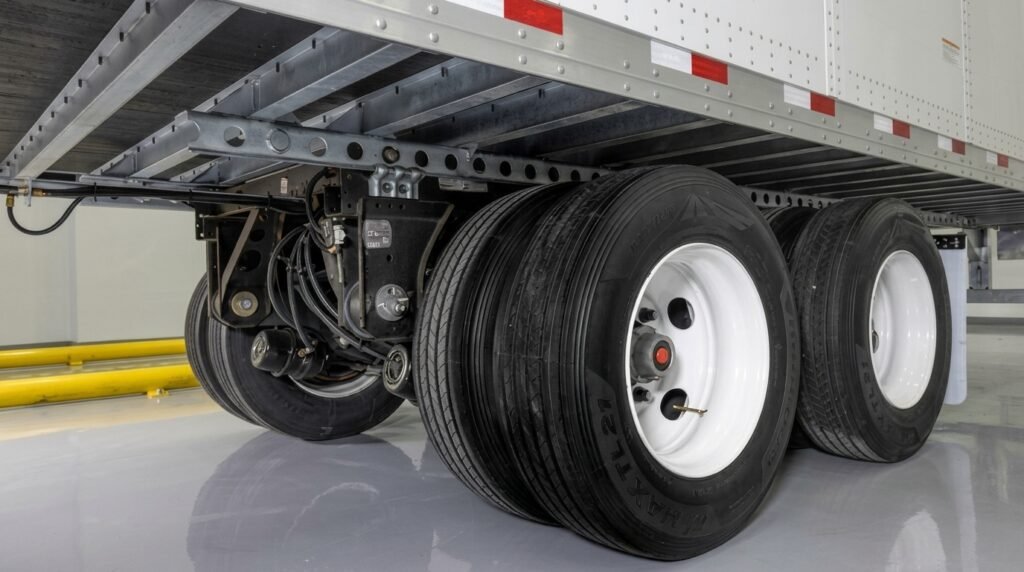
Most dry vans ride on a tandem axle assembly. Axles, tires, wheels and rims, hubs and bearings, wheel end systems, brake assemblies, and suspension attachments work as a package, carrying the trailer’s load and managing road forces. The tandem is mounted on slider rails under the trailer, so it can move forward or aft. Shifting it changes axle spacing and the distance from the kingpin to the axles, and that redistributes weight between the tractor’s drive axles and the trailer’s axles. Operators use this to bring axle weights into compliance, but a slider does not remove weight limits and cannot make every loading arrangement legal. After each adjustment, the locking pins, often released by an air operated system, must be fully engaged. Tri axle configurations are available from Hyundai Translead and Utility for certain heavy freight work, and they must be checked against legal axle loading, spacing, and route restrictions.
Suspension Systems
Air ride suspension uses air springs, controlled geometry, shock absorbers, and a height control system to cushion the trailer, reduce vibration reaching the structure and cargo, and keep ride height steady under different loads. It depends on a healthy air system, so leaks and worn components need attention. Mechanical suspension uses leaf springs, which are simpler and often less costly to buy and service, though they transmit more road shock. Fleets choose between them based on cost, freight sensitivity, and maintenance capability. The Hendrickson ULTRAA K is an example of a commercially available air ride sliding suspension, and Utility lists the ULTRAA K 40K air ride and slider system as standard on the 4000D X Composite, while Great Dane Champion suspension choices vary by configuration. These are manufacturer equipment choices, not universal specifications.
Air Brakes and Safety Systems
The trailer receives braking commands through the tractor’s air system. Air lines carry pressure to reservoirs on the trailer, and brake chambers convert that pressure into mechanical force, working through slack adjusters to apply drum brakes or, on some equipment, air disc brakes. ABS sensors read wheel speed and the control module modulates pressure to limit lockup and help the driver keep directional control, though ABS does not guarantee a shorter stopping distance in every condition. Under FMVSS 121 and 49 CFR 393.55, air braked commercial vehicles other than truck tractors manufactured on or after March 1, 1998, including applicable semitrailers, must meet ABS requirements. Trailers built on or after March 1, 2001 also require an additional ABS malfunction signaling circuit, and exterior trailer indicators help show faults.
Passive and visibility systems complete the safety picture. Rear impact guards reduce underride risk without eliminating it, and Great Dane states its RIG30 guard exceeds applicable U.S. and Canadian trailer rear impact standards. Reflective tape, LED lighting, side marker lights, brake lights, turn signals, and clearance lights make the trailer visible and communicate the driver’s actions.
Cargo Securement and Loading Operations
Freight must stay put during braking, cornering, and acceleration. Dry vans offer several restraint options, including E Track, A Track, and F Track rails, logistics posts, load bars, ratchet straps, sliding J hooks, and double deck systems such as Great Dane’s Double Dex. Each provides anchor points or load organization, but the method must match the freight’s size, weight, shape, and packaging. Under the FMCSA cargo securement rules, the aggregate working load limit of the securement system must be at least one half the weight of the cargo being secured, calculated by the regulatory method, and minimum tiedown counts are a separate requirement that depends on cargo length, weight, blocking, and other conditions. Simply installing E Track does not make a load compliant.
Loading ties these systems to warehouse infrastructure. Forklifts and pallet jacks enter through the rear opening, supported by dock levelers, bumpers, and dock locks that prevent the trailer from creeping away. Floor height, door configuration, and cargo layout shape loading speed, and the floor must handle the concentrated wheel loads of lift equipment. Side access, where fitted, changes how freight can be staged, but conventional rear loading remains the norm.
Electrical Systems and Telematics
A seven way electrical connection links tractor and trailer, powering LED tail lights, brake lights, turn signals, clearance lights, side markers, and ABS power. Sealed harnesses and protected lighting components resist moisture and corrosion and make repairs easier. Interior cargo lighting, cameras, and asset tracking are optional on many trailers. Great Dane identifies standard asset tracking through FleetPulse on Champion Dry Vans, with optional expanded capabilities that can include cargo visibility, ABS fault monitoring, and tire inflation system alerts. Available features always depend on the manufacturer’s configuration.
Freight Applications and Trailer Comparisons
Dry vans move consumer goods, packaged food that needs no refrigeration, electronics, furniture, clothing, paper, packaging, suitable building materials, automotive parts, retail products, and industrial goods. Retail distribution, e commerce, manufacturing, food and beverage, automotive supply chains, third party logistics, regional transportation, and long haul freight all depend on them. They are not appropriate for freight needing active refrigeration, liquid bulk, oversized equipment that cannot pass through the rear opening, or loads needing open deck access.
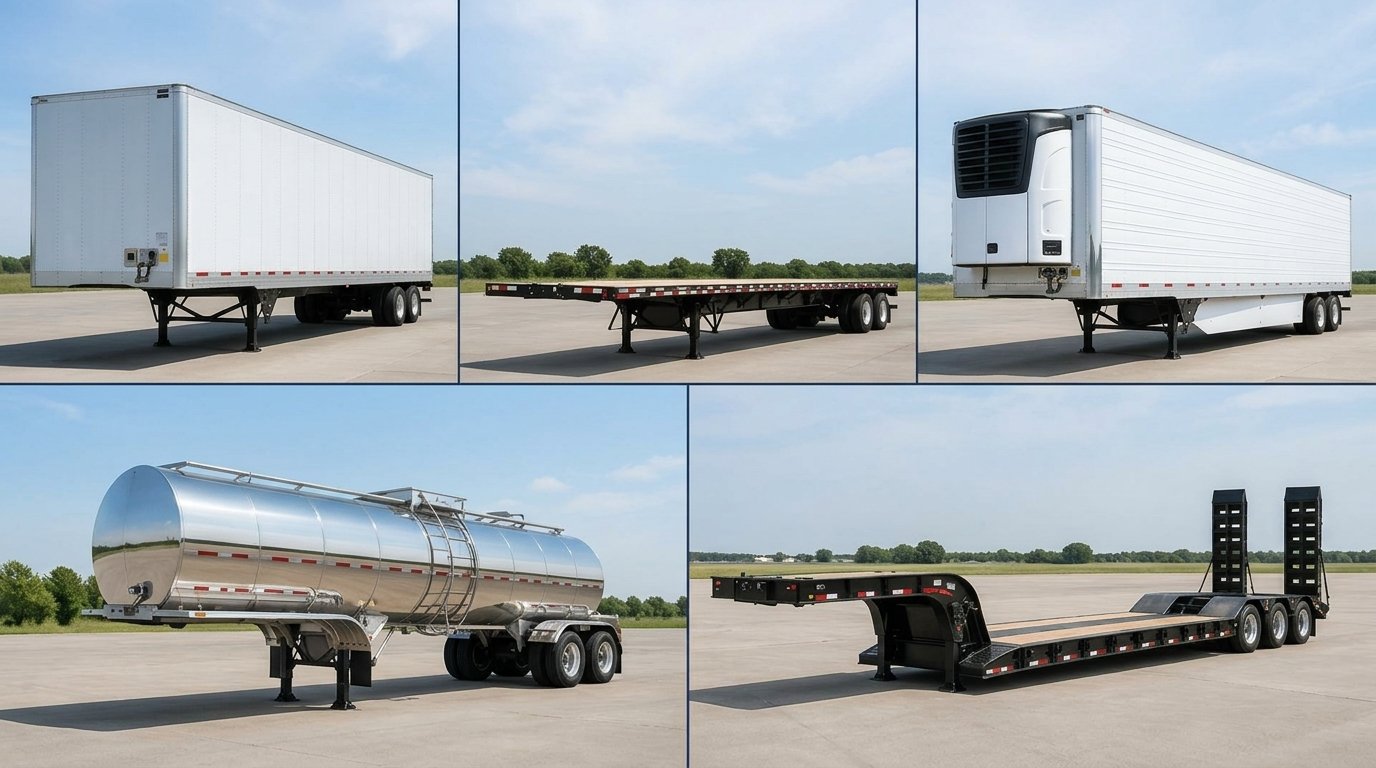
Those limits explain the other trailer families. A reefer is an insulated body with an active refrigeration unit for temperature controlled freight. A flatbed is an open deck for large, irregular, or oversized freight that is loaded from the sides or above, giving up weather protection for access. A lowboy places the deck close to the ground so tall machinery and heavy equipment can clear height limits. A dry van trades temperature control and open access for enclosed protection and dock compatibility, and freight requirements, not preference, decide which one fits.
Maintenance, Inspection, and Federal Requirements
Preventive maintenance keeps trailers safe and productive. Tires and inflation, wheels and rims, brakes, ABS sensors, electrical connections, axles, hubs and bearings, air ride and mechanical suspension, the kingpin, the fifth wheel contact area, landing gear, sliding tandem locks, frame members, floorboards and crossmembers, roof panels and seals, rear doors and hinges, locking mechanisms, lighting and wiring, and securement anchor points all need attention. Corrosion, structural fatigue, floor deterioration, roof leaks, worn tires, damaged seals, brake defects, and poorly maintained slider assemblies raise costs, cause downtime, damage cargo, and affect road safety. Intervals should follow manufacturer instructions, operating severity, fleet policy, and regulations rather than any fixed schedule.
Federal rules set the baseline. 49 CFR 396.3 requires motor carriers to systematically inspect, repair, and maintain the vehicles under their control, and 49 CFR 396.17 requires applicable commercial motor vehicles, including each unit of a tractor trailer combination, to pass a periodic inspection at least every 12 months. The annual inspection does not replace daily driver inspections or ongoing maintenance, and carriers should keep inspection and repair records. Manufacturer or fleet practices beyond those rules are recommended practices, not federal mandates.
Leading Dry Van Trailer Manufacturers
Wabash builds the DuraPlate family, including DuraPlate and DuraPlate HD, which use cellular core composite panels for weight reduction and sidewall durability. DuraPlate HD adds a 22 inch aluminum baseplate and a 20,000 pound floor rating, so buyers should compare exact configurations rather than model names alone.
Great Dane’s Champion Dry Van comes in 28 foot pup, 48 foot, and 53 foot versions, with Sheet and Post and Composite bodies. Buyers can configure flooring from 19K to 28K ratings, interior lining, roof design, rear doors, corrosion protection, and the RIG30 guard, along with A Track, F Track, sliding J hooks, Double Dex, FleetPulse telematics, and Hendrickson ULTRAA K suspension configurations.
Hyundai Translead offers the Original as sheet and post design, the HY Cube with a wider interior and replaceable HDPE lining, and the Composite and Composite XT with composite panel construction, using the model specific figures given earlier.
Utility Trailer builds the 4000D X Composite with a polyurethane foam core sidewall, Snag Free interior lining, 80K flush steel logistics posts, a stainless steel rear door frame, a 27 inch integrated threshold plate, a 20,000 pound floor rating, aluminum exterior skin with Ultra Road Shield Plus, and a galvanized steel wearband. Its listed standard equipment includes the Hendrickson ULTRAA K 40K air ride and slider system, a Bendix TABS 6 ABS system, and composite rear doors. Air disc brakes, tire inflation systems, double deck solutions, translucent roof skin, liftgates, side doors, aerodynamic equipment, and tri axle configurations are options, and not every trailer carries them. The manufacturers should be compared on construction, serviceability, weight, floor design, protection, and equipment, since none is universally best.
Advantages and Limitations
Dry vans offer enclosed protection, flexibility for general freight, warehouse compatibility, cargo security, wide equipment availability, and many construction choices. Their limits are real, including no active temperature control, restrictions on oversized cargo, limited side access in conventional configurations, weight and axle distribution constraints, wear on floors, walls, doors, and roofs, and steady maintenance demands. An operation hauling palletized dry goods may find a dry van ideal, while one hauling produce or machinery will not.
What Buyers Should Consider
Buyers should weigh length, interior width and height, cubic volume, tare weight, GVWR, floor rating, body construction, interior lining, suspension, axle configuration, door type, securement equipment, corrosion protection, wheel end systems, brakes, warranty, maintenance history, and telematics against the freight they actually haul, not the largest advertised capacity. For used equipment, inspect the frame for corrosion and cracks, the kingpin for wear, floors for damage, the roof for leaks, door seals, axles, tires, brakes, ABS function, suspension, slider locks, and electrical systems.
Why Dry Van Trailers Remain Central to American Freight
Dry Van Trailers remain central to American freight because their design matches the way general cargo actually moves, on pallets, through docks, behind tractors that must stay inside legal weight and axle limits. How well one performs depends on construction choices, floor strength, suspension and brakes, maintenance discipline, cargo securement, and compatibility with the tractor pulling it. A trailer that is specified for its freight and maintained to inspection standards will protect cargo and keep a combination legal, and that is why the enclosed van continues to anchor the industry.