International LT Series Review: Engines, Specs, and Performance
How the S13 and Cummins X15 powertrains, sleeper options, and chassis choices shape what this highway tractor can do for fleets and owner-operators

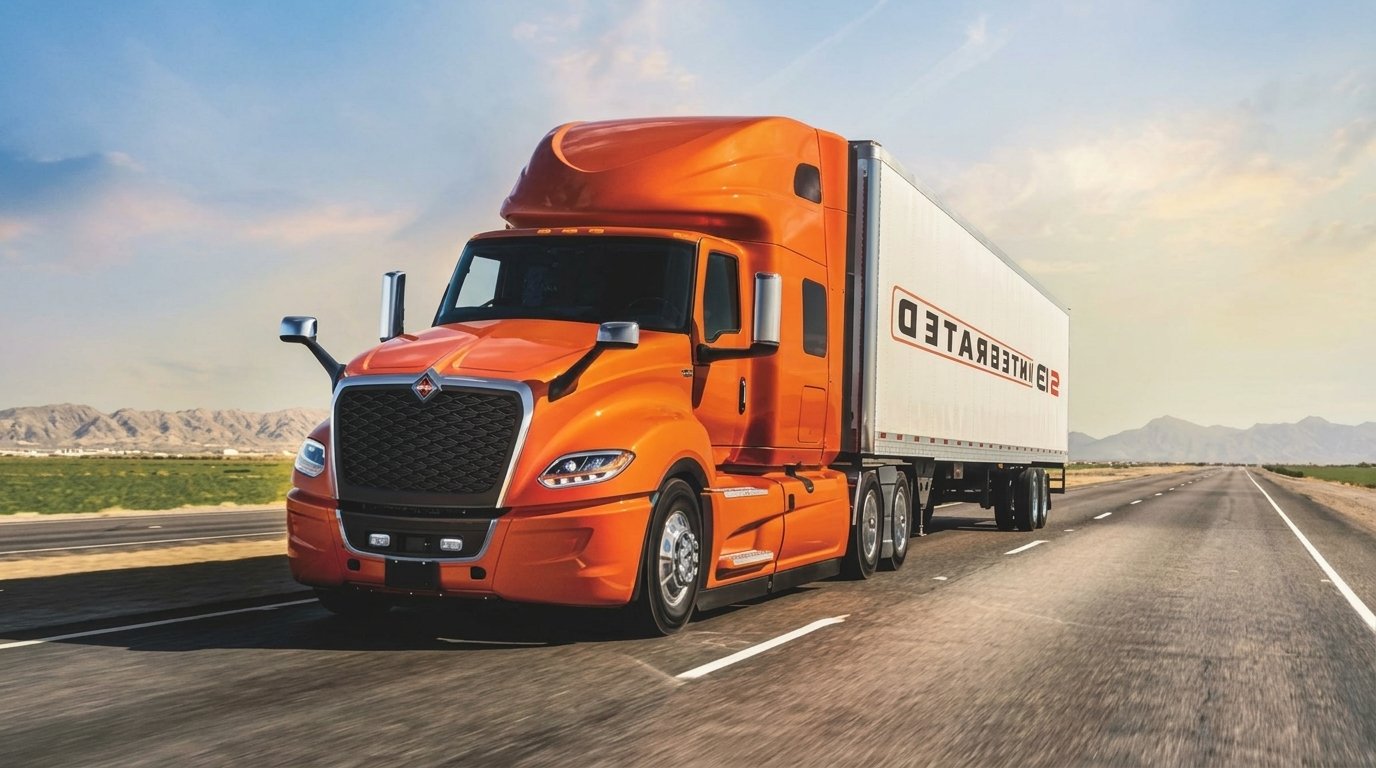
The International LT Series enters a market where every decision about a highway tractor eventually becomes a decision about money. Fuel is among the largest operating costs a fleet carries, and payload is capped by law and by the weight of the truck itself. A driver who sleeps poorly or fights a cluttered dashboard through a 600-mile day becomes a retention problem. When a tractor sits in a shop bay instead of at a loading dock, the lost revenue often exceeds the repair bill.
This International LT Series review examines the truck as a configurable platform built by International Motors for long-haul, regional, and intermodal work. It is offered as a Day Cab and in several sleeper formats, with different axle layouts, suspensions, transmissions, and two distinct engine families. The first is International’s own S13, developed with a matching automated transmission and aftertreatment system as an integrated powertrain. The second is the Cummins X15, a familiar choice for operators who have standardized on that engine. The choice between them shapes performance, maintenance planning, and driver preference, which makes the International LT truck more interesting than a catalog entry.
Manufacturer specifications are kept separate from editorial interpretation throughout. The review draws on International’s published documentation rather than a road test, and where International does not publish a figure, the article says so. Because the S13 changed between the 2024 and 2027 emissions standards, production year is treated as a specification in its own right.
Why This International LT Series Review Starts With Configuration
The LT is a family of configurations sharing a cab architecture and a design philosophy. International positions it for long-distance highway transportation, regional freight, local delivery, intermodal container work, and specialized hauling. It pulls van trailers, flatbeds, and specialty configurations for large fleets and owner-operators alike. The official International LT Series product page is the principal reference for current configurations, and it makes clear that the model name alone says little about how an individual truck behaves.
A Day Cab LT with a 4×2 drive layout and a modest engine rating serves a very different business than a 73-inch Sky-Rise Sleeper with a tandem rear axle, a high-output engine, and dual fuel tanks. Both are LTs, but they are bought for different reasons.
It also helps to understand what the LT is not. Heavy-haul and vocational trucks occupy a separate corner of the market. A truck such as the Volvo VHD is built around construction sites and worksite abuse, and its priorities differ from those of an aerodynamic highway tractor that lives on interstates. The two are different tools, not direct competitors in conventional long-haul work.
Weight Ratings, Axle Ratings, and What a Tractor Can Carry
Weight Terms That Matter
International’s product page displays a range of roughly 32,000 to 60,000 pounds for gross vehicle weight, depending on configuration. The January 2026 sleeper specification card lists 32,350 to 60,000 pounds. The upper figure matches, and the lower figure differs because the two documents describe the platform at different levels of detail and revision. The specification card that matches a truck’s configuration and build date is the more precise reference. International publishes these figures as GVW, but in rating terms they describe the tractor’s gross vehicle weight rating.
Weight vocabulary causes confusion, so precision helps. Gross vehicle weight rating, or GVWR, is the maximum loaded weight the manufacturer rates a vehicle to carry. For a tractor, that includes its own mass, fuel, driver, and equipment, plus the share of trailer weight carried through the fifth wheel. Gross vehicle weight, or GVW, is the actual weight of the vehicle at a given moment, which should never exceed the rating. Gross combination weight, or GCW, is the actual weight of the tractor and loaded trailer together. Gross combination weight rating, or GCWR, is the maximum combined weight the manufacturer rates the tractor and trailer to handle. Axle ratings, formally gross axle weight ratings, describe how much load each axle or axle group can bear.
Payload is the cargo itself. It is whatever remains after the actual weight of the tractor and trailer is subtracted from the most restrictive applicable limit, whether that is the GCWR, an axle rating, or a legal weight limit. The federal limit on the Interstate system is generally 80,000 pounds, with state rules varying.
GVWR is therefore never a measure of payload. International does not publish a single empty weight, universal payload figure, or maximum trailer weight covering every LT. Actual cargo capacity depends on the truck’s operating weight, installed equipment, trailer weight, axle ratings, fifth-wheel configuration, and applicable regulations. An operator who wants a payload estimate should build it from the weight of the specific truck being ordered.
Axle Ratings and Suspensions
The sleeper specification shows how much configuration matters. Front axle ratings run from 12,350 to 14,000 pounds, single rear axles are rated at approximately 23,000 pounds, and tandem rear axles range from 40,000 to 46,000 pounds. Front suspension choices include spring monoleaf ratings from 12,350 to 13,200 pounds and parabolic taperleaf ratings from 12,350 to 14,000 pounds. At the rear, the documentation lists single-air configurations at 20,000 pounds, International tandem-air at 40,000 pounds, and Hendrickson HAS suspensions rated up to 46,000 pounds.
These ratings shape real loading decisions. A higher front rating gives room when the fifth wheel sits forward or the tractor carries extra equipment. A higher tandem rating adds flexibility on heavy freight but also adds weight, which can cut into payload on freight that weighs out before it cubes out. Matching axle capacity to the freight is a balance, not a matter of choosing the biggest number.
The International S13 Integrated Powertrain
Engine Architecture and Ratings
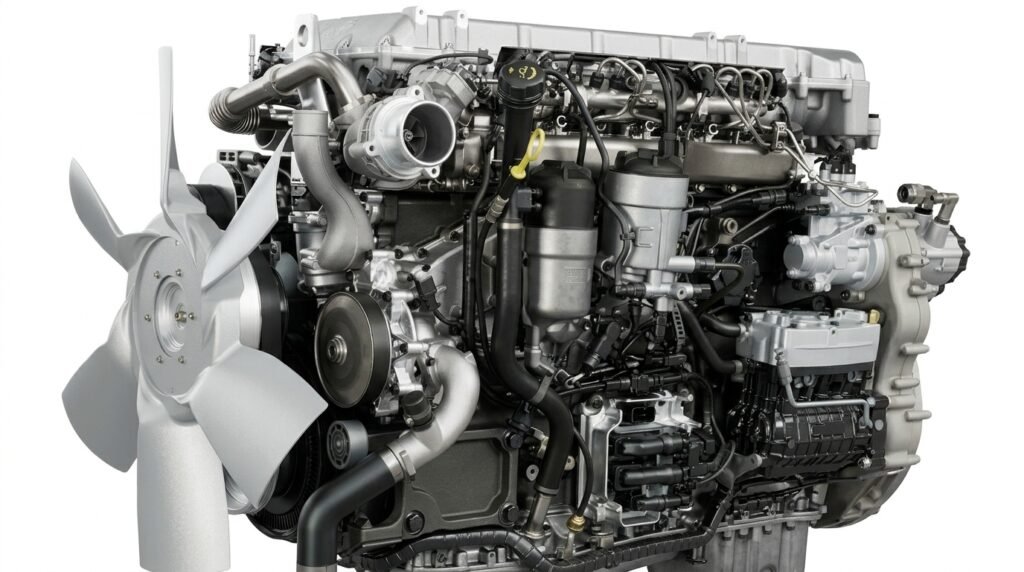
International developed the S13 Integrated Powertrain as a coordinated system combining the engine, the T14 automated transmission, and exhaust aftertreatment. The premise is that components designed together can communicate more cohesively than parts sourced independently. According to the S13 technical specification sheet, the S13 is a four-cycle inline six-cylinder diesel displacing 12.74 liters, or 777 cubic inches. It has a 5.12-inch bore, a 6.30-inch stroke, and a 23:1 compression ratio. It uses four valves per cylinder driven by a dual overhead camshaft, an 1,800-bar common rail fuel system, and a fixed-geometry turbocharger.
A high-pressure common rail lets the engine atomize fuel finely and time injection precisely, which supports combustion efficiency and emissions control. A fixed-geometry turbocharger is generally simpler mechanically than a variable-geometry unit, which International presents as a serviceability advantage. The engine holds 47.5 quarts of oil, about 45 liters, and weighs a published 2,284 pounds, about 1,036 kilograms. Engine weight matters commercially because every pound the truck carries is a pound unavailable for cargo when freight is weight-limited.
International publishes six power and torque ratings for the S13 in LT and RH applications. They are 400 horsepower with either 1,450 or 1,850 lb-ft, 430 horsepower with 1,550 lb-ft, 450 horsepower with 1,750 lb-ft, 470 horsepower with 1,750 lb-ft, and 515 horsepower with 1,850 lb-ft at the top of the range. Torque governs how a loaded truck behaves when it must move weight. Strong torque at low engine speed helps a tractor pull away from a stop with a heavy trailer, climb a grade without constant downshifting, and hold speed on rolling terrain without working at the top of its range.
The 400-horsepower rating with 1,850 lb-ft pairs modest horsepower with strong pulling torque, which suits operators who value relaxed engine speeds. The 515-horsepower rating makes sense where heavy loads, mountainous routes, or tight schedules reward the reserve. Higher ratings are not automatically better, since they may be unnecessary on flat, lightly loaded lanes.
What B10 Design Life Means
The published B10 design life of the S13 is 1,200,000 miles. B10 is a statistical reliability benchmark. It represents the mileage at which roughly 10 percent of an engine population is expected to have reached a defined major-overhaul or failure threshold, under the design assumptions that apply. It is neither a guaranteed lifespan nor a warranty. Individual engines may need major work earlier or run well beyond that figure, depending on duty cycle, maintenance, and operating conditions. The number is best used to understand a design target, not to predict what any one engine will do.
EGR and Aftertreatment Across Production Years
Emissions hardware needs careful production-year treatment. International’s January 7, 2026 announcement compares the 2024 and 2027 standards. It lists EGR usage under the 2024 standard and EGR as eliminated under the 2027 standard. It also describes the carried-over engine hardware as having no EGR cooler, a fixed-geometry turbo with smart DEF dosing, a dual overhead cam, and a 23:1 compression ratio. International’s own explanation is that the earlier documented S13 configuration does not require an EGR cooler and operates without EGR during normal operation.
The accurate reading is not that earlier S13 engines had no EGR hardware whatsoever. It is that International lists EGR usage for the 2024 standard while describing an engine that needs no EGR cooler, historically a maintenance concern on diesels, and that runs without EGR in normal operation. The 2027 version eliminates EGR altogether. None of this amounts to a blanket emissions-compliance claim beyond what International documents.
The documented earlier configuration uses a dual-stage aftertreatment system with two DEF injectors and catalysts arranged with upstream and midstream dosing. International’s S13 documentation also describes a design that does not require active DPF regeneration under the specified configuration. That matters because regeneration cycles can affect duty cycles and fuel use. For 2027, International describes the aftertreatment as dual-stage without pre-heating, in the same size and packaging, with extended service intervals. DEF consumption and catalyst service are ongoing costs, so buyers should confirm the exact hardware on any truck they consider.
The Cummins X15 Option
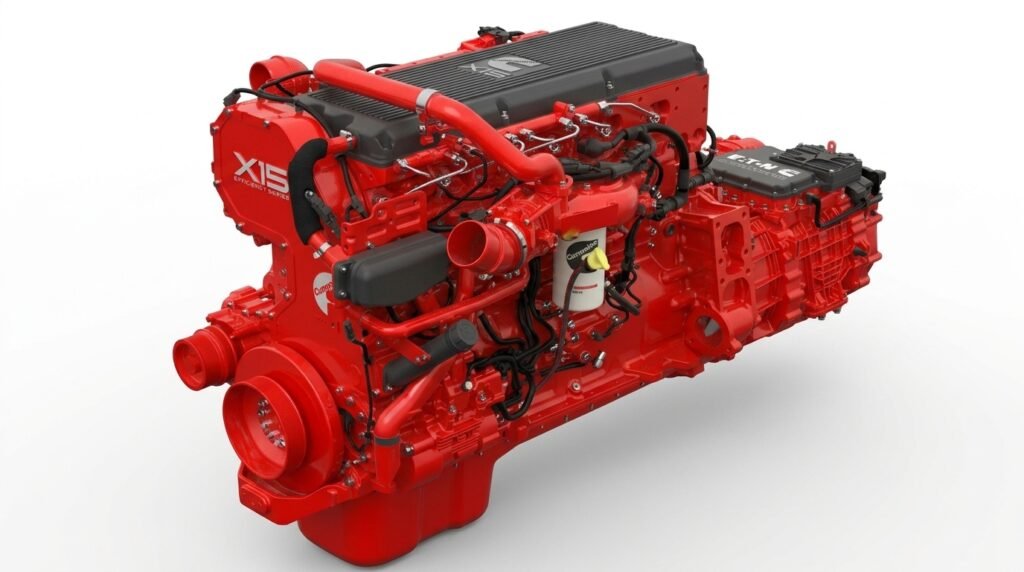
The Cummins X15 gives the LT a second personality. The official LT brochure describes a 14.9-liter, 912-cubic-inch inline six-cylinder diesel with a 5.3-inch bore, a 6.65-inch stroke, and an 18.9:1 compression ratio. It uses four valves per cylinder with a single overhead camshaft, holds 56 quarts of oil (about 53 liters), and has a published total weight of 2,961 pounds, roughly 1,343 kilograms. That is about 677 pounds more than the published S13 figure. For LT applications the published range runs from 400 to 565 horsepower and 1,450 to 2,050 lb-ft of torque, a higher ceiling that matters for heavy loads over demanding terrain.
Several technologies shape its behavior. The variable-geometry turbocharger adjusts boost across the engine’s speed range, helping low-speed response without overboosting at higher speeds. The CPI fuel system is a high-pressure common rail design that the brochure describes as capable of reaching 2,500 bar. The Jacobs Engine Brake provides retarding power on long descents and reduces service brake wear. The X15 Efficiency Series is described as producing up to 500 horsepower. That is a specific rating within the family and should not be confused with the 565-horsepower top of the LT application range.
The brochure cites a B10 design life of 1,000,000 miles. The same definition applies as for the S13: roughly 10 percent of an engine population is expected to reach a defined major-overhaul or failure threshold by that mileage, under the applicable design assumptions. It is not a guaranteed lifespan or a warranty. The two engines’ figures come from separate documents and assumptions, so they should not be read as a head-to-head durability ranking.
Fuel economy, performance, and productivity pull in different directions on any engine. A rating tuned for economy emphasizes lower engine speeds and efficiency, while a higher-output rating prioritizes pulling power on grades. Nothing in the published material justifies claiming that the X15 is automatically more powerful or more economical than the S13 in every operating condition.
Choosing Between the S13 and X15
The S13’s strongest argument is integration. Because the engine, T14, and aftertreatment were developed together, they are designed to share data and operate as a unit, and the engine is lighter. A fleet that values a single point of accountability, and is comfortable with International’s service network, may find that package appealing.
The X15’s arguments are its larger displacement, higher maximum horsepower, variable-geometry turbocharging, and the long history of Cummins engines in heavy-duty work. A fleet whose technicians already know Cummins products may see real advantages in parts familiarity and diagnostic experience. Operators running consistently heavy loads may value the headroom.
Service availability can outweigh specification differences. A powertrain that is slightly more efficient on paper but harder to service along a fleet’s routes can cost more in downtime than it saves in fuel. Driver preference matters too, since many professional drivers have firm opinions about engine feel. Without independent, controlled evidence, declaring a winner would be irresponsible. The sound approach is to match the engine to the work, the maintenance infrastructure, and the drivers.
Transmission Choices
The International T14
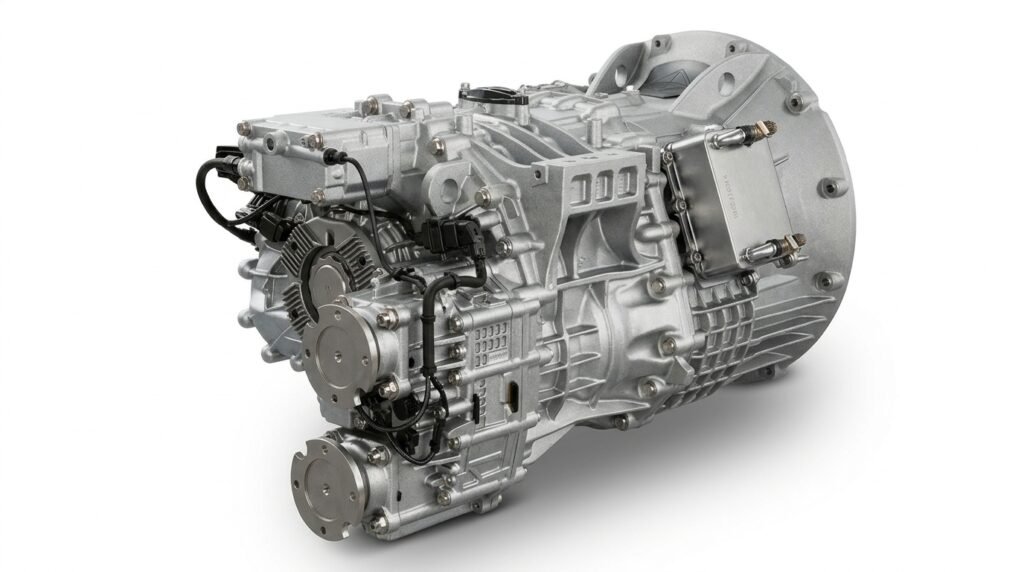
The International T14 is an automated manual transmission built as part of the S13 Integrated Powertrain, with fourteen forward speeds including two crawler gears. The published first-gear ratio is 20.81:1, thirteenth gear is a 1.00:1 direct drive, and fourteenth is a 0.78:1 overdrive. Crawler gears provide deep reduction for starting a heavily loaded truck on a grade or maneuvering at low speed. Direct drive transmits engine speed one-to-one, which is mechanically efficient. The overdrive lets the engine turn slower than the driveline at highway speed, which can support fuel efficiency on level ground. The wide spread balances pulling ability with relaxed cruising, and gear selection influences loaded starts, climbing, and cruising engine speed.
Production year matters here as well. The earlier S13 specification sheet describes the T14 as a single-countershaft design. International’s January 2026 announcement describes it as a compact 14-speed with a planetary gearset, an electronic clutch actuator, integrated PTO options, and an advanced oil lubrication system, and it lists that hardware as carried over. Because the two documents describe the gear architecture differently, the single-countershaft description should not be applied to every 2027 powertrain. Buyers should confirm transmission details against the build sheet for the specific model year.
New for 2027 is a 24-volt transmission control module with predictive shifting that uses GPS and topography data. In principle, a transmission that knows what the road ahead looks like can prepare for it. It can hold a gear before a crest, downshift ahead of a climb, or skip an unnecessary upshift before a descent. That can help keep the engine in a productive range and ease driver workload. Results still depend on route data, load, and driver habits, and International does not publish a fuel savings figure for the feature.
Other Transmission Options
The LT can also be configured with other transmissions depending on the build. International’s current specification identifies Eaton Endurant automated manual transmissions in 11- and 12-speed versions, the Endurant XD 18-speed, Eaton Fuller UltraShift PLUS units in 13- and 18-speed versions, and Eaton Fuller Advantage 10-speed configurations. Manual choices include the Eaton Fuller Advantage 10-speed, the Eaton Fuller 10-speed, and Fuller configurations with 9, 10, 13, 15, or 18 speeds. Not every transmission is available with every engine or chassis, so the pairing must be verified during specification. Fleet standardization, driver skill, terrain, and typical load weight all influence the right choice.
Frame, Wheelbase, and Drive Configurations
The LT uses a heat-treated alloy-steel frame with a published strength of 120,000 PSI. The frame carries the fifth-wheel load, resists torsional twisting, and must survive years of road shock. Frame strength supports durability, though weight distribution and wheelbase selection also influence how the truck handles in practice.
The platform uses a 125-inch BBC and a 50-inch BA measurement. BBC stands for bumper to back of cab, the distance from the front bumper to the rear of the cab. BA, or back of cab to axle, is the distance from the back of the cab to the center of the rear axle or axle group. These dimensions affect fifth-wheel placement, trailer swing clearance, weight distribution, and the overall length of the combination, which in turn influences legal compliance and maneuverability.
The LT is offered in 4×2, 6×2, and 6×4 drive configurations. A 4×2 tractor has two axles with the rear one driven, which keeps weight and cost low and suits many regional and local operations. A 6×2 adds a third axle with only one rear axle driven, which can improve weight distribution and reduce driveline friction, though traction may suffer in poor conditions. A 6×4 drives both rear axles, delivering the strongest traction for heavier loads or slippery routes, but it adds weight and cost. None is ideal for every application, and route, terrain, load, and fuel priorities should decide.
Severe-duty trucks follow different logic. The Western Star 4900 is engineered around demanding environments, with heavier components that favor strength over aerodynamics. The Freightliner 114SD Plus similarly represents the vocational side of the market. Both illustrate why a highway tractor optimized for distance and fuel efficiency serves a different purpose than a truck built for jobsite abuse.
Cab and Sleeper Configurations
Day Cab and Sleeper Formats
International offers five main LT cab configurations on the 125-inch BBC platform. They are the Day Cab, the 56-inch Low Roof Sleeper, the 56-inch Hi-Rise Sleeper, the 73-inch Hi-Rise Sleeper, and the 73-inch Sky-Rise Sleeper.
The Day Cab suits operations where drivers return home or to a terminal each day, such as local delivery, drayage, and regional runs. It saves weight and cost by omitting sleeping space, and it pairs naturally with the regional, comfort-conscious work discussed in the Mack Anthem review. The Day Cab specification card documents its technical options.
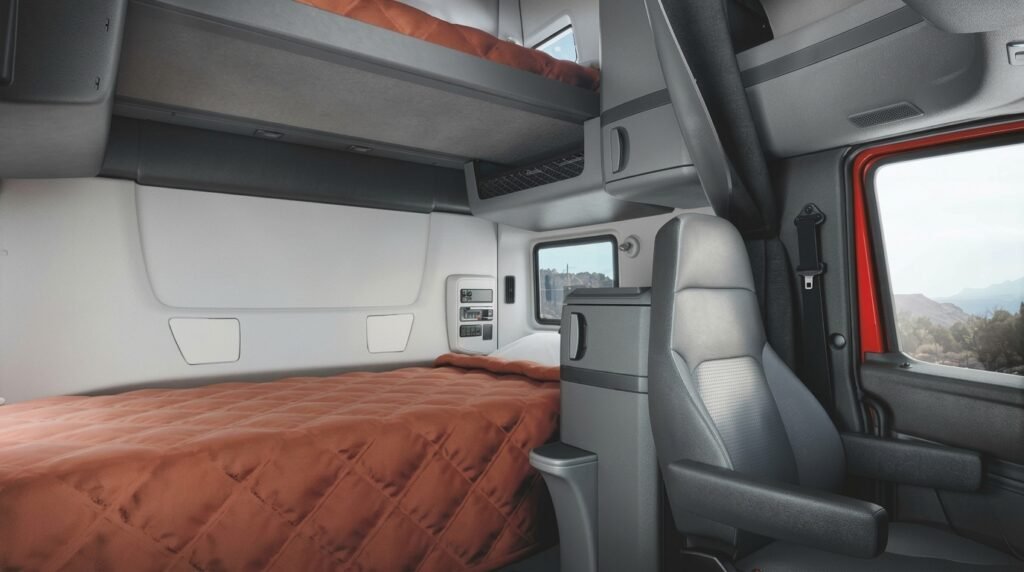
The 56-inch sleepers occupy the middle ground, providing rest space for regional and intermediate-haul work without the weight and length of the largest sleepers. The Low Roof keeps overall height down, while the Hi-Rise adds headroom. The 73-inch sleepers offer more living and storage space for operators away from home for extended periods, and the Sky-Rise is the most spacious, relevant to drivers who effectively live in the truck for weeks. Interior dimensions beyond International’s published specifications are not given here. Larger sleepers add weight and may affect aerodynamics, so living space trades against efficiency.
Interior Comfort and Driver Environment
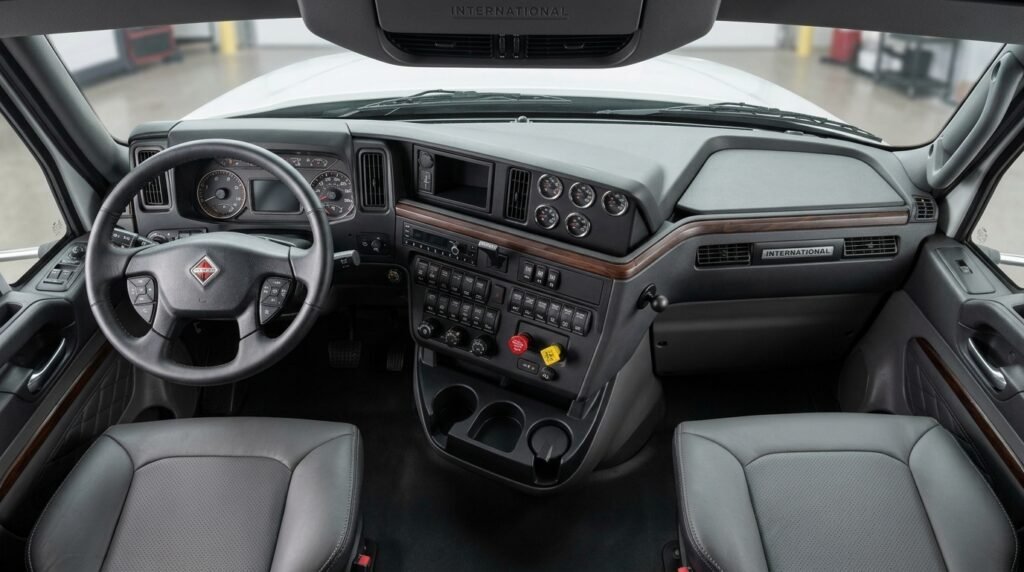
Fatigue, satisfaction, and retention have measurable commercial consequences. International offers three interior trim levels. Classic emphasizes durability and practical fleet operation, Diamond adds finish details including Mineral Grey Teak accents, and Diamond Elite uses Satin Mahogany accents and more premium details. A fleet issuing trucks to rotating drivers may favor Classic, while an owner-operator who lives in the truck may reasonably want richer finishes.
International’s product information describes a Premium Gauge Cluster with driver-configurable digital gauges, collision mitigation information, driver alerts, and real-time fuel economy data. Controls are arranged by frequency of use, and standard features include USB charging, four cup and bottle holders, and HVAC with optional automatic temperature control. Large mirrors and improved forward and side visibility help the driver see more of the road. Real-time fuel data is more than a curiosity, because feedback can shape speed and habits.
Sleepers offer different storage layouts and bunk arrangements, and microwave and television accommodations are available as options in documented configurations, not as standard equipment. A driver who sleeps well tends to drive more attentively.
The LT’s aerodynamic approach also contrasts with traditional styling. The Peterbilt 389X reflects the long-nosed classic American highway design that many owner-operators prize for presence and personal expression, while the LT leans toward aerodynamic efficiency and driver technology.
Fuel Capacity, Aerodynamics, and International LT Fuel Economy
The sleeper specification card lists single aluminum fuel tank configurations from 70 to 120 U.S. gallons and dual configurations from 70 to 140 gallons. The tanks are mounted behind the cab and may be polished or non-polished. Larger capacity reduces refueling stops and lets a driver buy fuel at favorable stops, while a smaller tank saves weight. International publishes no fixed driving range or universal MPG figure. Actual range depends on engine, configuration, load, speed, terrain, driving style, weather, and trailer aerodynamics.
Aerodynamics is central to International’s case for the LT. The cab shape, hood profile, mirrors, grille, cab extenders, and chassis airflow management all aim to reduce drag, the dominant force a tractor fights at highway speed. Across hundreds of thousands of miles, small drag improvements add up.
International states that an LT with the S13 Integrated Powertrain leads its on-highway aerodynamic category in fuel economy by at least 5 percent in its published comparison. The testing used the TMC Type IV methodology against specifically configured Freightliner Cascadia AeroX with a DD15, Kenworth T680 with an MX13, and Volvo VNL760 with a D13. International also reports that the LT with S13 uses up to 3.5 percent more DEF per gallon of fuel than those trucks in the same test.
This is a manufacturer-reported result under controlled conditions, not a universal guarantee. Operating weight, speed, terrain, weather, driver behavior, and trailer configuration all affect real consumption, and the added DEF use is a real cost to weigh against fuel savings.
Braking and Safety Technology
The LT offers air disc brakes and air drum brakes depending on configuration. Disc brakes generally provide strong, consistent stopping and resist fade under repeated heavy use, while drum brakes remain a proven, familiar choice for many fleets. ABS, Automatic Traction Control, and Electronic Stability Control, where equipped, help maintain control during hard braking, on slippery surfaces, and in sudden maneuvers.
The sleeper specification documents Bendix Wingman Fusion collision mitigation as standard in the referenced configuration. The system combines adaptive cruise control, lane departure warning, overspeed alerts, and stationary vehicle braking. Together these functions can improve awareness and may reduce collision risk, particularly during long, monotonous highway stretches. LED headlamps, deliberate mirror placement, improved forward and side visibility, and redesigned cab door glass add to the picture. Optional blind-spot technology is not treated as a feature here, since its availability should be verified in an official International document. Driver-assistance systems support a professional driver and do not replace judgment, and responsibility for safe operation remains with the driver.
The 2027 S13 Updates and Electrical Equipment
What Changes for 2027
International states that the 2027 S13 Integrated Powertrain meets EPA requirements for 2027 model year trucks and carries over more than 90 percent of hardware from the current platform. That includes consistency in service tools, parts, and technician training. International also says customers can expect similar fuel economy, driving experience, and powertrain weight, which is a manufacturer expectation, not a tested result.
The changes are specific. EGR is eliminated, and the aftertreatment drops pre-heating. The engine adds variable valve timing, which enables variable valve braking for improved braking performance, along with a closed crankcase breather and an oil centrifuge. The dual overhead camshaft, fixed-geometry turbo, and 23:1 compression ratio carry over. Production date therefore matters, and an earlier LT should not be assumed to include 2027 components.
Alternators and Batteries
Electrical capacity matters more than it once did. A modern tractor starts a large diesel in cold weather and powers digital gauges, safety electronics, telematics, and often sleeper conveniences. International lists alternators from Leece-Neville and Delco Remy. Published 12-volt ratings include 160, 210, 240, and 325 amps for specified Leece-Neville units and 165, 200, and 300 amps for specified Delco Remy units. Battery options include Fleetrite, JCI, Deka, and Enersys Odyssey, with ratings from 2,250 to 9,200 CCA depending on supplier and configuration. A well-equipped sleeper benefits from higher alternator capacity and stronger batteries, while a simple Day Cab may not need them.
The 2024 S13 is described as 12-volt only. The 2027 powertrain adds a standardized 24-volt architecture, with a 24-volt alternator, starter, and engine controllers intended to improve cold-crank performance and durability. The cab and chassis system remains 12-volt for accessories and body controls, and the two should be kept distinct.
Tires and Steering
International identifies tire suppliers including Continental, Michelin, Bridgestone, Goodyear, and Hankook, and steering options from Sheppard and TRW. Tire choice should reflect highway use, axle loads, and road conditions, because tires affect rolling resistance, traction, wear, and safety. Steering shapes handling, maneuverability, and driver confidence in tight yards and on long highway stretches. No supplier is standard across every LT, so the specific build sheet is what counts.
Maintenance, Serviceability, and Warranty
Uptime is the real currency of trucking. International emphasizes easier servicing for the S13 Integrated Powertrain, citing coordinated design, accessible service points, diagnostic monitoring, fleet health information, and preventive maintenance support. A well-integrated powertrain with remote diagnostics can help a fleet catch problems early and schedule repairs during planned downtime. These features can influence total cost of ownership. International does not publish oil-change intervals, service costs, or maintenance schedules for the LT, and none are invented here. Real requirements depend on production configuration and operating conditions.
Warranty coverage adds financial predictability. The current LT page lists base vehicle coverage of 12 months or 100,000 miles. The S13 engine carries 24 months with unlimited miles and hours, the T14 transmission 60 months or 750,000 miles, and the T14 clutch 36 months or 350,000 miles. Dual-stage aftertreatment is covered for 24 months with unlimited miles and hours, and the Cummins X15 for 24 months or 250,000 miles. Front and rear axles, differentials, and applicable transmission coverage run 36 months or 300,000 miles, and cab structure and corrosion coverage runs 60 months with unlimited miles and hours.
For a business buying an expensive tractor, this reduces exposure to major failures in the early years. Where limits are expressed in both time and miles, the whichever-comes-first rule generally applies, and all coverage is subject to the manufacturer’s terms. Warranties do not eliminate maintenance expenses or cover every component under identical conditions.
Who the International LT Series Suits Best
The LT is a platform for operators who value aerodynamic efficiency, driver technology, and configuration flexibility. Large fleets running van freight on predictable lanes may appreciate the fuel economy emphasis and the integrated S13 powertrain. Regional carriers can benefit from the 56-inch sleepers or the Day Cab, depending on how often drivers are away from home. Owner-operators who live in the truck may favor the 73-inch sleepers and upper trim levels, while those who value traditional styling may look elsewhere. Operators who need heavy-haul or severe-duty capability have better-suited options. The Volvo VNX is aimed at heavy-haul applications, and the Kenworth C500 is built for demanding terrain and specialized loads. Those are different jobs from conventional highway freight.
Conclusion
This International LT Series review comes back to a simple point: the truck’s value depends on how it is specified. The S13 offers an integrated powertrain with a lighter engine, a close relationship with the T14, and a published B10 design target of 1.2 million miles. The Cummins X15 offers larger displacement, a higher maximum horsepower rating, and the familiarity of a widely serviced engine family. Neither earns an unsupported universal victory. The better engine is the one that fits the freight, terrain, drivers, and the shop that will maintain it.
Beyond the engines, the LT combines chassis choices, sleeper configurations, collision mitigation technology, and aerodynamic design. Day Cab versions suit local and regional operators who return home nightly, while sleeper versions serve long-haul drivers, with the 73-inch models aimed at those who spend the most time on the road. International’s fuel economy claims are manufacturer-reported and should be tested against a fleet’s own data, and the differences between 2024 and 2027 powertrains mean production dates matter when comparing trucks.
In the broader heavy-duty market, the LT earns its place as a serious, efficiency-minded tractor that competes on technology and total operating cost more than on tradition. Readers comparing it with other commercial models can explore Haulizo’s trucks and tractors category. Anyone ready to build a specification should start with International’s official LT Series page and confirm every detail against current documentation for the exact configuration and model year.