New Holland Workmaster 25S Review and Specs
A detailed look at the Workmaster 25S engine, hydrostatic transmission, loader capabilities, attachments, and real-world performance for small properties and farms.

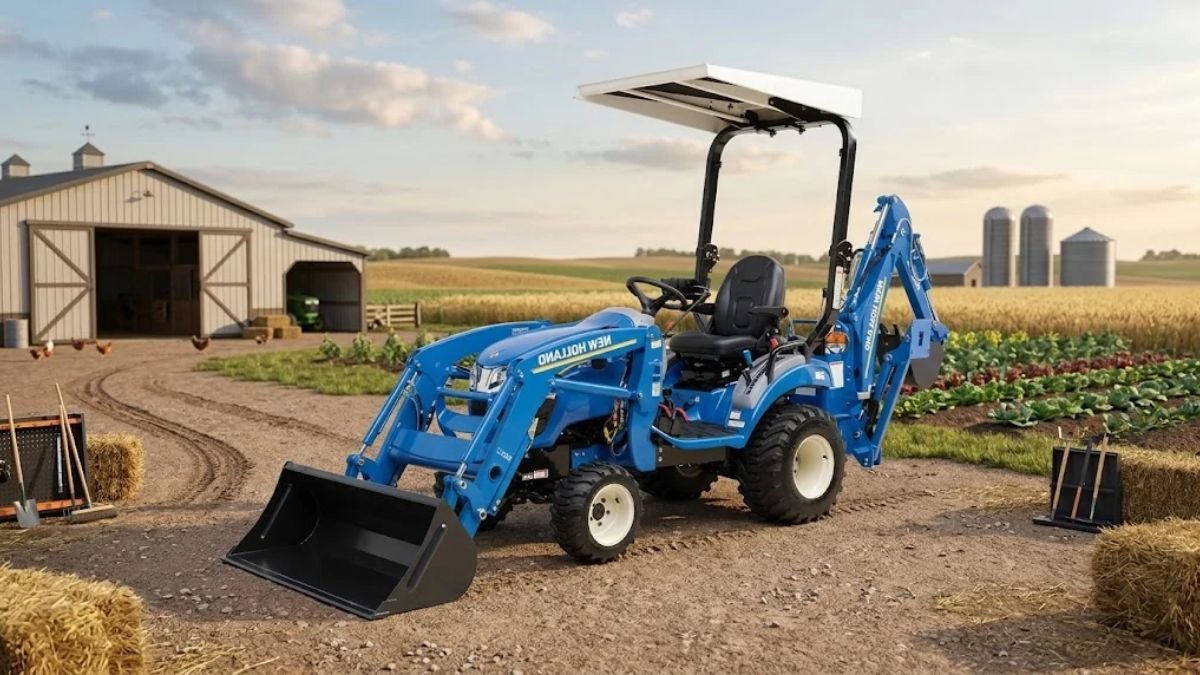
The New Holland Workmaster 25S sits in the gap between the lawn tractor most homeowners outgrow and the compact tractor that many small properties don’t really need. It is a three-cylinder diesel subcompact with standard four-wheel drive, a hydrostatic transmission, and a rear PTO. It is designed for people whose to-do list has moved past mowing: a gravel drive that needs grading, a few cords of firewood to stack, a trench for a water line, snow to clear in January. The two headline power figures tell most of the story. The engine is rated at 24.7 gross horsepower, but only 17.2 horsepower reaches the PTO. Understanding why those numbers differ, and what the 17.2 can and cannot drive, is the key to deciding whether this tractor fits your land.
Our Take
The appeal of the Workmaster 25S is that it behaves like a small tractor rather than an oversized mower. Four-wheel drive is standard, the diesel engine is a proper agricultural unit, and the rear PTO and Category I three-point hitch accept real implements. New Holland also offers a loader, a mid-mount mower, and a backhoe built for this platform. That combination gives a property owner room to grow into the machine, which is not true of many entry-level tractors.
It is worth being clear about where the limits sit. A 17.2 horsepower PTO output defines the size of the powered implements you can reasonably run. The loader is rated for the light end of loader work, and the published figures are specific enough that nobody should mistake it for a construction tool. The backhoe cannot be combined with the cab. These are not flaws so much as boundaries, and they matter more than any single strength.
The buyers most likely to be satisfied are owners of roughly one to a few acres, rural homeowners with long driveways, and hobby gardeners who move a lot of material by hand today. The same buyer will probably compare this tractor with others in the category. Haulizo has covered several of them, including the Kubota BX23S and the John Deere 1025R, and reading those reviews alongside this one will help you weigh configurations rather than badges. This article is an editorial assessment built on New Holland’s published information and engineering reasoning. It is not based on hands-on testing. Figures attributed to the manufacturer come from the official WORKMASTER 25S product page and the supplied technical package, and everything else is analysis.
Strengths and Limitations in Practice
The strongest argument for this tractor is how many different jobs it can credibly do with one drivetrain. The transmission is easy to operate, the traction is good for its size, and the attachment lineup covers the main property chores: moving material, cutting grass, and digging. A buyer who needs three or four of those capabilities will find the platform coherent.
The limitations follow from the same compactness. Light weight and modest hydraulic flow limit how hard the machine can be pushed. The loader’s capacity falls quickly as loads move forward. The PTO output rules out heavy-duty powered implements. The small fuel tank suits a property where work happens in short sessions rather than all-day field operations. None of this counts against the tractor if you buy it for the right work. It becomes a problem only when a buyer expects compact-tractor capability from a subcompact machine.
Engine and Power Delivery
The Workmaster 25S uses a three-cylinder, naturally aspirated diesel with a displacement of 1.26 liters, or 77.3 cubic inches. The engine specification identifies it as the Yanmar 3TNV80F, with a rated speed of 3,000 rpm and Tier 4B Final emissions compliance. It is not turbocharged, and nothing in the published information suggests extra engine technology beyond what is described here.
The number that gets the attention is 24.7 gross horsepower. Gross horsepower is measured at the engine, before the power passes through the drivetrain or runs accessories. The useful number for implement work is the PTO output, which for this tractor is 17.2 horsepower. The two figures describe different points in the power path, and the gap between them is normal. The measurements should never be treated as interchangeable. Gross horsepower tells you about the engine. PTO horsepower tells you what is left to turn a rear or mid-mounted implement.
This matters because a powered attachment draws its energy through the PTO shaft. A tiller, a rotary cutter, or a finish mower asks for a certain amount of power to do its work properly. If the implement demands more than the PTO can deliver, the engine bogs down, the work suffers, and the tractor is stressed unnecessarily. Choosing an attachment by checking its requirements against the PTO figure, rather than the engine figure, avoids that mistake. A larger displacement also helps with steady, low-speed work. Chores like grading, loader cycles, and slow tilling reward torque at modest engine speeds more than they reward a high peak number.
The tractor carries 6.6 US gallons of fuel. Without published consumption figures, any estimate of running time would be guesswork, so none is offered here. The practical point is that a tank of this size suits property maintenance, where jobs come in segments, better than it suits long uninterrupted days of field work. Owners who plan a full day on a large mowing job or a long stretch of snow clearing should plan their refueling accordingly.
Hydrostatic Transmission and Four-Wheel Drive
The Workmaster 25S uses a two-range hydrostatic transmission with dual pedal control. One pedal moves the tractor forward and the other moves it in reverse. There is no shuttle lever and no clutch to manage. Cruise control is available as well, which is useful on long mowing passes or transport runs.
The practical benefit appears during loader work. Loading a trailer or moving a pile means constantly changing direction: forward to the pile, back away, forward to the dump point. With a pedal for each direction, the operator can switch smoothly without stopping to shift. The same applies to tight maneuvering around buildings and landscaping, where a series of short forward and reverse moves is common.
The two ranges divide the tractor’s job in sensible ways. New Holland recommends low range for demanding work such as tilling, scraping, and snow blowing. In those cases the machine needs to move slowly while the engine and implement do the heavy lifting. High range is for transport and faster mowing, when the tractor covers ground and the load on the drivetrain is lighter.
Four-wheel drive is standard, and a rear differential lock adds another layer of traction. On wet ground, soft soil, or uneven terrain, driving all four wheels helps the tractor keep moving. Engaging the diff lock makes the rear wheels turn together, which helps when one wheel would otherwise spin. Neither feature replaces good judgment. Tire selection still matters, ground conditions still matter, and an operator still needs to keep loads low and approach slopes carefully. Four-wheel drive gives the tractor more ways to keep grip, but it does not make a light machine immune to slipping, tipping, or poor decisions.
Hydraulics and the Three-Point Hitch
The published hydraulic flow is 6.7 gallons per minute in total, split between two pumps. The implement pump provides 4.6 gallons per minute, and the steering pump provides 2.1 gallons per minute. These are separate circuits with separate jobs. Steering flow keeps the front wheels responsive without competing with the implement circuit. Implement flow is what raises the loader, curls the bucket, and moves the backhoe.
Flow determines how quickly hydraulic functions respond. With a modest implement flow of 4.6 gallons per minute, loader movements will be steady rather than fast. For a property owner moving mulch or gravel this is perfectly workable, but anyone expecting quick cycle times should understand that a subcompact tractor is built for deliberate work. Pressure and cylinder size also affect what the loader can lift, so flow alone doesn’t define loader capability.
At the rear, the Category I three-point hitch has a published lifting capacity of 992 pounds, measured at the hitch ends. A second figure, 728 pounds, is measured 24 inches behind the hitch ends. They are two ratings for the same hitch, not alternatives. Lifting capacity drops as the load moves away from the tractor because of leverage. A load sitting farther behind the hitch points acts through a longer lever arm, which demands more force from the lift arms for the same weight. The farther a heavy implement hangs out the back, the less the hitch can raise.
For buyers, this means reading implement specifications carefully. A box blade, a landscape rake, or a ballast box places weight at different distances from the hitch. The 728-pound figure is more representative of real implement work than the 992-pound figure, because few implements have their center of gravity right at the hitch ends. The rear PTO runs at 540 rpm and the mid PTO at 2,500 rpm. The PTO system operates independently with electro-hydraulic engagement, which makes it easier to start and stop a powered implement from the operator’s seat.
The 100LC Front Loader
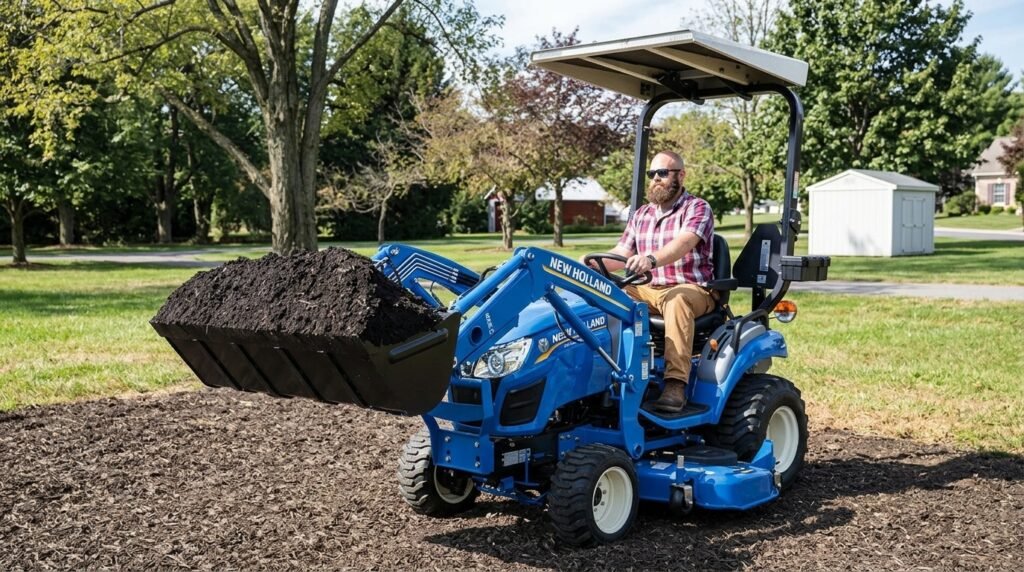
The compatible loader is the New Holland 100LC, and its published numbers are worth reading carefully. Lifting capacity at maximum height is 1,005 pounds measured at the bucket pivot pins. At a point 500 millimeters forward of the pivot pins, roughly twenty inches, the published capacity falls to 693 pounds. Maximum lift height to the bucket pivot pin is 72 inches. Breakout force is 2,078 pounds at the pivot pins and 1,426 pounds at the point 500 millimeters forward.
The difference between the pairs of numbers is leverage again. When a load sits in the bucket, its center of gravity is forward of the pivot pins, not at them. The farther forward the weight sits, the more strain it places on the loader arms and hydraulic cylinders. The 693-pound figure comes closer to what a loaded bucket experiences. Breakout force follows the same logic. It describes how much force the bucket can apply to dig into a pile or pry material loose, and it is greater at the pins than farther out.
In practice, the 100LC suits the materials that most small properties actually move. Mulch, topsoil, gravel, firewood, and leaf debris fit well within its working range. A bucket of wet soil or dense stone adds up quickly, though, and heavy material means partial loads. Anyone planning to handle large boulders, deep excavation, or commercial quantities of aggregate will be limited by this loader. It is a light-duty tool for property work, not an industrial loading system, and a buyer who respects its numbers will get steady use from it.
Loader work also changes how the tractor feels. A raised, loaded bucket shifts the center of gravity forward and upward, and a light tractor is more sensitive to that than a heavy one. Carrying loads low, turning slowly, and avoiding slopes with a raised bucket are the habits that keep the machine stable. The standard safety guidance matters even more on a small platform.
Backhoe and Mower: The 905GBL and 160GMS
The backhoe and the open platform
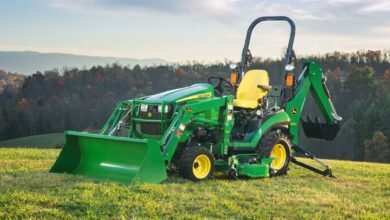
The New Holland 905GBL backhoe has a published maximum digging depth of 79.4 inches. It is intended for light digging: trenches, landscaping holes, small excavations, and similar work around a property. For a homeowner who has been hiring out small digging jobs or doing them with a shovel, a backhoe attachment can change what is possible.
It comes with an important configuration restriction. According to New Holland’s published information, the backhoe is compatible with the open-air ROPS configuration, not the cab. A buyer cannot combine the factory cab with this backhoe, and that choice should be made at the start rather than discovered at the dealership. If digging is a priority, the open platform is the path. If cab comfort is a priority, the backhoe is off the table.
The trade is straightforward. The open platform is more budget-friendly, according to New Holland, and makes getting on and off faster and easier. The cab gives up flexibility with the backhoe in exchange for weather protection. Anyone who needs both will have to decide which matters more or consider a different class of machine.
The mid-mount mower
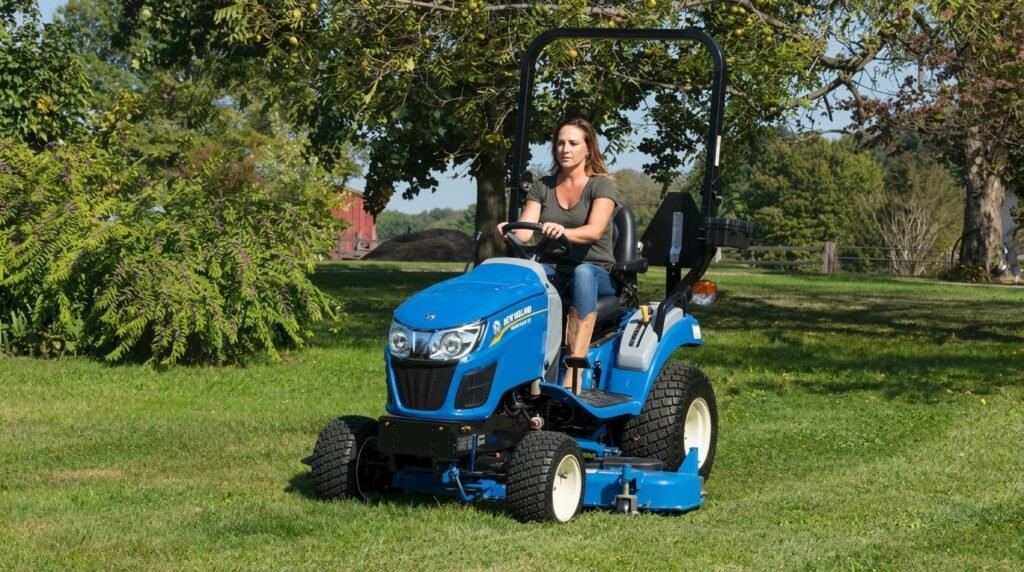
The 160GMS mid-mount mower has a published cutting width of 60 inches. For a subcompact tractor, that is a substantial deck. It cuts wide passes on open lawns and larger properties, which cuts mowing time compared with narrower decks. The mid-mount position keeps the deck between the axles, where operators can see it and where it follows the ground reasonably well.
Mowing is also where the high range of the transmission earns its place. A mid-mount mower is driven from the PTO, so the engine’s PTO output is again the relevant figure rather than the gross rating. For residential lawns and larger grass areas, routine mowing is often what justifies the tractor in the first place.
One tractor across four seasons
These attachments are optional. New Holland sells the tractor in configurations with different packages, and the loader, mower, and backhoe are not automatically included with the tractor. The tractor can also be equipped with snow removal equipment and other compatible attachments, depending on the configuration.
A single owner’s year might look like this. Spring starts with garden preparation and mulch delivery, where the loader and possibly a tiller or rake do the work. Summer is for mowing, which means the mid-mount deck is doing most of the hours. Fall brings leaf cleanup, firewood moving, and drainage fixes. Winter shifts the work to snow, with the low range suited to blowing or scraping. The tractor stays the same while the attachments change its job. That is a good reason to think about what you will do with the tractor over twelve months rather than what you need on the first weekend.
Operator Platform, ROPS, and Cab
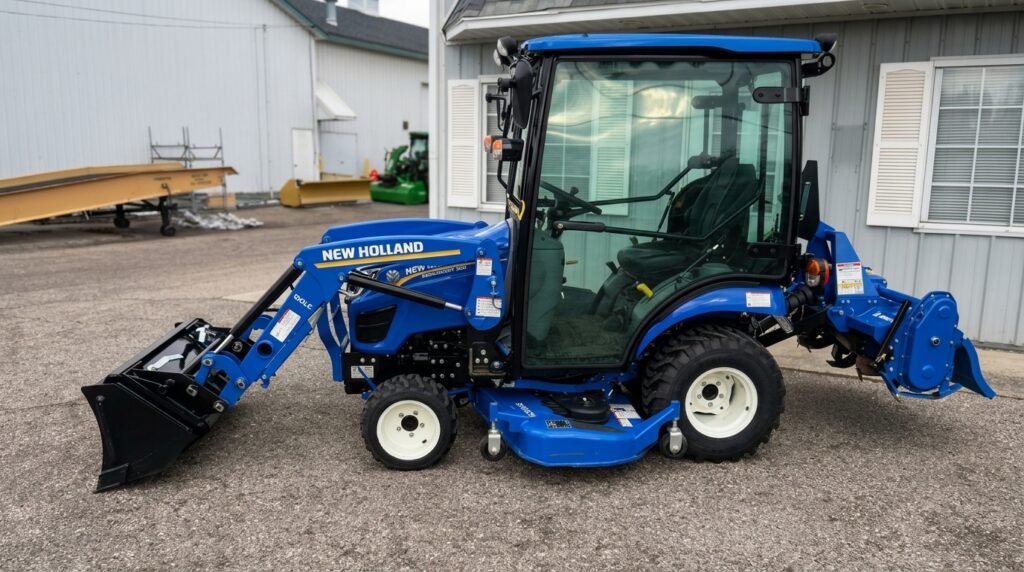
The Workmaster 25S is offered with an open-air ROPS platform or a factory cab. ROPS stands for rollover protection structure. It exists to protect the operator if the tractor tips. Owners should never remove or modify it, because it is a safety system and altering it defeats its purpose. Seat belt use goes hand in hand with ROPS, and both are basic to operating any tractor on uneven ground.
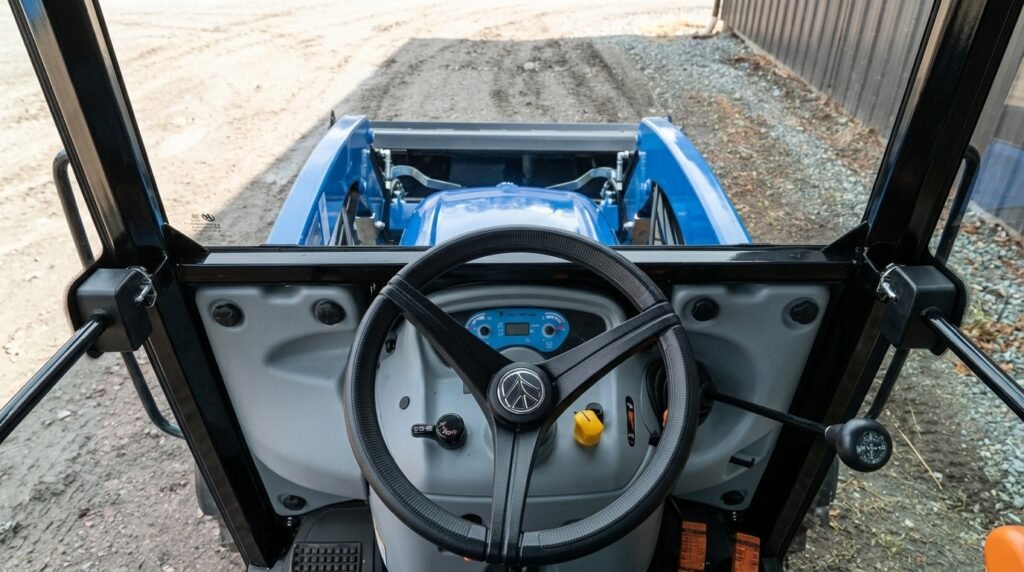
Both configurations use New Holland’s Clear-Thru operator platform. The deck is flat, with no transmission hump to catch a foot, and the controls are placed to stay out of the way when stepping on or off. On a subcompact tractor this matters more than it might seem. Property work involves frequent stops to move a gate, check a trench, pick up debris, or hitch an implement. An operator who steps on and off a dozen times in an afternoon will notice an easy platform and a awkward one.
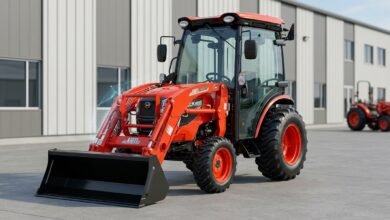
The cab uses a four-post design with large glass areas and two doors. New Holland describes it as offering good visibility and improved operator comfort. The published cab equipment includes a heater, windshield wipers, an additional mirror, and front and rear lighting. Air conditioning is not among the confirmed features, so buyers who want it should ask a dealer about the specific configuration.
The advantage of the cab is in cold, wet, and dusty conditions. Winter snow work and long sessions outdoors are more tolerable with a heated enclosure, and wipers and lights extend the hours when work is practical. The open platform gives up that protection but offers lower cost, easier access, and the ability to mount the backhoe. The right choice depends on whether you work in harsh weather often enough to justify a cab, and on whether you need to dig.
Size and Maneuverability
New Holland’s preliminary technical package includes dimensions and weights for the Workmaster 25S, but those figures could not be confirmed for a specific model year and configuration from the official product page, so this article leaves them out rather than presenting them as universal. Buyers who need exact dimensions for a garage, a gate, or a trailer should get them from the dealer for the exact configuration, since a loader, backhoe, or cab will change them.
What can be said is that compact size is a central reason to choose a subcompact tractor. A machine this size fits through narrower gates, turns more easily around buildings, and works closer to trees, fences, and garden beds than a larger tractor can. Those advantages count for much on a small property with tight spaces. They also come with a trade: a lighter, smaller machine has less mass for stability and traction, which is part of why careful loader use matters.
Ownership and Warranty
New Holland advertises its Boomer Guard Limited Warranty for the Workmaster 25S. According to the manufacturer’s description, it includes two years of bumper-to-bumper coverage and an additional four years of powertrain protection. This is a limited warranty and it is subject to New Holland’s terms and conditions. Buyers should read those terms, ask a dealer what is and is not covered, and keep any records the warranty requires. Details about exclusions, service requirements, and claims are not covered here because they are not part of the supplied information.
Routine ownership comes down to habits any diesel tractor owner will recognize. Engine oil and filtration need regular attention, and fuel quality matters for a diesel engine. The hydraulic system deserves periodic checks because the loader, backhoe, and steering all depend on it. Tire condition affects traction and stability, and attachments should be inspected before use for loose hardware, worn parts, and damaged hoses. Service intervals and maintenance costs are not given here. The operator’s manual and a dealer are the correct sources for those, and New Holland’s compact tractor resources page lists manuals and videos, including a section for the Workmaster 25S.
New Holland’s broader range of small tractors is available on its compact tractor page, which is useful for seeing where the Workmaster 25S sits in the lineup and what steps up from it.
Price and Buying Value
This article does not list a price, because none was supplied and any figure would risk being wrong. Real pricing depends on location, model year, the choice of cab or ROPS, loader and attachment packages, financing, and promotions available at the time. New Holland’s site shows that promotions change, so a number quoted today may not apply when you shop.
The more useful question is what the complete package will cost for the work you actually need. A tractor with a loader and a mower is a different purchase from a bare tractor, and a backhoe changes the equation again. Comparing two machines by base horsepower alone ignores the loader, the PTO output, the platform, and the attachments that make up the real working tool. A buyer weighing options might also read Haulizo’s Massey Ferguson 1GC.25 review to see how another subcompact approaches the same job, then compare complete configurations with dealers.
For an American property owner who needs a versatile machine for maintenance and light agricultural work, the Workmaster 25S offers a lot of capability in a small, approachable format. Whether it is the best value depends on how closely its limits match your needs. It would be a mistake to claim it is the cheapest or the best in its category, and this article makes neither claim. It is a well-equipped option that deserves a place on a short list.
Final Verdict
The Workmaster 25S works best as a first real tractor. Its diesel engine provides steady low-speed power, the hydrostatic transmission makes loader work and tight maneuvering simple, and standard four-wheel drive with a rear diff lock gives it reliable footing for its size. Add a loader, a mid-mount mower, and possibly a backhoe, and it handles most of what a small property throws at it across the seasons. The open platform is easy to use and the cab adds comfort for owners who work in cold or wet conditions, though the backhoe restriction means that choice has consequences.
The right buyer owns a few acres or less of land, wants to move mulch, gravel, and soil, mow a sizable lawn, clear snow, and dig the occasional trench. They value ease of operation over raw capacity and understand that a 17.2 horsepower PTO and a 1,005-pound loader rating are the working limits, not suggestions. They will respect the loader’s reduced capacity at the bucket, keep loads low, and match implements to the PTO.
Buyers who plan to run heavier powered implements, handle large volumes of dense material every week, or work larger acreage should look at a larger, more powerful compact tractor. The same goes for anyone who expects a backhoe and a cab together, since that combination is not available. For everyone else, the Workmaster 25S is a capable, sensible, and approachable machine. It does what a subcompact tractor should do and stops short of promising more.