Volvo VNL Review Engine, Specs, MPG, and Performance
A detailed look at Volvo’s redesigned Class 8 truck, its diesel powertrain, fuel efficiency, sleeper comfort, and advanced safety technology.

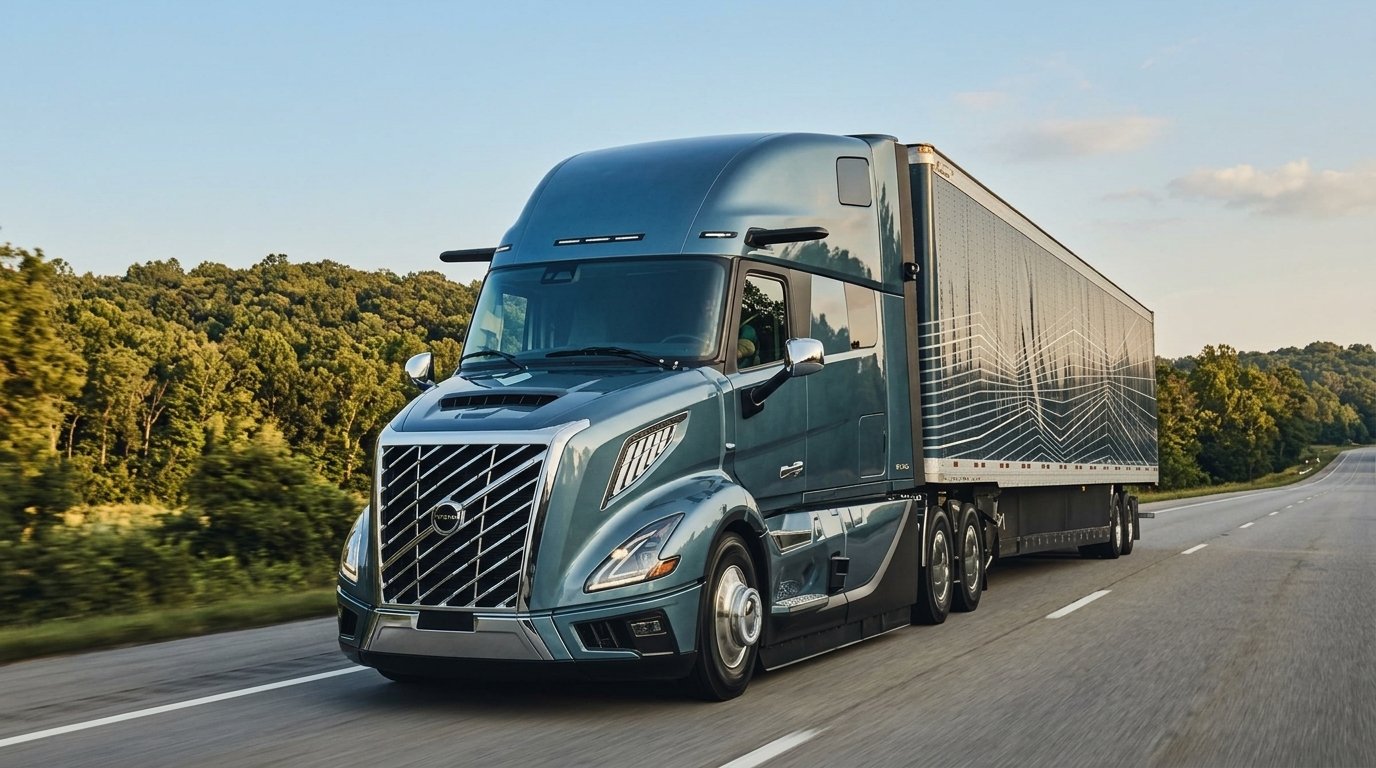
Any Volvo VNL review has to start with how much of the truck is new. When Volvo Trucks North America unveiled the latest generation on January 23, 2024, it described a redesign of roughly 90 percent of the previous platform. That is not a facelift. The aerodynamics, engine, transmission calibration, safety systems, connectivity, and driver environment were all reworked, and the truck is built at Volvo’s New River Valley plant in Dublin, Virginia. For a long-haul tractor, where small gains in efficiency and driver comfort compound over a million miles, that scale of change matters. The truck now competes on the details that decide whether an owner-operator or fleet makes money on it.
Our Take
The latest VNL is one of the more complete long-haul tractors on the market, and its strength is integration rather than any single headline number. The D13 engine, the I-Shift automated manual transmission, the cab’s aerodynamic shape, and the driver assistance hardware are designed to work together, and that shows in how Volvo frames its fuel efficiency story. Volvo claims up to a 10 percent improvement over the previous VNL, with about 7 percent credited to aerodynamics and 3 percent to the powertrain. That split is revealing. Most of the gain comes from pushing air around the truck more cleanly, which is the right place to look when most of the miles are logged at highway speed.
The cab is the other big argument for the truck. The VNL line runs from a day cab to a 74-inch full-height sleeper, and the higher trims put real effort into the places where drivers actually live. Add the connected services and a safety package that goes well beyond the basics, and you have a tractor aimed squarely at professional long-haul work.
It is not a flawless proposition. The best features depend on how the truck is specified, and the options can change by model year. Electronic complexity has to be weighed against dealer service access. Volvo’s efficiency figures are the company’s own claims, not guarantees for your routes, loads, and drivers. A serious buyer should treat this review as a framework for questions and then test the exact specification against real operating conditions.
A Redesign That Repositions the VNL
The VNL is a Class 8 highway tractor built primarily for North American long-haul freight. Volvo’s official VNL page and its launch announcement make clear that the redesign was driven by the three things long-haul buyers care about most: fuel consumption, uptime, and driver retention. That last one is easy to underestimate. A fleet that cannot keep seated drivers happy bleeds money in turnover, so a truck that treats the cab as a workplace is a business decision as much as a comfort one.
Buyers sometimes confuse the VNL with Volvo’s heavy-haul platform. Those who need higher gross combination weights and more severe-duty hardware should read our Volvo VNX review, because the VNL is optimized for efficient highway running rather than extreme loads.
The Volvo D13 Engines Behind the VNL
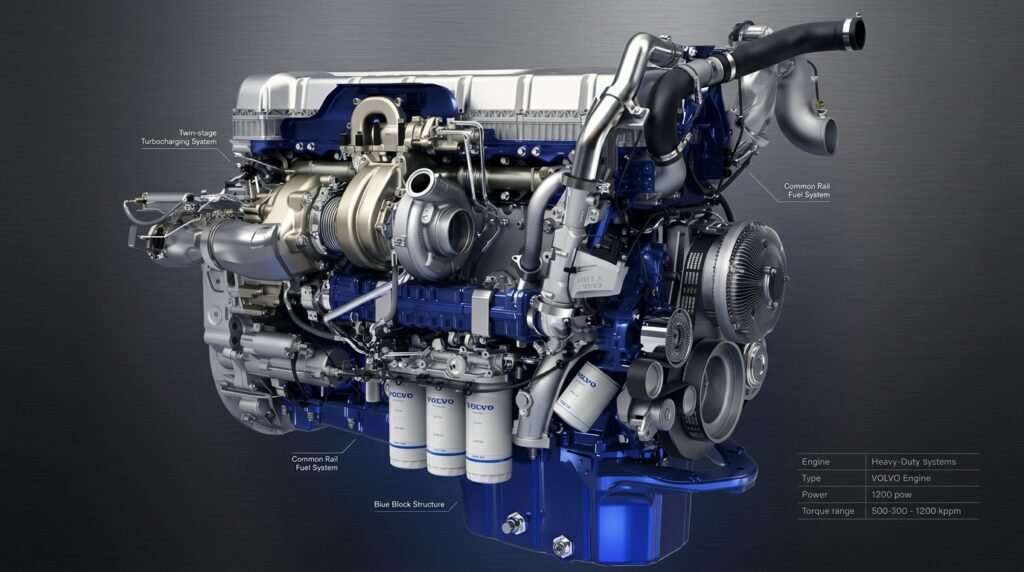
The engine at the heart of the VNL is the Volvo D13, a 13-liter inline-six diesel with direct injection and turbocharging. Three separate D13 discussions belong in this review, and they should not be blended together: the D13TC that debuted with the redesigned truck, the D13 VGT offered for the day cab, and the newer EPA 2027 D13. Each has its own ratings, its own role, and its own availability.
The D13TC and What Turbo Compound Actually Does
The D13TC is the principal engine introduced with the redesigned VNL. It adds Turbo Compound technology to the D13 base. Published ratings for the D13TC run from 405 to 500 horsepower and from 1,750 to 1,950 lb-ft of torque, depending on the powertrain package. The broader D13 family includes other configurations, so not every published rating is available in every VNL.
Turbo Compound is the interesting part. A conventional turbocharger uses exhaust gas to spin a turbine that drives the compressor, and some exhaust energy is still left over afterward. The D13TC adds a second turbine downstream that captures this leftover energy and feeds it back to the crankshaft through a mechanical coupling. In practical terms, heat that would have left the tailpipe becomes useful work at the flywheel. The benefit is greatest under steady high-load operation, which describes most interstate driving.
Volvo has also refined the engine’s internals. The seven-wave piston design improves combustion and reduces friction. The fuel injection system has been improved, and a variable-displacement oil pump delivers oil according to need instead of pumping at a fixed rate. Turbocharger development and combustion optimization round out the efficiency story. These are not dramatic changes individually, but a diesel is an accumulation of small losses, and each one removed shows up eventually at the pump.
Volvo publishes a B50 engine life target of about 1.2 million miles for the D13TC. B50 is a statistical durability measure: it means half of a population of engines is expected to reach that mileage before needing a major overhaul. It is an engineering target, not a warranty and not a guarantee for any individual engine, and maintenance practices and duty cycle will determine where a given truck lands. Details are on Volvo’s D13TC page.
The D13 VGT Option for the Day Cab
In its March 11, 2025 announcement, Volvo introduced the D13 VGT as an additional engine option for the all-new VNL Day Cab. Announced ratings include 405, 425, 435, and 455 horsepower, with torque ranging from 1,450 to 1,850 lb-ft. Those figures sit below the top of the D13TC range, which fits the kind of regional and local work a day cab is built for.
The difference lies in how each design handles exhaust energy. Variable Geometry Turbo technology uses adjustable vanes in the turbocharger to change how exhaust gas reaches the turbine. At low engine speeds the vanes narrow the flow to spin the turbo up quickly, and at higher speeds they open to avoid restricting the engine. The result is boost that responds across a wider range of conditions, which suits stop-and-go distribution and varied terrain. Turbo Compound takes a different route, recovering leftover exhaust energy and returning it mechanically to the crankshaft, which pays off most in steady, high-load cruising. Neither approach is simply better. They are tools matched to different duty cycles, and a buyer should pick the one that fits how the truck will actually be worked.
The EPA 2027 D13 Is a Separate Engine
Volvo has also announced a newer D13 developed for EPA 2027 emissions standards, covered on its EPA 2027 powertrain page and in the May 2026 engine announcement. The announced engine family offers up to 540 horsepower and 1,950 lb-ft of torque, with engine braking up to 630 braking horsepower. It relies on advanced combustion control and an improved exhaust aftertreatment system to meet the new requirements, and Volvo has announced it across the North American lineup, including the VNL.
These are announced engine-family capabilities, and they should not be merged with the D13TC or D13 VGT figures. The 540-horsepower rating belongs to the newer engine and is not standard equipment across every VNL. Exact ratings and availability depend on model year and the customer’s selected specification, so a buyer looking at a used or earlier-production truck needs to confirm the engine rating on that particular unit.
I-Shift and the Powertrain Packages
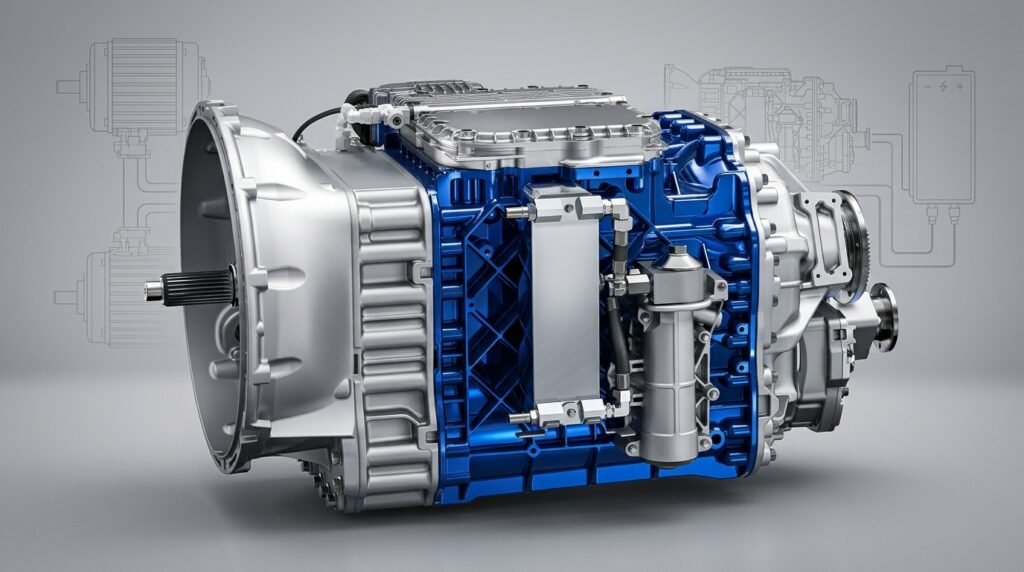
The VNL uses Volvo’s I-Shift, an automated manual transmission. Mechanically it is closer to a manual gearbox than to a torque-converter automatic, with gears, shafts, and a clutch, but the driver does not operate a clutch pedal. Computers select gears and handle the clutch. For long-distance work this reduces driver fatigue, makes shift quality consistent from one driver to the next, and lets the transmission use engine data the driver could never process in real time.
The 12-speed configuration is the baseline, with 13-speed and 14-speed versions available where applicable. The next-generation I-Shift has redesigned electronics and an improved countershaft brake, and Volvo reports shifting decisions up to 30 percent faster than the previous generation. Volvo covers the transmission on its I-Shift page.
The truck is offered with three powertrain packages: Super Direct, Straight Torque, and I-Torque. They are not identical in features, and buyers should confirm what each one includes for their intended application instead of assuming the same behavior across all three.
Integration is the point. Adaptive gear shifting, predictive cruise control, engine speed management, and road-grade awareness all work because the engine and transmission are calibrated as one system. The truck can anticipate a hill, hold a gear, or ease off the throttle before a crest, and that behavior is where a good deal of the powertrain’s 3 percent contribution to efficiency presumably originates. A driver who understands how to work with the system, rather than fighting it, will usually get more out of it. For a different powertrain philosophy, our International LT Series review is a useful comparison.
Aerodynamics and the Fuel Economy Question
Aerodynamic drag grows rapidly with speed. At highway speeds, pushing a tractor and trailer through the air consumes a large share of the engine’s output, which is why the 7 percent aerodynamic contribution in Volvo’s figures is so important. The company has detailed this work in its fuel efficiency story.
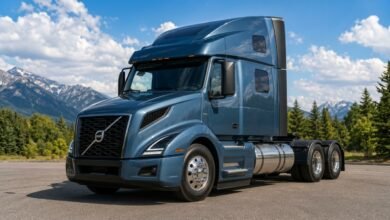
The VNL’s shape reflects that priority. The windshield, angular cab profile, and hood shape are designed to guide air smoothly over and around the truck. The bumper design and wheel-opening airflow address turbulence low on the tractor, where it is hard to manage. Chassis fairings help keep air from tumbling underneath, and the trailer gap, the space between the cab and the trailer face, is managed to limit the drag created where the two meet.
Volvo’s claim is up to a 10 percent improvement over the previous generation. It is a manufacturer’s comparative claim, not an official MPG rating, and no single mpg number applies to every VNL. Real-world fuel economy depends on speed, vehicle weight, trailer type, road grades, weather, driving style, and fleet configuration. A reefer pulling through headwinds in the Plains will burn fuel differently from a dry van on a flat corridor. The only dependable number is the one a fleet measures itself, on its own lanes, with its own drivers, and buyers should push their dealer for a trial or a comparable-lane reference.
Fuel Tanks and Real Driving Range
Manufacturer body-builder specifications list 50, 75, 100, 125, and 150 US-gallon tank options. Placement and single or dual tank arrangements depend on the chassis, battery-box layout, and wheelbase. A larger tank gives routing flexibility, particularly in regions where fuel stops are spread out or priced unevenly. It also adds weight and consumes chassis space, and both matter when a trailer is loaded close to the legal limit.
Capacity and range are different things. Volvo does not publish a single official range for every VNL, and it should not, because range depends on the tank configuration and the mileage the truck actually achieves. The sensible method is to take the usable fuel in your tank setup, multiply it by your verified operating mpg, and then subtract a reserve you are comfortable with. A tank is never completely usable in practice, and nobody should plan a run to the last gallon.
Highway Performance and Top Speed
The VNL is engineered for sustained cruising on North American highways, and its performance story is about torque delivery and gearing more than raw speed. High torque at low engine speeds lets the truck hold a gear on moderate grades and reduces unnecessary downshifts, while the I-Shift’s calibration keeps the engine in an efficient range. On long climbs, the combination of torque and shift logic determines how much speed is lost, and on descents the engine brake takes over.
Volvo does not publish one universal maximum road speed for every configuration, so no top-speed figure is given here. Actual speed is constrained by electronic fleet settings, local speed laws, terrain, load, and company policy. Many fleets govern their trucks well below anything the hardware could do, partly for safety and partly because fuel consumption rises sharply as speed climbs.
Chassis, Axles, Suspension, and Steering
The VNL’s modular chassis supports a range of freight applications, and the axle configuration is one of the first decisions a buyer faces. A 4×2 has one driven rear axle and is the common choice for efficient long-haul work. A 6×2 adds a non-driven rear axle, which can reduce weight and friction losses but offers less traction than a driven pair. A 6×4 has tandem driven rear axles for stronger traction and higher load handling, at the cost of added weight and complexity.
Published engineering configurations include front axle ratings up to approximately 14,600 pounds and rear axle arrangements up to 46,000 pounds, depending on the axles and suspension chosen. Those are the upper limits of the available options, not standard equipment across the lineup. Wheelbase choice, axle ratios, frame requirements, and weight distribution all interact with these ratings, and the right combination depends on the freight, the trailer, and the terrain.
Volvo redesigned the suspension architecture, which spans the front suspension, rear air suspension, cab suspension, and engine mounting. The aim is better ride quality, controlled vibration, and stability at highway speed. Calibration matters because the same truck may run empty one day and fully loaded the next, and air suspension behaves differently across those conditions. For driver fatigue, a quieter, smoother cab pays back on every shift.
Volvo Dynamic Steering helps reduce driver effort and supports precise control, correcting small deviations and easing the constant micro-adjustments that wear on a driver over a long day. It is one of the less glamorous features, but its effect on fatigue can be significant.
Weight, Payload, and What the 80,000-Pound Limit Means
This is the area where many readers get confused, so precision matters. The VNL is a tractor designed to pull a separate trailer, so it has no universal payload rating like a rigid-body truck. Several different numbers are involved. GVWR is the maximum rated weight of a single vehicle. GCWR is the maximum rated weight of the combination, meaning tractor, trailer, and cargo together. Actual operating weight is what the rig weighs on a given trip, and cargo payload is what remains after the tractor, trailer, fuel, and equipment are accounted for.
On the Interstate system, the federal maximum gross vehicle combination weight is commonly 80,000 pounds, subject to axle limits and the Federal Bridge Formula. The usual limits are 20,000 pounds on a single axle and 34,000 pounds on a tandem axle, with exceptions and grandfather provisions. The regulation is in 23 CFR 658.17. That 80,000-pound figure applies to the whole combination. It is not the truck’s cargo capacity.
Usable payload depends on tractor weight, sleeper configuration, fuel capacity, trailer construction, axle arrangement, cargo distribution, state laws, and special permits. A full-height sleeper with a 150-gallon fuel setup and a heavy trailer will leave less room for freight than a lightweight day cab. Volvo does not publish a single towing or payload number, and neither should anyone else.
Brakes and Downhill Control
The VNL uses a heavy-duty air braking system with electronic control. ABS prevents wheel lockup by monitoring wheel speeds, and EBS coordinates braking electronically, helping balance braking between the tractor and the trailer. Foundation brakes do the final work of stopping the truck, but they generate heat, and on a long descent that heat is the enemy.
That is where the engine brake matters. The earlier D13TC reaches 500 braking horsepower at 2,200 rpm, while the newer EPA 2027 D13 reaches up to 630 braking horsepower. Braking horsepower is the retarding power the engine produces when it acts as a brake, and it should never be confused with the engine’s driving horsepower. A heavily loaded trailer on a long grade can overwhelm friction brakes if the driver leans on them, so a strong engine brake lets the driver keep speed under control while preserving the foundation brakes for when they are truly needed. Predictable downhill control is a safety feature in its own right.
Exterior Design and Lighting
The VNL’s exterior is functional more than decorative. The cab, hood, grille, and windshield are shaped for airflow, and the side fairings and bumper reinforce that purpose. Mirrors and glass area are laid out with visibility in mind, which matters in tight yards and on crowded highways. Lighting includes headlights, cornering lamps that illuminate the path during turns, and automatic high beams on equipped trucks. Features vary by configuration, and cold-weather and rain performance should be checked against the exact specification.
Cab Configurations and Trims
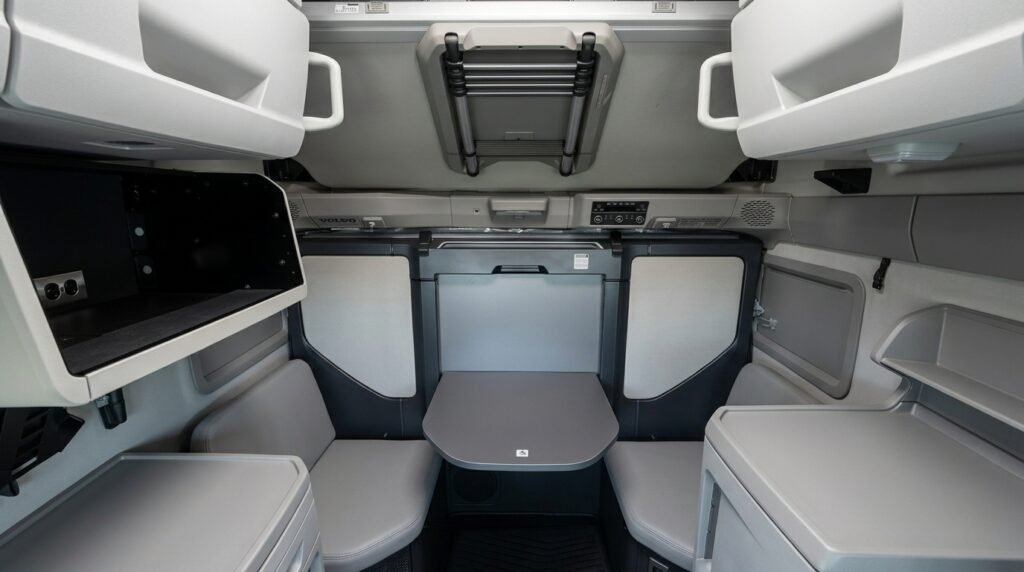
Volvo offers six major cab configurations. The VNL 300 is a day cab, suited to local distribution and short regional work where the driver goes home every night. The VNL 440 has a 42-inch mid-roof sleeper, and the VNL 640 has a 62-inch mid-roof sleeper, both of which fit regional operations with occasional overnights. The VNL 660 offers a 62-inch full-height sleeper. At the top of the range, the VNL 840 has a 74-inch mid-roof sleeper and the VNL 860 has a 74-inch full-height sleeper, built for extended cross-country assignments where the truck is effectively a mobile home.
Four trim levels sit on top: Core, Edge, Edge Black, and Ultimate. Not every comfort feature comes standard on every trim or every sleeper, so buyers should read the spec sheet carefully instead of assuming that a feature seen in a brochure photo is included.
Interior and Driver Comfort
The driving environment pairs a 12-inch Driver Information Display with a 9-inch infotainment center, as described on Volvo’s driving environment page. Steering wheel controls, push-button start, and a stalk-mounted gear selector complete the layout. Moving the transmission controls to the steering column is more than a styling choice: it frees up space in the cab, makes entry and exit easier, and gives the driver intuitive access to gear selection without reaching down to a floor-mounted lever.
Seat adjustment, storage, visibility, cabin insulation, and ergonomics were all addressed in the redesign. Optional heated and ventilated seats, adjustable steering, backup cameras, navigation integration, and multi-camera configurations are available. Those are options, and not every truck will have them.
Sleeper Environment and Climate Control
Sleeper differences are substantial. Bunk arrangements vary, with reclining bunk options available, and larger sleeper models can include a pull-down bunk and dinette design where applicable. Storage, lighting, insulation, and privacy improve as the sleeper gets larger. These details bear on rest quality, and rest quality bears on fatigue, safety, and productivity. A driver who sleeps well performs better the next day, which is why sleeper design belongs in a conversation about operating economics.
Climate control covers heating, ventilation, and air conditioning, along with the optional Volvo Parking Cooler. Parked-cab climate management reduces the need for engine idling during rest periods, which helps with fuel use, noise, and compliance with idling policies. Actual run times and cooling performance depend on equipment and environmental conditions, so any figure promised without that context should be treated skeptically.
Safety and Driver Assistance
Active Safety Technology
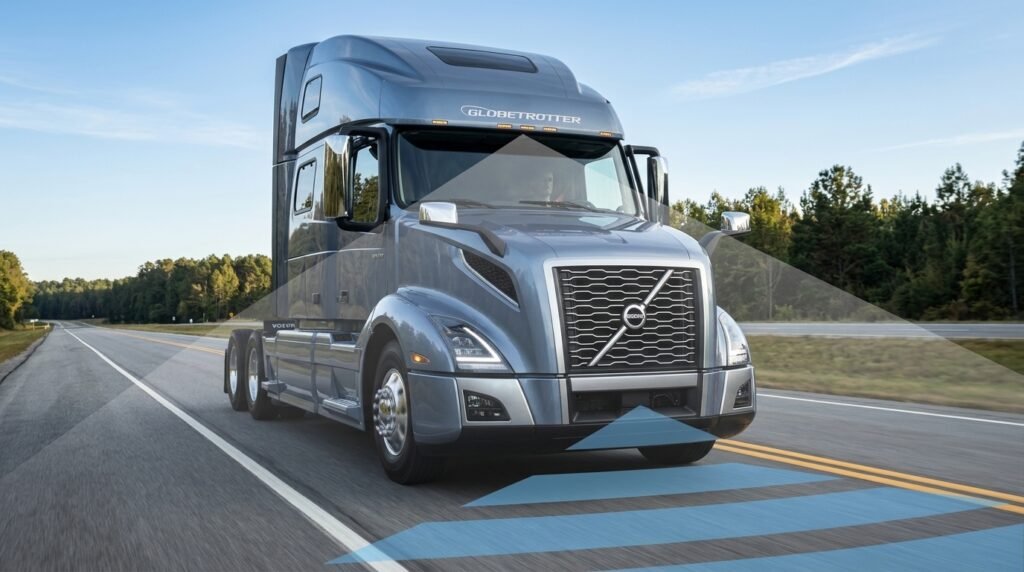
Safety receives serious attention on this truck, and Volvo outlines the system on its VNL safety page. Volvo Active Driver Assist uses radar and camera sensing to detect vehicles, pedestrians, lane markings, and other hazards, and to help the driver respond. Adaptive Cruise Control with Traffic Stop & Go maintains following distance and can bring the truck to a stop in slow traffic. Forward Collision Warning and Collision Mitigation work with Automatic Emergency Braking, and Long-Range Pedestrian Detection extends awareness ahead of the truck.
These systems assist the driver. They do not replace attention, and none can prevent every accident. They have limits in poor weather, on worn markings, and in unusual traffic situations.
Lane Departure Warning and Lane Keep Assist address drifting, with Lane Centering and Pilot Assist available where equipped. Blind Spot Detection and, where equipped, Side Detection for Pedestrians and Cyclists cover the areas a big truck cannot see directly. Oversteer Guidance supports stability, and Road Sign Recognition, Automatic High Beam, and Cornering Lamps help with night and unfamiliar roads. E-Call Emergency Assistance can summon help after a serious event. Standard and optional packages can differ by model year and configuration, and Volvo describes how these features are bundled in its technology packaging announcement.
Passive Safety and Cab Protection
Passive safety rests on a high-strength steel cab structure. The truck offers a driver airbag, available passenger protection, reinforced door hinges, an impact-absorbing dashboard, and a steering column designed with crash behavior in mind. Side-curtain airbags deserve a specific note. Volvo announced in September 2025 that integrated side-curtain airbags became standard equipment on new VNL and VNR trucks built for the North American market. They are designed to add protection for both the driver and the passenger during rollover events. The standard status applies to new trucks built after that change, so a buyer shopping for an earlier-production or used VNL should verify the equipment on that specific unit instead of assuming it is there.
Volvo’s Swedish Cab Safety Test is part of the design approach, and the structure aims to direct engine and transmission components downward in certain frontal collisions rather than into the cab. After a qualifying rollover or airbag deployment, the system can shut the engine down and trigger emergency assistance. No cab can promise that every occupant walks away unhurt, but this structural thinking is a real advantage.
Tires, Connectivity, and Fleet Management
Tire pressure and temperature monitoring helps with fuel efficiency, tire condition, and safety, since underinflated tires waste fuel and run hot. Driver information displays, cameras, and infotainment are tied together so that relevant data reaches the driver without clutter.
Volvo Connect and the MyTruck application extend that connection to the fleet office. Remote diagnostics and remote programming allow some issues to be assessed and handled without a shop visit, and vehicle health data can reveal developing problems before they strand a truck. Fuel economy and safety reports give managers a way to coach drivers and spot inefficiency. Used well, connectivity improves uptime, which is where many fleets win or lose money.
Maintenance, Emissions Systems, and Cost of Ownership
The D13 carries the usual modern diesel burdens: lubrication, fuel filtration, a diesel particulate filter, selective catalytic reduction, a DEF system, and the wider aftertreatment system. These systems need to be maintained on schedule, with correct engine oil and approved service procedures. Skipping or stretching maintenance can raise fuel consumption, cut availability, and shorten engine life. Exact service intervals, parts prices, repair costs, and maintenance savings are not stated here because they depend on the engine, duty cycle, and operating conditions, and Volvo’s documentation is the place to confirm them.
One recent change deserves attention. In its July 27, 2026 announcement, Volvo explained that since May 2026 it has been building D13 VGT and D13 Turbo Compound engines with updated DEF inducement software in the all-new VNL and VNR. Inducement is a protective response the truck applies when it detects a problem such as insufficient DEF or a fault in the SCR system, and it limits performance until the problem is fixed. Under the revised EPA guidelines, the final inducement speed rose from 5 mph to 25 mph, and the repair window grew from 4 hours to as much as 160 hours. In practice, a driver who gets a qualifying warning has far more time to reach a service facility without being left crawling along the shoulder.
That is a software calibration change, not a mechanical redesign of the engine. It also does not make emissions faults optional. The underlying problem still has to be repaired, and the extra time is there to make that repair easier to schedule, not to postpone it indefinitely.
It also helps to separate engineering life targets from warranty. The B50 target describes design intent, while warranty coverage is a contractual commitment with its own terms. Buyers should get warranty details in writing for the specific truck they are considering. The authorized Volvo Trucks dealer network matters too, because a long-haul truck is only as useful as the nearest competent service bay when something goes wrong.
Pricing has the same caveat. No universal MSRP applies to the VNL. The final figure shifts with engine rating, sleeper model, axle configuration, equipment packages, financing, dealer agreements, and market conditions. Comparing base prices is a mistake, and the full specification is what should be compared. Fleets looking at other highway tractors might also look at our Mack Anthem review to see how a different manufacturer approaches the same job.
Final Assessment
The Volvo VNL earns its place among the strongest long-haul tractors available because its parts are designed to work together. The D13 and I-Shift combination is thoughtfully integrated, the aerodynamic work targets the largest source of highway fuel loss, the sleeper options address driver rest in a serious way, and the safety and connectivity systems give both drivers and fleet managers meaningful tools. For professional long-haul operations, especially those running the full-height sleepers on cross-country lanes, it is a convincing choice.
The caveats are real, though. Volvo’s 10 percent efficiency figure is a claim, not a promise. The most attractive features depend on specification and model year, and the 540-horsepower engine is not something every VNL has. Electronic complexity adds capability and potential service demands in equal measure, and dealer access should be checked before purchase. Pricing and operating costs can only be judged against a specific build and specific routes.
The VNL does not need to be perfect to be a strong buy. A buyer who specifies it carefully, verifies fuel economy on their own lanes, and maintains it properly will get a capable, modern highway tractor that fits professional long-haul work well.