Most drivers don’t think much about accessories until something goes wrong. A tool rolls off the seat during a hard brake. There’s nowhere to stash tire chains except the floor of the cab. A trailer sits alone in a truck stop overnight with nothing protecting the king pin. These are the moments that turn “maybe later” into “I need this now.”
Choosing long-haul truck accessories isn’t like shopping for gadgets at a hardware store. Everything you add to a truck or trailer has to earn its place. Space is limited, especially in a sleeper cab. Weight matters, both for fuel economy and for staying within legal limits. Anything mounted outside has to survive rain, road salt, vibration, and temperature swings that would kill a product built for a pickup truck. Installation has to be realistic, not something that requires a shop visit and half a day off the road. And cost has to make sense against how often the item will actually get used.
This guide walks through how to think about long-haul truck accessories before you buy anything, then looks at five specific products that solve five different, common problems drivers run into: exterior storage, cab organization, trailer security, tire checks, and splash protection. None of them is presented as the single best option. The goal is to help you figure out which category of accessory actually addresses what’s going wrong on your truck, and what to check before you commit to a purchase.
Our Take
A working truck doesn’t need every accessory on the market. It needs the handful of things that solve real, recurring problems without adding weight, clutter, or hassle that outweighs the benefit.
It’s easy for a truck to end up weighed down with add-ons that sounded good in an ad but rarely get used, while the driver still keeps loose tools rattling around the cab or checks tire pressure with a gauge that’s been dropped so many times it can’t be trusted anymore. The accessories worth buying are usually boring. They do one job, they do it reliably, and they hold up outside in weather that would ruin something cheaper.
Our take is simple: buy for the problem, not for the feature list. If a product doesn’t fix something you actually deal with on a regular run, it’s just extra weight and one more thing to maintain.
What to Look For
Before buying any semi-truck accessories, it helps to run through a short mental checklist. A few dollars saved on the wrong product usually costs more in wasted time later.
Fit and compatibility. Truck and trailer setups vary enough that “universal” rarely means universal in practice. Cab height, frame rail spacing, catwalk dimensions, and mounting points differ between makes and even between model years. Always check measurements against your own rig rather than assuming a product will fit because it’s marketed for commercial vehicles.
Construction and durability. Long-haul truck accessories live outside the cab far more than accessories on a personal vehicle. Aluminum, forged steel, and heavy-duty polymer show up often for good reason. They resist corrosion and hold up under constant vibration in a way that lighter materials don’t.
Exposure to weather and road conditions. Anything mounted externally deals with rain, snow, road salt, and flying debris. Gaskets, powder coating, and sealed housings aren’t extras. They’re the difference between a product that lasts years and one that fails at the first hard winter.
Weight and available space. Every pound added to a truck or trailer is a pound that isn’t cargo, and every accessory takes up room that might be needed for something else. Before buying, measure the space you actually have and check the accessory’s listed weight against what your setup can reasonably carry.
Installation requirements. Some truck accessories bolt on in minutes. Others need brackets, kits, or hardware sold separately, and a few genuinely benefit from professional mounting. Know what you’re getting into before the box arrives.
Frequency of use. An item used daily, like a tire gauge, earns its keep quickly. Something used only occasionally still needs to justify its cost and the space it takes up.
Overall value. Heavy-duty truck accessories aren’t always expensive, and expensive doesn’t always mean better suited to your truck. Value comes from how well a product matches your actual routine, not from its price tag alone.
Keeping these factors in mind makes it much easier to evaluate any long-haul truck gear, including the five products below.
Five Practical Accessories Worth Considering
Aluminum Underbody Trailer Tool Box
Exterior storage is one of the most common headaches for drivers who carry tools, straps, or spare parts on a regular basis. Tossing everything loose in the cab means digging through clutter every time you need something, and it puts weight where it doesn’t need to be.
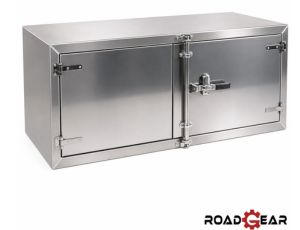
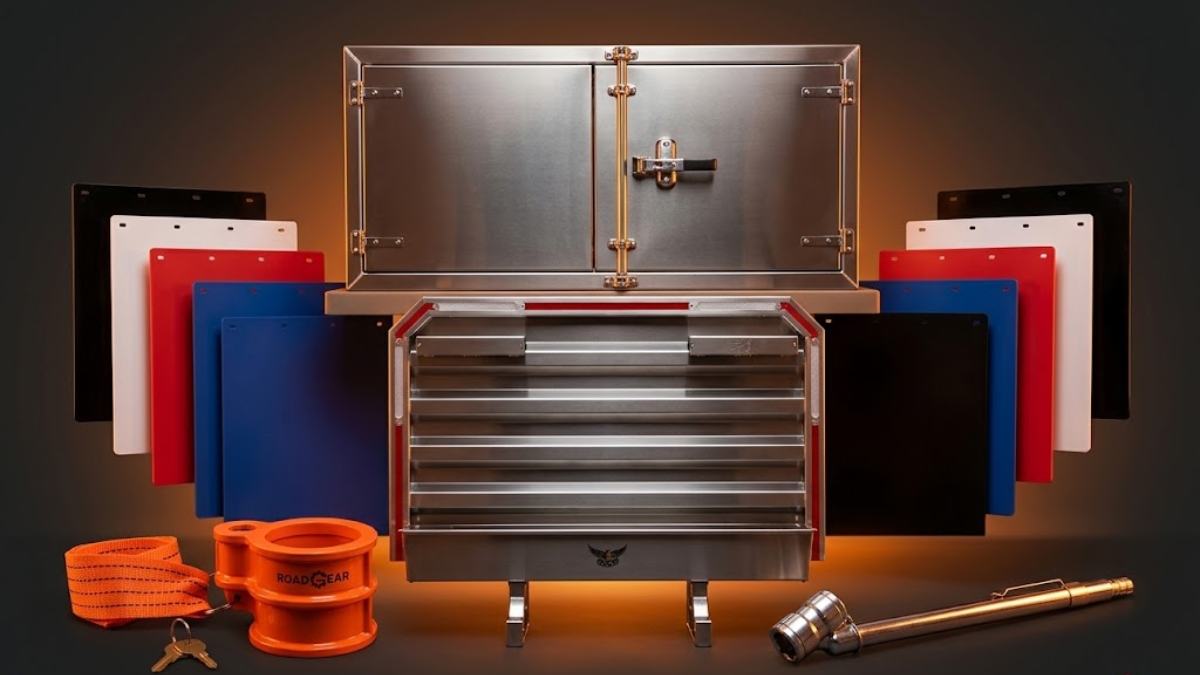
The RoadGear Aluminum Underbody Trailer Tool Box is built to move that gear outside the cab entirely. At 60 x 24 x 24 inches, it offers a genuinely large amount of enclosed storage, constructed from 3 mm (11 gauge) aluminum that’s meant to handle years of exposure to road spray and debris without rusting through. Double barn doors give you access from either side, a heavy-duty paddle lock keeps the contents secured, and a waterproof gasket helps keep moisture out of whatever’s stored inside.
The tradeoff is size. At approximately 100 pounds empty, before you’ve added a single tool, this is a substantial piece of equipment. It needs enough clear frame space underneath the trailer to mount properly, and the mounting brackets are sold separately, which adds a step (and a cost) that’s easy to overlook when comparing the sticker price. This isn’t something you buy on impulse and figure out later. Measure your available mounting space first, and plan the installation before ordering.
Stainless hardware throughout means the fasteners themselves won’t be the weak point down the road, which matters on a product that’s expected to stay bolted to a moving trailer indefinitely.
Viking Sleeper Cab Rack with 2 Chain Hangers & Full Tray
Drivers who run chains seasonally, haul dunnage, or simply need somewhere to keep bulky equipment off the catwalk face a different kind of storage problem than someone dealing with hand tools. That’s the gap this rack is built to fill.
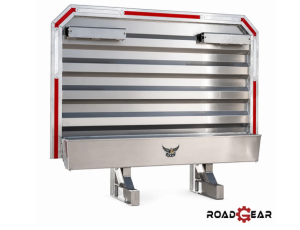
At 80 inches wide and 68 inches high, weighing roughly 158 pounds, the Viking Sleeper Cab Rack is not a small addition. It’s constructed from 5000-series aluminum at 1/8 inch thickness. Two chain hangers keep tire chains organized and off the deck, the full tray adds flat storage space, and it doubles as a dunnage carrier for drivers who need to move pallets or blocking material between loads.
Before ordering one, check your actual catwalk space. RoadGear specifies approximately 22 inches of catwalk space is required for this rack, and given the dimensions involved, that number is worth confirming against your own truck rather than assuming it will clear. The installation kit is also sold separately, so factor that into both cost and planning. This is a rack built for trucks that genuinely need heavy equipment storage behind the cab, not a decorative add-on for a truck that rarely carries chains or dunnage in the first place.
Heavy-Duty King Pin Lock
A parked trailer at a truck stop or rest area is an easy target if nothing is protecting the connection point. A king pin lock addresses that specific vulnerability by covering the king pin itself, making it much harder for someone to hook up and drive off with an unattended trailer.
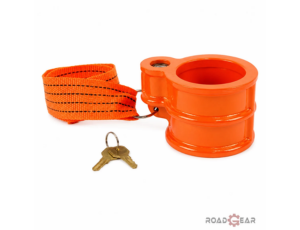
This is strictly a security accessory for a parked trailer, not something used while driving. RoadGear’s version is forged steel with a powder-coated finish, uses a slide bolt mechanism, and comes with two keys. At approximately 3.25 inches high and 3.5 inches wide, it’s compact enough to keep in a door pocket or small storage compartment without taking up meaningful space, and at around $21.59, the cost is low enough that price isn’t really a factor in the decision.
What it won’t do is guarantee that a trailer can’t be tampered with. No lock provides absolute protection against someone determined and equipped to defeat it. What it does is add a real obstacle that discourages opportunistic theft and buys time, which is the realistic role a device like this plays in a driver’s overall security routine. It works best as one habit among several, used every time a loaded or valuable trailer is left unattended, rather than as a standalone solution.
Truck Dual Angle Head Tire Gauge, 120 PSI
Tire pressure is one of those checks that’s easy to skip when you’re behind schedule, and one of the checks that causes real problems when it’s skipped too often. Commercial tires run at pressures far higher than passenger vehicle tires, and a gauge built for a car simply isn’t rated for the range a semi-truck actually needs.
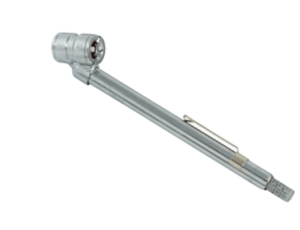
This gauge reads up to 120 PSI, a higher rating than most passenger vehicle gauges provide, and it’s built with a dual, or twin, head design that makes it easier to reach valve stems on dual wheel setups without wrestling the gauge into an awkward angle. PCL air technology and a locking metal inner core are aimed at keeping the reading accurate and the seal tight during use, and a positive sealing washer helps prevent air loss while checking pressure. At about half a pound, it’s light enough to clip to a pocket using the built in clip and carry during a pre-trip walk-around without noticing the extra weight, and the protective cap keeps the gauge head clean between uses.
It’s worth being clear about what this tool is and isn’t. A gauge tells you the pressure in a tire at the moment you check it. It doesn’t replace a full inspection for cuts, uneven wear, or sidewall damage, and it’s only as reliable as the habit of actually using it regularly. For drivers who make pressure checks part of their routine, though, having a gauge rated well above typical passenger vehicle pressures makes that daily task more reliable, as long as the rating suits your specific tires.
Buyers Polymer Mud Flaps, 24 x 24, Black
Mud flaps don’t get much attention until they’re missing, cracked, or too stiff to do their job in cold weather. On a long-haul truck, that job matters more than it might seem: reducing the spray and debris thrown onto the vehicles behind you and protecting the truck’s own components from road grime.

These Buyers flaps measure 24 x 24 inches, sold as a pair, at 3/16 inch thickness in a heavy-duty low-density polymer. That combination of thickness and material is meant to stay flexible rather than becoming brittle in cold conditions, which matters for a part that has to keep working through winter temperature swings. Buyers notes resistance to snow, ice buildup, and general road debris, which matters for a part that’s constantly exposed to whatever the road throws up.
At roughly 6.54 pounds for the pair, weight isn’t a concern here. The one thing to check carefully is fitment. At 24 x 24 inches, these flaps suit a specific range of trucks and mounting positions, and dimensions that work on one rig won’t automatically work on another. Confirm your mounting hardware and the space available before ordering, since mud flaps that are too large or improperly sized create their own problems rather than solving the one they’re meant to address.
Why These Products Made the List
These five products aren’t here because they’re the top-rated items in their categories. They’re here because each one represents a distinct, common problem drivers run into, and together they cover a reasonable cross-section of what long-haul truck accessories are actually for.
The underbody toolbox addresses exterior storage for tools and equipment that shouldn’t be cluttering the cab. The sleeper cab rack solves a related but different problem: organizing chains, dunnage, and bulky items that need to stay off the catwalk. The king pin lock is about trailer security during the hours a truck sits unattended. The tire gauge supports a basic but essential maintenance habit. And the mud flaps handle truck protection and road spray, a problem that’s easy to ignore until it causes a complaint or a violation.
No driver necessarily needs all five. A regional driver who never runs chains has little use for a sleeper cab rack. A driver who never leaves a loaded trailer unattended overnight may not prioritize a king pin lock. The point of laying these out side by side isn’t to sell a bundle. It’s to help you recognize which category matches a problem you’re actually dealing with, so you can focus your budget and your truck’s limited space on what will genuinely get used.
The Bottom Line
The right long-haul truck accessory is the one that solves a problem you actually have, fits your specific truck or trailer, and works with how you already operate rather than forcing a change in routine. Weight, available space, installation effort, and cost all have to make sense together, not just the price on the listing.
None of the five products covered here is a universal necessity, and none of them is a shortcut around good habits like regular pre-trip inspections or basic security awareness at truck stops. They’re tools that support those habits when the underlying need is real. Before adding anything to your truck, it’s worth asking honestly whether it fixes something that’s actually been a problem, or whether it’s just something that looked useful in passing. That question, more than any spec sheet, is usually what determines whether an accessory earns its keep.
FAQ
1. What should I check before buying a truck accessory?
Check the accessory’s dimensions, mounting requirements, compatibility with your truck or trailer, and any installation hardware that may be sold separately.
2. Do truck accessories always fit every semi-truck?
No. Fitment can vary by truck, trailer, cab, mounting location, and available clearance. Always check the product dimensions and installation requirements before ordering.
3. Should I consider the accessory’s weight?
Yes. Larger items such as tool boxes and cab racks add weight before anything is loaded into them, so their weight should be considered as part of your truck’s overall load.
4. Are these accessories ready to install out of the box?
Not always. Some products may require separate mounting brackets, installation kits, or existing hardware, so check what is included before purchasing.
5. What matters more, price or practical usefulness?
For long-haul equipment, practical usefulness should be the starting point. An accessory is worth considering when it solves a real problem without creating unnecessary weight, installation work, or fitment issues.