John Deere 1025R vs. New Holland Workmaster 25S Similar Power, Different Strengths
How two subcompact diesels with nearly identical engine ratings differ in PTO, hydraulics, loaders, and attachments


The 1025R vs Workmaster 25S comparison begins on a five-acre property with a gravel driveway that needs maintenance, a lawn that requires weekly mowing, a pile of mulch waiting by the road, and a trench that needs to be dug for a new water line. Two tractors are parked side by side at the dealership, and both feature three-cylinder Yanmar diesel engines, hydrostatic transmissions, four-wheel drive, and gross horsepower ratings separated by less than one horsepower. The John Deere 1025R and New Holland Workmaster 25S appear remarkably similar on paper, which is precisely why their differences deserve a closer look.
Those differences become apparent when the comparison moves beyond engine output and examines how each tractor delivers its power to the equipment it operates. One produces slightly more power at the engine, while the other delivers marginally more horsepower at the PTO. Their hydraulic systems provide different amounts of implement flow, their front loaders use different lifting arrangements and measurement references, and their rear hitches carry ratings that cannot be compared accurately without understanding where the load is measured. Even their backhoe attachments introduce different operating considerations, particularly for buyers who want an enclosed cab.
The most useful way to compare these tractors is to look at them as complete working systems rather than two machines competing over a single horsepower figure. Engine output is only the beginning. The power available at the PTO, the hydraulic flow reaching the implement, the geometry of the loader, the lifting capacity of the rear hitch, and the compatibility of available attachments all contribute to what an owner can accomplish during an ordinary working day.
Both tractors are designed for property maintenance, landscaping, mowing, light agricultural activities, and a variety of jobs that would be difficult for a conventional lawn tractor. However, their engineering and equipment packages create different advantages depending on how frequently the owner uses a loader, mower, hydraulic attachment, or backhoe. Understanding these distinctions makes the purchasing decision considerably easier.
Our Take
The John Deere 1025R and New Holland Workmaster 25S are closely matched in engine performance, but their differences become more interesting when the comparison reaches the hydraulic system and available attachments. New Holland advertises 24.7 gross horsepower, compared with approximately 24 horsepower for the John Deere under SAE J1995. Deere, however, publishes 18 horsepower at the PTO, while New Holland specifies 17.2 horsepower. The difference is small, but it demonstrates why gross engine output should never be treated as a complete measure of implement performance.
New Holland has an interesting advantage on paper in implement hydraulic flow, publishing approximately 4.6 gallons per minute compared with the 1025R’s 3.5 gallons per minute. That difference deserves attention from buyers who expect to use hydraulic attachments regularly. Its 100LC loader also has substantial published lifting and breakout figures for a tractor in this size category. John Deere counters with the optional Mechanical Self-Leveling version of its 120R loader, an attachment arrangement that changes the loader’s operating characteristics and increases its published lifting rating for the 1025R.
The choice becomes less straightforward when equipment compatibility enters the discussion. The Deere 1025R has the 60D AutoConnect mower system, which offers a convenient approach to changing between mowing and other property maintenance tasks. The Workmaster 25S offers its own 60-inch mid-mount mower and a flat operator platform that makes getting on and off the tractor particularly convenient. Their backhoe options also deserve consideration because New Holland restricts backhoe operation to the open-air ROPS configuration, while John Deere specifies that its Mauser cab cannot be paired with the 260B backhoe.
Neither tractor is automatically the better purchase. The John Deere makes a convincing case for owners who prioritize mowing, attachment convenience, and a well-developed equipment ecosystem. The New Holland deserves serious consideration when hydraulic implement flow, loader performance, and its available open-air backhoe package are important parts of the intended workload. The evidence for each position becomes clearer when the two machines are examined system by system, and the right answer ultimately depends on the work and the configuration.
Engine Design, Gross Horsepower, and Real-World Performance
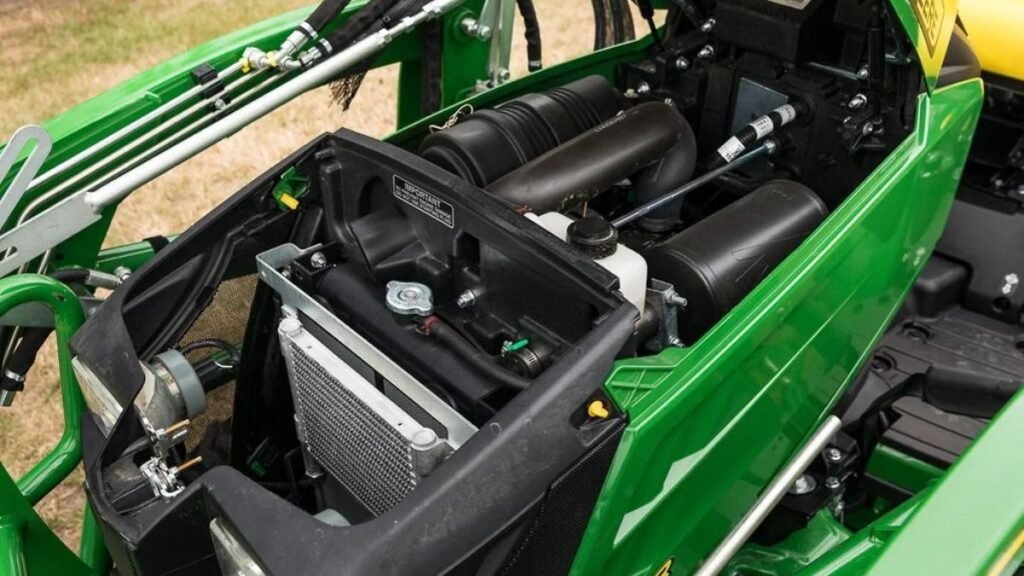
Both tractors use compact Yanmar three-cylinder diesel engines with displacement close to 1.27 liters. The John Deere 1025R uses the Yanmar 3TNV80F-NCJT, with a displacement of approximately 1.267 liters, while the New Holland Workmaster 25S uses the Yanmar 3TNV80F, with a published displacement of approximately 1.26 liters. Both engines are naturally aspirated and designed to meet the applicable Final Tier 4 emissions requirements, with New Holland identifying its emissions level as T4B Final.
The small difference in displacement helps explain why the two tractors occupy such a similar performance category. These engines are designed to provide useful power for compact equipment rather than deliver the characteristics of a much larger agricultural diesel. Their three-cylinder configurations also make them suitable for the limited engine compartments and overall dimensions of subcompact tractors.
John Deere’s published specifications list 24 gross horsepower under the SAE J1995 standard for the 1025R, with a rated engine speed of 3,200 rpm. New Holland lists 24.7 gross horsepower at 3,000 rpm. Although the New Holland figure is higher, the difference is not large enough to suggest that the Workmaster 25S will automatically outperform the Deere during every operation.
The distinction between gross engine horsepower and usable implement power is particularly important here. Gross horsepower describes the engine’s rated output, whereas PTO horsepower identifies the power available to operate equipment through the power take-off shaft. Transmission losses and the demands of the tractor’s operating systems influence how much engine power reaches the implement.
John Deere also publishes an engine torque figure of 39.2 lb-ft at rated engine speed. This is useful technical information, but it should not be described as peak torque because the manufacturer identifies the figure at rated speed. New Holland’s American product page does not provide a directly comparable torque figure, so there is no sound basis for declaring one engine superior in low-speed pulling performance using torque alone.
For ordinary property work, the horsepower difference is unlikely to be the deciding factor. Both engines have sufficient output for compatible mower decks, front loaders, small rotary cutters, tillers, and other equipment designed for this tractor class. The more meaningful differences appear when the operator connects an implement that places a sustained demand on the engine.
John Deere’s official 1025R specifications provide further details about its Yanmar engine and drivetrain. Readers interested in the Deere’s individual capabilities can also explore our detailed John Deere 1025R review, which examines the tractor’s engine, equipment compatibility, and practical applications.
Hydrostatic Transmission, Four-Wheel Drive, and Traction
The transmission systems are among the most similar parts of these two tractors. Both use a two-range hydrostatic transmission, with separate foot pedals controlling forward and reverse movement. John Deere calls its arrangement Twin Touch, while New Holland uses a dual-pedal configuration that allows the operator to change direction without operating a conventional clutch or mechanical forward and reverse shuttle.
This design is especially useful during loader work. An operator frequently needs to approach a pile of soil, lower the bucket, collect material, reverse, and move toward a dumping area. A conventional transmission would require more frequent clutching and gear changes, while a hydrostatic system makes these repeated movements easier to manage. The operator can adjust ground speed continuously while keeping one hand available for the loader joystick.
The two available speed ranges serve different purposes. Low range is appropriate for heavier operations that require controlled movement, including loading, tilling, scraping, and operating certain snow-removal attachments. High range is better suited to transporting the tractor across a property and mowing when additional ground speed is useful.
Both tractors also provide four-wheel drive and a rear differential lock. These features improve traction when working on loose gravel, damp soil, uneven ground, or other surfaces where a single driven axle would struggle. Four-wheel drive helps distribute traction across the front and rear axles, while the differential lock reduces the possibility of losing forward movement when one rear wheel encounters a slippery surface.
Even with these similarities, traction is not determined by drivetrain configuration alone. Tire selection, inflation pressure, surface conditions, tractor weight, and rear ballast all influence how effectively the machine transfers power to the ground. A tractor equipped with a front loader can become less stable when carrying a heavy bucket without appropriate rear ballast, so operators must follow the manufacturer’s recommendations for the installed equipment.
For buyers who frequently change direction during landscaping and loader operations, both hydrostatic systems offer the convenience expected from modern subcompact tractors. The overall operating experience may depend more on pedal placement, steering feel, and the layout of the operator platform than on the basic transmission technology.
New Holland describes its Workmaster 25S hydrostatic transmission and four-wheel-drive system as part of an equipment package designed for straightforward operation on small properties.
PTO Output and Implement Compatibility
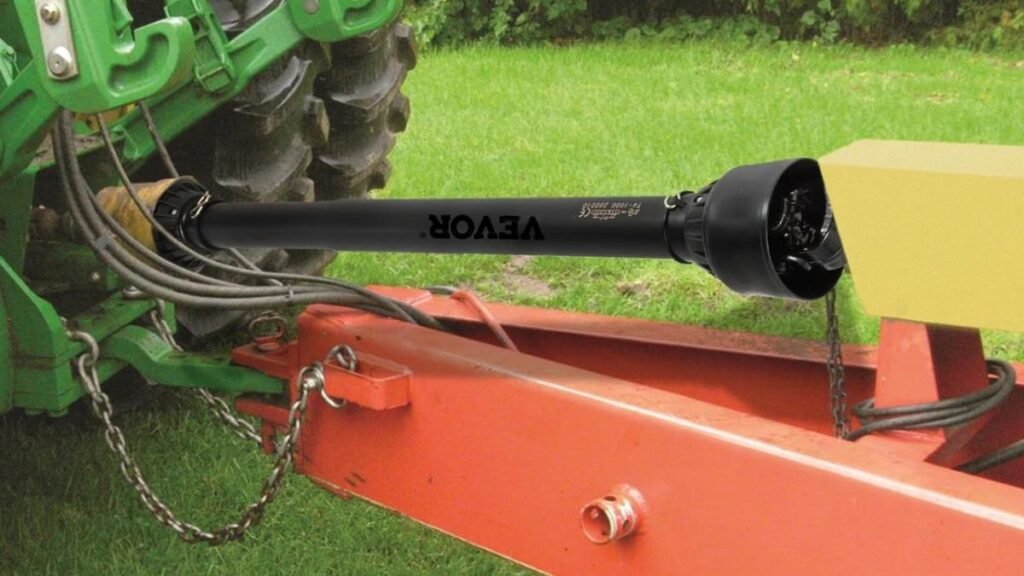
The power take-off system is one of the more meaningful differences between the two tractors, especially for owners who intend to operate rear-mounted or mid-mounted equipment.
John Deere lists 18 horsepower at the PTO for the 1025R, while New Holland publishes 17.2 PTO horsepower for the Workmaster 25S. This gives the Deere a modest advantage in available PTO power, even though the New Holland has the higher gross engine rating.
The rear PTO on both tractors operates at 540 rpm, making it suitable for compatible equipment such as small rotary cutters, rotary tillers, rear-mounted finish mowers, and other implements designed for that standard operating speed. This is an important specification because the implement must receive the correct rotational speed to operate as intended.
The mid PTO serves a different purpose. It provides the drive for a mower deck installed beneath the tractor rather than behind it. John Deere specifies a mid PTO speed of 2,100 rpm, while New Holland uses a 2,500 rpm mid PTO. These different speeds reflect the respective mower systems and their drive arrangements. A higher PTO rotational speed does not automatically mean greater available horsepower or improved cutting performance.
For a property owner maintaining a lawn, either tractor can provide useful mowing capability when paired with the appropriate deck. The difference becomes more relevant when the tractor regularly operates ground-engaging equipment or attachments that place a sustained load on the rear PTO.
A rotary tiller working through compacted soil, for example, may place a much greater demand on the tractor than a mower cutting regularly maintained grass. In that situation, available PTO horsepower, implement width, working depth, soil conditions, and operating speed all influence performance.
The Deere’s slightly higher published PTO output is worth considering, but the difference is not large enough to make the Workmaster unsuitable for the same general category of work. Buyers should concentrate on the horsepower requirements of the actual implements they intend to purchase rather than select a tractor based on a small difference in a specification sheet.
Hydraulic Systems and Available Implement Flow
Hydraulic performance deserves particular attention because it affects how efficiently a tractor operates its loader, backhoe, and compatible hydraulic attachments.
Both machines use open-center hydraulic systems, but their published implement-flow figures differ. John Deere lists approximately 3.5 gallons per minute of implement hydraulic flow for the 1025R, while New Holland specifies an implement pump capacity of approximately 4.6 gallons per minute for the Workmaster 25S. New Holland also lists a separate steering pump with a capacity of approximately 2.1 gallons per minute, giving the system a published combined output of approximately 6.7 gallons per minute.
The total pump output and the flow available to an attachment should not be treated as interchangeable measurements. A tractor can have a relatively high total hydraulic output while directing some of that capacity toward steering and other operating functions. For someone evaluating hydraulic equipment, the implement circuit is the more useful figure.
On the published numbers, the Workmaster 25S provides approximately 1.1 gallons per minute more implement flow than the Deere. That represents roughly 31 percent greater published implement flow, a meaningful difference for certain hydraulic applications. The actual benefit, however, depends on the attachment and the hydraulic components involved.
Hydraulic flow influences how quickly cylinders can move for a given cylinder size. More available flow can improve the operating speed of a hydraulic mechanism, including certain loader and backhoe movements. However, flow does not independently determine lifting capacity or breakout force. Those characteristics also depend on operating pressure, cylinder dimensions, linkage geometry, and the structural capabilities of the equipment.
This distinction matters because buyers sometimes assume that a tractor with more hydraulic flow must have a stronger loader. That conclusion is not necessarily correct. A loader’s lifting ability depends on how its hydraulic cylinders interact with the boom, bucket, and load position. A tractor with more implement flow may provide faster movement in some applications without automatically lifting more weight.
New Holland therefore has an interesting advantage for buyers who regularly operate compatible hydraulic equipment, but it should be considered alongside the loader’s published ratings, the available attachment connections, and the complete hydraulic configuration.
For a closer examination of the New Holland model, our New Holland Workmaster 25S review discusses its engine, hydraulic equipment, and practical attachment capabilities.

Front Loader Comparison: John Deere 120R vs. New Holland 100LC
The front loader is one of the most important attachments on either tractor, and it can determine how useful the machine becomes for landscaping, material handling, driveway maintenance, and general property work.
John Deere offers the 120R loader for the 1025R, with a conventional non-self-leveling configuration and an optional Mechanical Self-Leveling version. The loader uses the Quik-Park mounting arrangement, allowing the operator to remove or reinstall the attachment without treating the process as a complicated workshop operation.
John Deere’s published 1025R-specific compatibility information lists a lifting capacity of approximately 517 pounds for the standard 120R and 680 pounds for the 120R equipped with Mechanical Self-Leveling. Both configurations have a published maximum lift height of approximately 72 inches. These figures must be kept separate from ratings published for the 2025R or other Deere tractors. The company’s 120R loader information explains the loader’s compatibility, Quik-Park mounting system, and optional MSL arrangement.
The New Holland Workmaster 25S uses the 100LC front loader. Its published specifications list a lifting capacity of approximately 1,005 pounds at the bucket pivot pins when raised to maximum height. At a point 500 millimeters forward of the pivot pins, the published capacity is approximately 693 pounds. Maximum lift height is also approximately 72 inches.
These measurement locations are essential when comparing loader specifications. A load positioned directly at the bucket pivot pins creates a different mechanical demand from an identical load positioned farther forward. Moving the load away from the pivot increases leverage against the lifting mechanism and generally reduces the amount of weight the loader can safely handle.
The New Holland’s two figures illustrate this relationship clearly. Its published capacity falls from 1,005 pounds at the pivot pins to 693 pounds at the forward measuring point. John Deere’s 1025R-specific compatibility figures provide capacities for the standard and MSL versions, but do not establish the same measurement reference beside each figure. Consequently, the Deere’s 517-pound and 680-pound ratings should not be placed directly against New Holland’s 693-pound measurement as though the test locations were confirmed to be identical.
The mechanical self-leveling option is an important consideration for the Deere. Its linkage is designed to help maintain the bucket’s angle as the loader rises, reducing the amount of manual correction required from the operator. This can be useful when handling material that needs to remain relatively level during lifting, as well as when using compatible attachments such as pallet forks.
New Holland also publishes breakout-force ratings for the 100LC, including approximately 2,078 pounds at the bucket pivot pins and 1,426 pounds at a point 500 millimeters forward. These values describe different measuring positions and should not be treated as interchangeable. A directly comparable 1025R-specific Deere breakout rating using the same measurement basis is not established here, so declaring a winner through an unsupported numerical comparison would be misleading.
The type of material being moved is just as important as the loader rating. Dry mulch, loose soil, wet clay, gravel, and firewood all have different densities. A bucket that can be filled easily with relatively light material may exceed the practical operating limit when filled with wet soil or gravel.
Proper ballast is equally important. A loaded front bucket shifts weight toward the front axle and can reduce rear-wheel traction and steering control if the tractor is not configured correctly. Operators should use the rear ballast and operating practices specified by the manufacturer rather than assume that the loader’s rated lifting capacity can be used safely under every condition.
The Deere 120R MSL and New Holland 100LC therefore deserve consideration as complete loader systems. The New Holland publishes substantial loader figures, while Deere offers an optional self-leveling configuration and a convenient mounting arrangement. The final decision should be based on the precise loader rating, attachment package, operating requirements, and dealer-confirmed specifications for the exact tractor being purchased.
Three-Point Hitch Capacity and Rear Implement Work
The three-point hitch determines which rear-mounted implements can be carried and operated by a tractor. This system is particularly important for owners who intend to use box blades, rear blades, rotary cutters, landscape rakes, and smaller tillers.
John Deere classifies the 1025R as a Limited Category 1 tractor and lists approximately 758 pounds of lift capacity measured 24 inches behind the lift link ends. The New Holland Workmaster 25S uses a Category I three-point hitch with a published capacity of approximately 992 pounds at the ball ends and 728 pounds at a point 24 inches behind them.
The measurement point changes the meaning of the specification. A load positioned directly at the hitch’s ball ends places less leverage on the lifting system than an implement whose center of gravity extends farther behind the tractor. That is why New Holland’s 728-pound figure is more appropriate for comparison with Deere’s 758-pound rating than its higher ball-end figure.
Even then, the two manufacturers’ measurement references are not necessarily identical in every detail. The ratings are close enough to show that neither tractor has an overwhelming advantage in this area, but the small numerical difference should not be overstated.
The Limited Category 1 classification on the Deere also deserves attention. Buyers should confirm implement compatibility rather than assume that every conventional Category 1 attachment will fit without modification. The New Holland’s Category I arrangement offers a familiar standard, but compatibility still depends on implement dimensions, weight, geometry, and required PTO power.
A properly sized box blade can be useful for smoothing a gravel driveway, moving loose material, and maintaining a rural access road. A rear blade can handle certain grading and snow-removal applications, while a landscape rake can help collect surface debris and prepare areas for maintenance.
The important consideration is that the hitch must lift the implement safely while the tractor has sufficient power to operate it. A heavy attachment can exceed the practical capability of a subcompact tractor even when its mounting points physically fit. The implement’s total weight, rearward center of gravity, working width, and operating resistance all matter.
Backhoe Capability: John Deere 260B vs. New Holland 905GBL
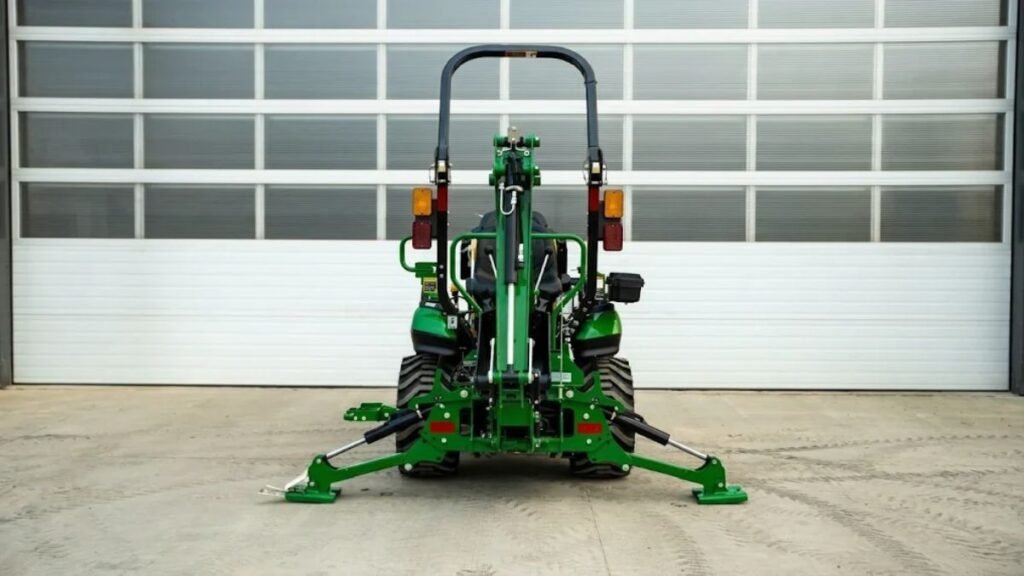
A backhoe can transform a subcompact tractor from a property maintenance machine into a useful tool for small excavation projects. Trenching for utilities, digging drainage channels, removing small amounts of soil, and preparing landscape features are among the jobs that make this attachment attractive.
John Deere offers the 260B backhoe for compatible 1025R configurations. Manufacturer specifications list a maximum digging depth of approximately 6 feet 2.5 inches for the 1025R application, along with a swing angle of 150 degrees. The attachment uses a subframe mounting arrangement and requires the appropriate front loader and Power Beyond hydraulic equipment.
Compatibility is particularly important because the mounting components can depend on the tractor’s production date and model year. John Deere’s 260B backhoe subframe mounting information identifies compatible tractor configurations and required mounting equipment. Buyers considering a used 1025R should confirm the exact mounting kit and serial-number compatibility before purchasing a backhoe.
New Holland offers the 905GBL backhoe for the Workmaster 25S, with a manufacturer-published maximum digging depth of 79.4 inches. Its published shipping weight is approximately 707 pounds, and its transport height is approximately 74.7 inches. New Holland’s official utility backhoe specifications provide the attachment details, while the Workmaster 25S product page identifies the 905GBL as a compatible equipment option.

The New Holland therefore has a nominal digging-depth advantage of approximately five inches over the 260B when using the published figures. That difference is worth considering for owners who expect to dig deeper trenches or excavation areas, but digging depth alone does not determine which backhoe is more capable.
Reach, bucket dimensions, swing geometry, hydraulic performance, soil conditions, and tractor stability all influence the amount of work an attachment can accomplish. A deeper maximum digging rating is useful, but it does not automatically mean faster excavation or better performance in every type of soil.
The most important ownership restriction concerns the operator station. New Holland specifies that backhoe digging is possible with the open-air ROPS version of the Workmaster 25S rather than the cab configuration. John Deere likewise specifies that its Mauser cab cannot be combined with the 260B backhoe. Buyers who consider excavation an important part of their workload should resolve this equipment choice before purchasing the tractor.
For anyone who prioritizes an enclosed working environment, this restriction can change the entire buying decision. The backhoe may be a useful attachment for occasional projects, but the cab may be more valuable for someone who spends long hours operating the tractor in cold or wet weather. The right configuration depends on which of those requirements has greater importance.
Mid-Mount Mowers, Snow Equipment, and Attachment Versatility
Mowing is one of the most common reasons buyers choose a subcompact tractor instead of a conventional lawn tractor. Both machines offer mid-mount mower options designed to make regular lawn maintenance more convenient.
John Deere’s 60D AutoConnect mower deck is available for the 1025R and provides a 60-inch cutting width. Its drive-over mounting arrangement allows the operator to install or remove the deck without the conventional process of working through multiple difficult attachment connections. The company’s 60D AutoConnect mower information describes the deck’s intended tractor compatibility and mounting system.
One particularly useful feature is its compatibility with rear three-point hitch equipment, backhoes, and front loaders. This allows the operator to keep certain additional attachments installed while mowing, rather than repeatedly removing equipment whenever the tractor changes jobs.
New Holland offers the 160GMS mid-mount mower for the Workmaster 25S, also with a 60-inch cutting width. Its published cutting-height range is approximately one to four inches. The New Holland 160GMS mower specifications describe a free-floating four-bar linkage designed to allow the deck to follow the ground contour, helping maintain a more consistent cut across uneven terrain.
The two systems therefore approach the same basic requirement through their respective attachment designs. John Deere emphasizes its AutoConnect arrangement, while New Holland provides a dedicated mower package that integrates with the Workmaster’s mid PTO and operator platform.
Snow removal is another useful application, especially for owners in areas that experience regular winter snowfall. Both tractor families offer compatible snow-removal equipment, although the correct attachment and mounting configuration should be confirmed for the specific tractor package.
The broader point is that attachment versatility should be evaluated over the entire year. A tractor that mows efficiently in summer, moves mulch and soil during landscaping projects, maintains a gravel driveway, and clears snow during winter can provide considerably more value than one purchased only for a single occasional task.
Buyers should compare the actual implements available for their chosen configuration, including their mounting requirements and the time needed to change between them. Compatibility is more important than simply counting the number of attachments shown in a manufacturer’s catalog.

Operator Platform, Cab Comfort, and Everyday Usability
The operator platform influences how comfortable and practical a tractor becomes during a long working day. Small differences in pedal position, access, seat design, and visibility can become significant when the operator repeatedly climbs on and off the machine.
John Deere equips the 1025R with a semi-flat operator platform, folding ROPS, power steering, and a seat designed with suspension and armrests. The company’s premium operator station emphasizes comfort and straightforward control placement, particularly for owners who use the tractor for a mixture of mowing and loader work.
New Holland takes a slightly different approach with its Clear-Thru platform. The flat floor is designed to make entry and exit easier by keeping the area around the operator’s feet relatively clear. Its dual-pedal transmission controls are positioned to make direction changes straightforward without requiring a conventional clutch or shuttle lever.
For a property owner performing several short jobs throughout the day, easy access is more than a cosmetic advantage. The operator may need to step off the tractor to connect a trailer, inspect an attachment, move an obstacle, or check the working area. A platform that makes these movements easier can improve the overall ownership experience.
Both manufacturers also offer cab configurations for buyers who need additional weather protection. Deere’s optional 1R cab provides a heated enclosure with two doors and additional protection from the elements. New Holland’s four-post cab uses large glass areas and two doors, with a heater, windshield wipers, an additional mirror, and front and rear lighting.
An enclosed cab can make winter mowing, snow removal, and other cold-weather tasks more comfortable. It also changes the tractor’s overall configuration and weight. The published Deere specifications, for example, list approximately 1,556 pounds for the open-station 1025R and approximately 1,996 pounds for the cab-equipped version.
For buyers who need to operate a backhoe, the cab question must be addressed before ordering. The compatibility restrictions associated with both machines mean that the open-air ROPS configuration is the appropriate direction for the backhoe packages discussed in this comparison.
Dimensions, Weight, and Fuel Capacity
The dimensions of a subcompact tractor help determine how easily it can move through narrow gates, work around buildings, enter storage spaces, and maneuver between landscaped areas.
John Deere publishes a wheelbase of approximately 57.1 inches for the 1025R. Its open-station base machine weight is approximately 1,556 pounds, while the cab configuration weighs approximately 1,996 pounds according to the published specifications. The fuel tank holds approximately 6.3 U.S. gallons.
The Workmaster 25S has a published fuel capacity of approximately 6.6 U.S. gallons. Its exact operating dimensions and weight depend on the equipment configuration, including the operator station, tires, loader, mower, and backhoe. Buyers who need precise overall dimensions or a complete equipped weight should obtain the figures for the specific package from a New Holland dealer rather than treat an open-station base figure as the weight of a fully equipped machine.
The heavier tractor is not automatically the better one. Additional mass can improve traction and help counterbalance a loaded bucket, but it can also increase ground pressure on lawns and finished surfaces. The best configuration is determined by the intended work, tire selection, approved ballast, and the equipment installed.
Fuel capacity is also close. The Deere’s 6.3-gallon tank and New Holland’s 6.6-gallon tank provide similar storage capacity. Neither figure alone establishes how long the tractor can operate between refueling stops.
Fuel consumption depends on engine load, operating speed, PTO equipment, terrain, hydraulic activity, and working conditions. Without comparable field tests conducted under identical conditions, it would be inappropriate to claim that either tractor is inherently more economical based only on its engine rating or fuel tank size.
Maintenance, Warranty, Dealer Support, and Ownership Considerations
Long-term ownership involves more than the specifications listed in a product brochure. Routine maintenance, access to replacement parts, dealer support, attachment costs, and the availability of service equipment all influence the overall ownership experience.
Both tractors require regular attention to engine oil, filters, fuel filtration, cooling systems, hydraulic components, and lubrication points. Loader pins, backhoe connections, and other moving equipment also require maintenance according to the manufacturer’s schedule. Owners should follow the correct operator’s manual for their specific model year and configuration rather than rely on generic maintenance intervals.
The front loader mounting arrangement can make a difference during everyday equipment changes. John Deere’s Quik-Park system is designed to simplify removal and reinstallation of the compatible loader, which can be useful for an owner who prefers to mow without the front attachment installed. New Holland also offers equipment packages designed around the 100LC loader, although the procedure and compatibility requirements should be checked for the installed package.
Warranty coverage is another consideration. New Holland promotes its Boomer Guard Limited Warranty for the Workmaster 25S, describing two years of bumper-to-bumper protection followed by an additional four years of powertrain protection. This is a substantial advertised coverage period, but it should not be interpreted as six years of identical comprehensive coverage. The extended period applies to powertrain protection under the applicable written warranty terms, and buyers should check the exclusions, operating conditions, and coverage details supplied with their specific tractor.
John Deere’s warranty terms should be considered separately using the written documents applicable to the exact tractor and purchase date. A fair ownership comparison should not assume that every attachment or component receives identical coverage from either manufacturer.
Dealer support can become especially important for a machine that relies on proprietary mounting kits, hydraulic connections, and brand-specific attachments. The distance to an authorized dealer, parts availability, service scheduling, and familiarity with the tractor family can influence the owner’s experience over several years.
Buyers should also compare complete equipment packages rather than base tractor prices. A tractor equipped with a loader, mower, backhoe, hydraulic options, and a cab can have a very different purchase cost from a basic open-station machine. Getting quotations for equivalent configurations provides a much more useful comparison than looking at two advertised starting prices.
Which Tractor Makes More Sense for Your Work?
For owners whose primary responsibilities involve mowing, maintaining landscaped areas, moving occasional loads of mulch, and performing general property maintenance, the John Deere 1025R makes a convincing case. Its 60D AutoConnect mower, convenient loader mounting arrangement, and optional Mechanical Self-Leveling configuration provide a combination of features suited to owners who frequently change between different types of work.
The Workmaster 25S deserves particular attention from buyers who expect to use hydraulic attachments regularly. Its published implement flow of approximately 4.6 gallons per minute gives it an advantage on paper over the Deere’s 3.5 gallons per minute. The 100LC loader also has substantial published lifting and breakout figures, although the measurement positions must be understood before comparing its performance directly with the John Deere loader.
For owners who plan to install a backhoe, New Holland’s published 79.4-inch digging depth is an attractive specification. The Deere 260B has a slightly shallower published digging depth of approximately 74.5 inches, but its 150-degree swing arrangement is another part of the equation. Buyers should consider the complete backhoe system rather than selecting one solely because it reaches a few inches deeper.
Driveway maintenance is an application in which both tractors can perform useful work when paired with an appropriately sized rear blade or box blade. Their three-point hitch ratings are close, and the final result depends on choosing an implement that suits the tractor’s lifting capacity, available PTO power where applicable, and hydraulic equipment.
Moving gravel, soil, firewood, and landscaping material puts more emphasis on front-loader capability and stability. The operator must consider material density, bucket position, rear ballast, and the loader’s measurement specifications. Neither tractor should be expected to handle every bucket load simply because its loader can lift the empty attachment.
There is also a practical limit to this entire category. Subcompact tractors are designed for smaller properties, landscaping, mowing, light agricultural activities, and moderate material handling. They are not intended to replace larger compact utility tractors for regular heavy tillage, substantial ground-engaging work, or large implements that demand more PTO horsepower and lifting capacity.
Owners who anticipate heavier workloads should also read our broader subcompact versus compact tractor comparison, which explains where the differences between the two tractor categories become important and when stepping up to a larger machine makes more sense.
Conclusion
The John Deere 1025R and New Holland Workmaster 25S demonstrate why choosing a tractor by engine horsepower alone can lead to an incomplete purchasing decision. Both use closely matched three-cylinder Yanmar diesel engines, both offer two-range hydrostatic transmissions and four-wheel drive, and both operate in the same general class of subcompact equipment. Yet the way each machine delivers power to its PTO, hydraulic circuits, front loader, and rear hitch creates meaningful differences for everyday work.
The John Deere’s slightly higher published PTO output, 60D AutoConnect mower system, and optional Mechanical Self-Leveling loader configuration make it an appealing choice for owners who prioritize mowing, landscaping, and convenient attachment changes. Its 260B backhoe also provides useful excavation capability when the tractor is ordered with the correct open-station configuration and mounting equipment.
The New Holland Workmaster 25S counters with higher published implement hydraulic flow, a capable 100LC front loader, and a 905GBL backhoe with a greater published digging depth. Its Clear-Thru operator platform and available cab also give buyers another combination of access and comfort to consider, although the backhoe requires the ROPS configuration rather than the enclosed cab.
Neither tractor wins every category, and the most suitable choice depends on the equipment the owner intends to operate most frequently. Someone who spends much of the year mowing a property and performing lighter maintenance may place greater value on the Deere’s mower and attachment systems. Someone who regularly moves material, uses hydraulic equipment, or wants a deeper-reaching backhoe may find the Workmaster 25S more attractive.
The best tractor is not necessarily the one with the largest number on its specification sheet. It is the machine whose engine, hydraulic system, loader, hitch, and attachments are properly matched to the work waiting on the property. When those components are considered together, the differences between the John Deere 1025R and New Holland Workmaster 25S become much clearer, and the purchasing decision becomes far more useful than a simple horsepower comparison.