Volvo VNL vs. International LT Which Long Haul Truck Is Right for Your Operation?
A detailed comparison of two North American highway tractors, examining powertrain technology, fuel efficiency, sleeper comfort, safety, and fleet performance.

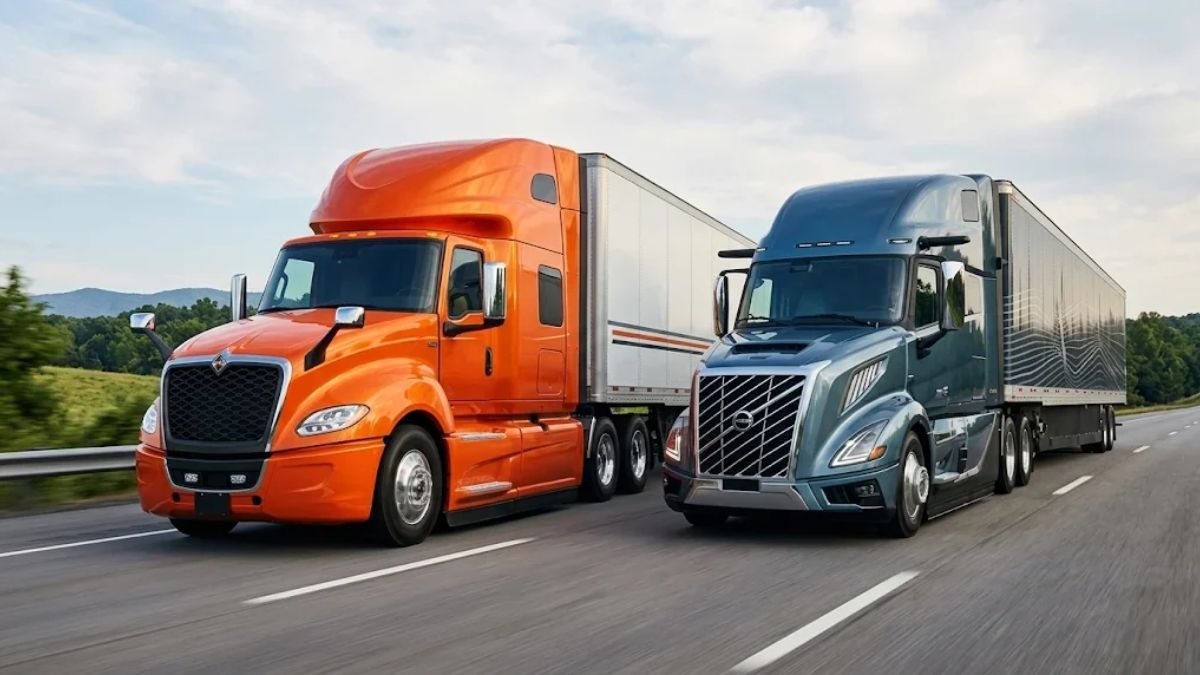
The Volvo VNL vs International LT comparison puts two established Class 8 highway tractors against each other in one of the most important segments of the North American trucking industry. Both trucks are designed to move freight over long distances, support drivers who spend extended periods on the road, and give fleets the performance and efficiency needed to remain competitive. However, Volvo and International approach those goals through different powertrain strategies, cab designs, aerodynamic developments, and onboard technologies.
The Volvo VNL centers on the relationship between the Volvo D13 engine, the I Shift automated manual transmission, and the company’s aerodynamic and connected vehicle systems. International gives its LT Series a different kind of flexibility by offering the S13 Integrated Powertrain alongside the Cummins X15. That choice allows an operator to select an integrated International engine and transmission package or a Cummins powered configuration with a different performance profile.
For a fleet manager, the decision affects more than the truck’s advertised horsepower. Fuel consumption, engine response, transmission behavior, sleeper comfort, service support, and the amount of time a tractor remains available for work all influence its value. An owner operator may place greater importance on the sleeper environment and personal driving preferences, while a large fleet may focus on consistency across vehicles, maintenance arrangements, and operating costs.
This comparison examines the Volvo VNL and International LT as long haul highway tractors, with particular attention to their sleeper configurations and powertrain choices. It also distinguishes between current published specifications and the newer EPA 2027 powertrain updates, since equipment and ratings can change with production year and configuration. Readers who want the complete technical background can also explore our individual Volvo VNL review and International LT Series review.
Our Take on the Volvo VNL vs International LT
The Volvo VNL and International LT are closely matched in their intended market, but their strongest selling points are not the same. Volvo makes a compelling case through powertrain integration, aerodynamic development, driver assistance technology, and a connected vehicle environment. International counters with an unusually broad engine choice for a single highway tractor platform, combining its own S13 Integrated Powertrain with the Cummins X15.
The VNL is particularly interesting for operators who want a truck developed around Volvo’s D13 engine and I Shift transmission. The company’s engineering approach places considerable emphasis on how the engine, gearbox, aerodynamics, and electronic systems work together during sustained highway operation. The result is a platform designed to reduce unnecessary fuel consumption while giving drivers a consistent driving environment.
The International LT stands out because buyers are not restricted to one engine manufacturer. The S13 and T14 combination provides a coordinated powertrain designed by International, while the Cummins X15 offers a larger displacement alternative with higher available horsepower and torque ratings. This flexibility can matter to fleets with established Cummins maintenance experience or operators who prefer the performance characteristics of the X15.
There is no automatic winner based on the largest horsepower figure or the most attractive manufacturer fuel economy claim. The engines need to be considered in their correct production year and configuration, and the fuel consumption claims use different comparison methods. The important distinction is how each complete truck is equipped for the work it will perform.
Volvo VNL and International LT: Design and Long Haul Purpose
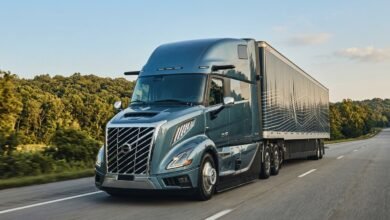
The Volvo VNL is designed primarily for North American highway transportation. Its latest generation introduced extensive changes to the cab, aerodynamic profile, powertrain, driver environment, safety systems, and connectivity features. Volvo describes approximately 90 percent of the previous platform as redesigned, reflecting a substantial development effort rather than a minor exterior update.
The VNL’s curved windshield, angular cab profile, hood design, side fairings, and chassis airflow management are intended to reduce aerodynamic drag. These details matter because a tractor pulling a loaded trailer at highway speed spends a considerable amount of engine power overcoming air resistance. Even relatively small improvements can become meaningful over the hundreds of thousands of miles accumulated by a commercial truck.
International approaches the same challenge with the LT Series. Its aerodynamic package includes refinements to the hood, grille, mirrors, chassis skirts, wheel openings, and tractor trailer gap. The company has also developed details intended to guide air more smoothly around the lower chassis and between the tractor and trailer. These improvements are aimed at the same basic commercial objective as Volvo’s work: reducing the energy required to keep a loaded combination moving.
The LT is available in several configurations, including versions intended for local, regional, and specialized applications. Its sleeper models are particularly relevant to this comparison because they serve drivers who regularly spend nights away from home. International’s own description positions the LT as a truck built for long haul transportation while retaining enough flexibility for other freight operations.
The two designs therefore share the same broad purpose, but neither should be judged by appearance alone. A tractor’s aerodynamic performance depends on the selected cab, roof height, chassis equipment, trailer design, and operating conditions. The most useful comparison is between two trucks configured for similar routes and trailer types.
Buyers can examine the manufacturer’s complete configurations through the official Volvo VNL product page and International LT Series product page.
Volvo D13 vs International S13 and Cummins X15 Engines
Engine selection is one of the biggest differences between the Volvo VNL and International LT. Volvo builds the VNL around its D13 diesel engine family, whereas International offers two distinct choices. The S13 is the manufacturer’s own integrated engine platform, while the Cummins X15 provides an alternative with different displacement and output characteristics.
Volvo D13 Engine and the Latest EPA 2027 Powertrain
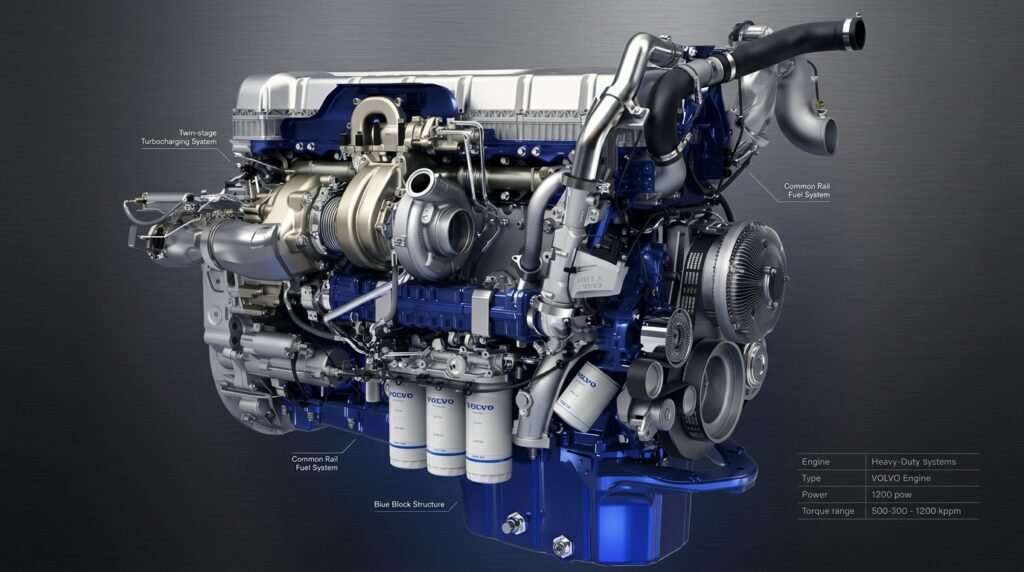
The Volvo D13 is a 13 liter inline six cylinder diesel engine developed for heavy duty commercial applications. In the current VNL product information, Volvo lists horsepower ratings from 405 to 500 and peak torque figures from 1,650 to 1,950 lb ft, depending on the selected powertrain package.
The latest EPA 2027 D13 represents an important development beyond the earlier engine configurations. Volvo’s published information for the newer powertrain lists ratings reaching 540 horsepower and 1,950 lb ft of torque. Engine braking capability also reaches as much as 630 braking horsepower, providing additional retarding power for loaded trucks operating on steep descents.
These figures should not be treated as standard equipment on every VNL. The general VNL product page continues to display its 405 to 500 horsepower range, while Volvo’s separate EPA 2027 powertrain information describes the newer engine family and its expanded ratings. Buyers need to verify the exact production year, engine specification, and availability on the truck they intend to purchase.
The D13 is designed to work closely with Volvo’s I Shift automated manual transmission. This relationship is important because the engine’s torque delivery and the transmission’s shift strategy influence how the tractor accelerates, climbs grades, and maintains cruising speed. The objective is to keep the engine operating in a productive range without requiring constant intervention from the driver.
Volvo also uses Turbo Compound technology on the D13TC configuration introduced with the redesigned VNL. This system captures some of the exhaust energy that would otherwise leave through the exhaust and returns it mechanically to the engine’s crankshaft. It is an approach intended to improve efficiency during sustained operation, particularly when the truck is working under load.
The newer EPA 2027 D13 introduces updated combustion and aftertreatment technology to meet the next emissions requirements. Volvo reports that the engine reduces nitrogen oxide emissions by more than 80 percent compared with the previous standards. It is also approved for renewable diesel up to R100 and biodiesel blends up to B20, giving fleets additional fuel options where those fuels are available.
More details about the engine ratings, emissions technology, and transmission combinations are available through Volvo’s official EPA 2027 powertrain information.
International S13 Integrated Powertrain
International takes a different approach with the S13. Rather than treating the engine, transmission, and exhaust aftertreatment as separate systems, the company developed them as an integrated package. The S13 engine, T14 transmission, and dual stage aftertreatment system are designed to work together, with the stated goal of reducing complexity while improving operating efficiency and serviceability.
The S13 is a 12.74 liter inline six cylinder diesel with a published maximum output of 515 horsepower and 1,850 lb ft of torque in the LT application. Its technical design includes a high pressure common rail fuel system, fixed geometry turbocharger, and dual overhead camshaft arrangement. The engine is also designed to deliver strong torque at low engine speeds, which helps a loaded tractor move away from a stop and maintain useful pulling power without relying exclusively on higher engine revolutions.
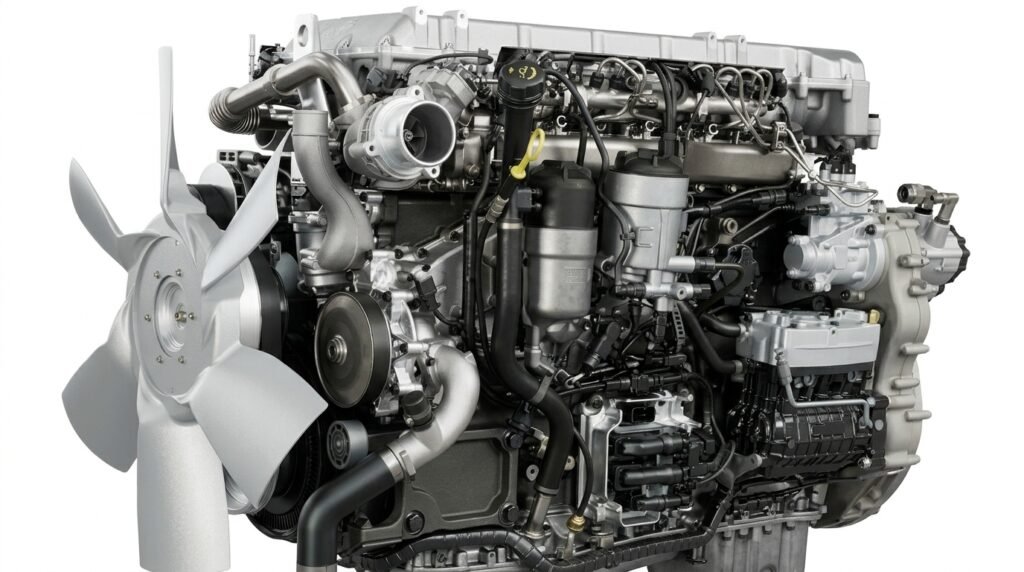
One of the S13’s distinguishing features is its aftertreatment design. International developed the system around selective catalytic reduction and dual stage DEF dosing. The arrangement is designed to control emissions without the conventional cooled EGR system used in many diesel engines. The company also states that the S13 configuration does not require active DPF regeneration during normal operation, an engineering feature intended to reduce interruptions and simplify operation.
The 2027 S13 retains the core integrated design while introducing changes for the newer emissions requirements. International says more than 90 percent of the previous powertrain hardware carries over, helping maintain familiarity in service tools, parts, and technician training. The new engine configuration adds variable valve timing, variable valve braking, a closed crankcase breather, and an oil centrifuge.
The electrical architecture also changes. The 2027 powertrain uses 24 volt equipment for the alternator, starter, and engine controllers while retaining the 12 volt cab and chassis electrical system for accessories and body functions. International says this arrangement is intended to improve cold starting and component durability while reducing electrical system complexity.
The latest S13 documentation also lists a 370 horsepower rating for certain LT and RH configurations, while the general LT product page currently summarizes the engine range from 400 to 515 horsepower. The detailed specification for the truck being ordered should therefore take priority over a broad model summary.
International has also approved the S13 for R100 renewable diesel without requiring hardware changes. This gives the LT an alternative fuel capability that may be useful to fleets seeking to reduce the well to wheel carbon footprint of their operations.
The manufacturer’s latest S13 Integrated Powertrain page explains the system, while its EPA 2027 announcement describes the changes introduced for the newer emissions standard.
Cummins X15: The Alternative International LT Engine
The Cummins X15 gives the International LT a second engine personality. It is a 14.9 liter inline six cylinder diesel, and International lists LT configurations with ratings ranging from 400 to 565 horsepower and from 1,450 to 2,050 lb ft of torque.
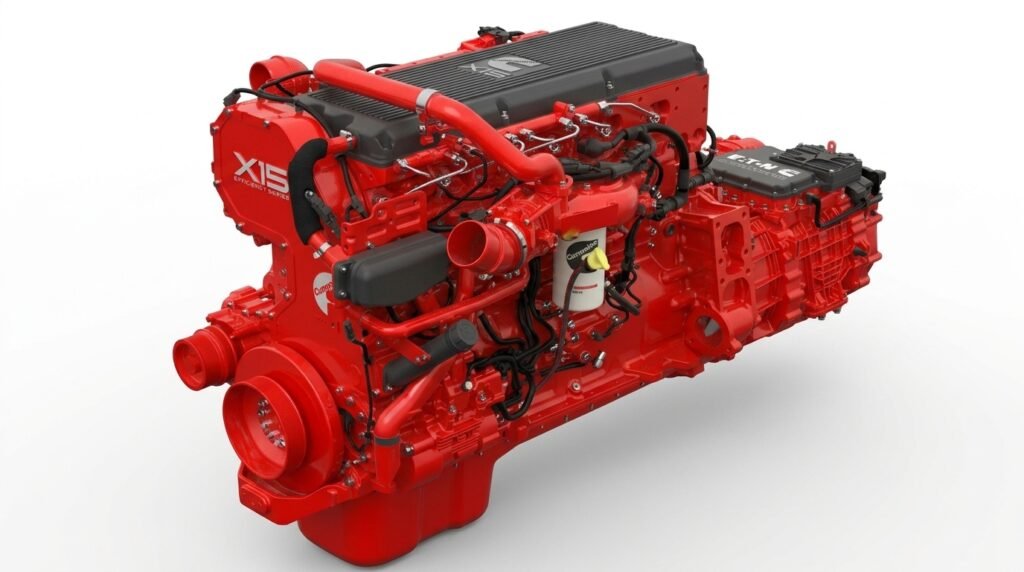
That upper output range gives the X15 a clear advantage over the S13 when the buyer specifically needs the highest published horsepower or torque available in the LT platform. It also provides an option for fleets that already operate Cummins powered trucks and have established relationships with technicians who know the engine family.
The X15 uses variable geometry turbocharging, allowing the turbocharger to adjust airflow across different engine speeds. Its fuel system and electronic controls are designed to support combustion efficiency, acceleration, and engine response. The engine also uses a Jacobs engine brake to provide additional retarding capability during downhill operation.
The Cummins X15 is offered in different versions, including Efficiency and Performance configurations. The Performance Series is listed with output reaching 565 horsepower and 2,050 lb ft of torque, while the Efficiency Series has a different rating range and is designed around fuel economy priorities. The distinction matters because the highest performance rating should not be assumed to represent every X15 equipped LT.
The X15 is also heavier than the published S13 engine specification. That difference can influence the operating weight of the tractor and the remaining legal payload capacity, particularly in applications where freight frequently reaches weight limits rather than trailer volume limits.
International’s official Cummins X15 information provides the engine family details and its different performance configurations.
Volvo I Shift vs International T14 Transmission
The transmission has a direct influence on how a long haul tractor uses engine power. It affects the ability to start with a heavy trailer, maintain speed on grades, cruise at an efficient engine speed, and maneuver in congested loading areas. The Volvo VNL and International LT both offer automated manual technology, but their systems are developed around different powertrain strategies.
Volvo equips the VNL with its I Shift automated manual transmission. Although it uses conventional mechanical gears and a clutch, electronic controls manage gear selection and clutch operation. The driver does not need to use a traditional clutch pedal, and the system can use engine information and vehicle operating data to make its shift decisions.
The latest I Shift information includes 12, 13, and 14 speed configurations, with direct drive and overdrive choices depending on the specification. Volvo’s predictive systems use information about road grade, vehicle weight, speed, and torque demand to help select the appropriate gear. The I See system also uses topographical information to anticipate changes in the road ahead.
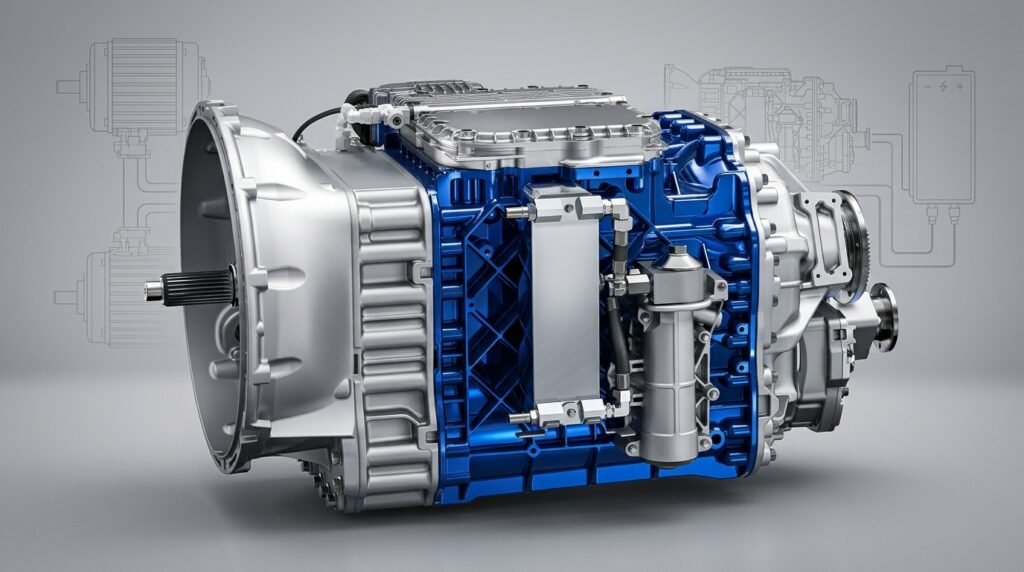
Volvo reports that its updated transmission shifts up to 30 percent faster than the previous generation. That figure is a manufacturer comparison, but the underlying objective is clear. Faster and more intelligent shifting can reduce unnecessary gear changes and help the engine remain within an efficient operating range.
The International LT uses the T14 when ordered with the S13 Integrated Powertrain. The T14 is a fully automated 14 speed manual transmission that includes two crawler gears. Its thirteenth gear is direct drive, while fourteenth gear provides overdrive for highway cruising. The lower ratios offer substantial reduction for loaded starts and low speed operation.
The T14 has an electronically controlled clutch actuator and a design that includes both a single countershaft arrangement and planetary gearing. Those features work together to create a compact transmission package. The electronically controlled clutch does not rely on drawing air from the truck’s pneumatic system during complicated maneuvers, which International identifies as an advantage when reversing a trailer into a tight loading area.
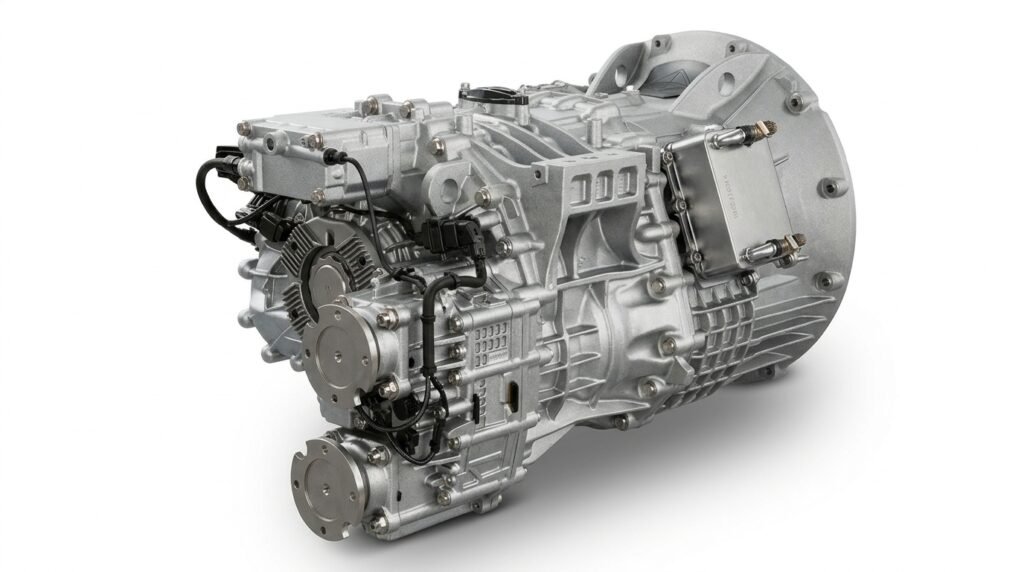
The 2027 T14 also receives an updated 24 volt transmission control module. International says the system uses learned driver behavior, GPS information, and topographical data to make predictive shifting decisions. This is especially relevant to highway work, where anticipating a climb or descent can be more useful than reacting after the tractor reaches the change in terrain.
The main difference is not simply that one transmission has 12 speeds and another has 14. The I Shift is part of Volvo’s broader integrated powertrain system, while the T14 is specifically developed to operate with the S13. Buyers selecting the LT with the Cummins X15 must consider the transmission pairing available for that engine rather than assuming the T14 is included with every LT.
Volvo VNL vs International LT Fuel Efficiency
Fuel consumption is one of the most important costs in long haul trucking. A tractor that covers high annual mileage can turn a modest difference in fuel economy into a substantial financial result over the life of the vehicle. This is why both manufacturers have invested heavily in aerodynamic improvements, engine calibration, and predictive transmission technology.
Volvo states that the redesigned VNL can deliver up to a 10 percent improvement in fuel efficiency compared with the previous VNL generation. The improvement is attributed to a combination of aerodynamic development and powertrain changes. The company’s exterior work focuses on airflow around the windshield, hood, cab sides, wheel openings, and chassis, while the engine and I Shift systems are calibrated to work together during highway operation.
International makes a separate claim for the LT equipped with the S13 Integrated Powertrain. The company reports that its tested configuration achieved at least a 5 percent fuel economy advantage over specified competing aerodynamic highway tractors using the TMC Type IV testing methodology. The comparison included a Freightliner Cascadia AeroX with the DD15, a Kenworth T680 with the MX13, and a Volvo VNL760 with the D13.
International also discloses that the tested LT with the S13 used up to 3.5 percent more DEF per gallon of fuel than the comparable models in that test. This is an important part of the operating cost picture because diesel fuel is not the only consumable associated with modern emissions systems.
These figures should not be compared as though Volvo and International tested the trucks against each other under the same conditions. Volvo’s 10 percent figure compares the redesigned VNL with its predecessor. International’s 5 percent figure comes from a separate controlled comparison involving selected competing models. The results describe different baselines and do not establish which truck will always deliver better real world fuel economy.
Aerodynamics is only part of the result. A tractor pulling a dry van across flat interstate routes will operate differently from one hauling a refrigerated trailer through mountain terrain. Vehicle speed, gross weight, trailer design, tire selection, idle time, weather, and driver behavior also influence fuel consumption.
For that reason, a fleet comparing the two trucks should seek operating data from similar routes and loads. A properly managed evaluation that uses comparable trailers, consistent speeds, and accurate fuel records will provide more useful information than relying exclusively on a manufacturer’s headline percentage.
The official Volvo VNL product information and International LT Series specifications provide the manufacturers’ published descriptions of their efficiency technologies and claims.
Sleeper Cab Comfort and Driver Environment
Sleeper design has a direct effect on the working life of a long haul driver. A truck cab becomes a place to sleep, store belongings, prepare meals, relax between shifts, and manage personal routines while traveling. The quality of the bunk, available floor space, storage, lighting, insulation, and climate control can influence how comfortable a driver feels after several consecutive days away from home.
Volvo offers six main cab configurations in the VNL family. The range starts with the VNL 300 Day Cab and continues through the VNL 440 with a 42 inch mid roof sleeper, VNL 640 with a 62 inch mid roof sleeper, and VNL 660 with a 62 inch full height sleeper. At the larger end, the VNL 840 offers a 74 inch mid roof sleeper, while the VNL 860 provides a 74 inch full height sleeper.
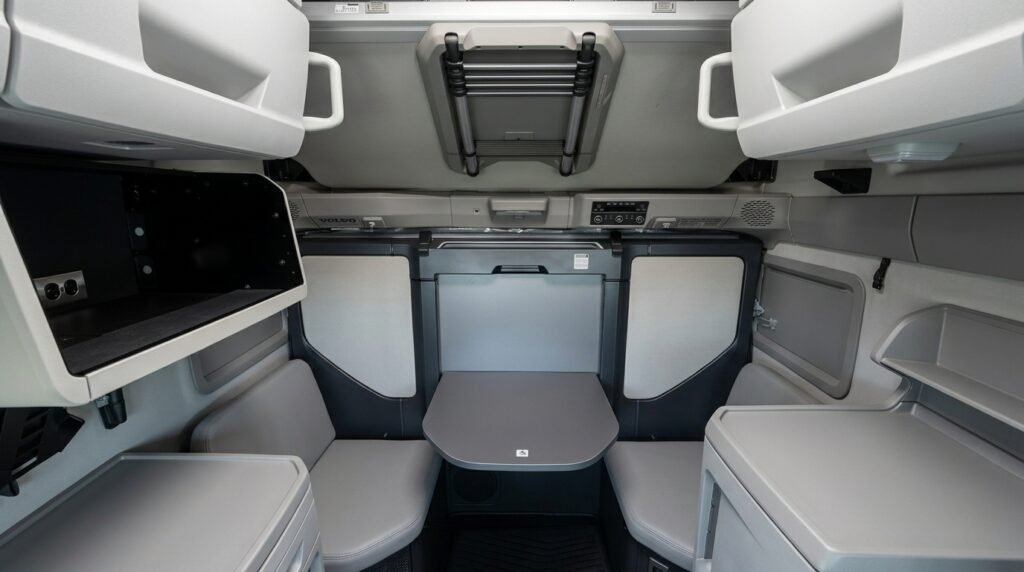
For extended cross country work, the VNL 840 and VNL 860 deserve particular attention. Both provide more living space than the smaller configurations, although the roof design and interior arrangement are different. The VNL 860 is Volvo’s flagship sleeper, while the VNL 840 provides a larger sleeper with a mid roof profile that may suit certain freight and height requirements.
The redesigned driving environment includes a digital driver information display, a separate infotainment screen, steering wheel controls, and a column mounted gear selector. The placement of the transmission controls frees space in the center of the cab and makes the driving area easier to move through. Volvo has also developed additional storage and living space features for drivers who spend significant time in the truck.
International offers the LT with a Day Cab and four main sleeper configurations. These include the 56 inch Low Roof Sleeper, 56 inch Hi Rise Sleeper, 73 inch Hi Rise Sleeper, and 73 inch Sky Rise Sleeper. The larger 73 inch versions are particularly relevant to long haul drivers and owner operators who spend extended periods away from home.
The LT also offers three interior trim levels: Classic, Diamond, and Diamond Elite. Classic focuses on practical durability, while the upper trims add more premium appearance and finishing details. The choice of trim should be considered alongside the cab configuration, because interior finish alone does not determine how much usable living space the sleeper provides.
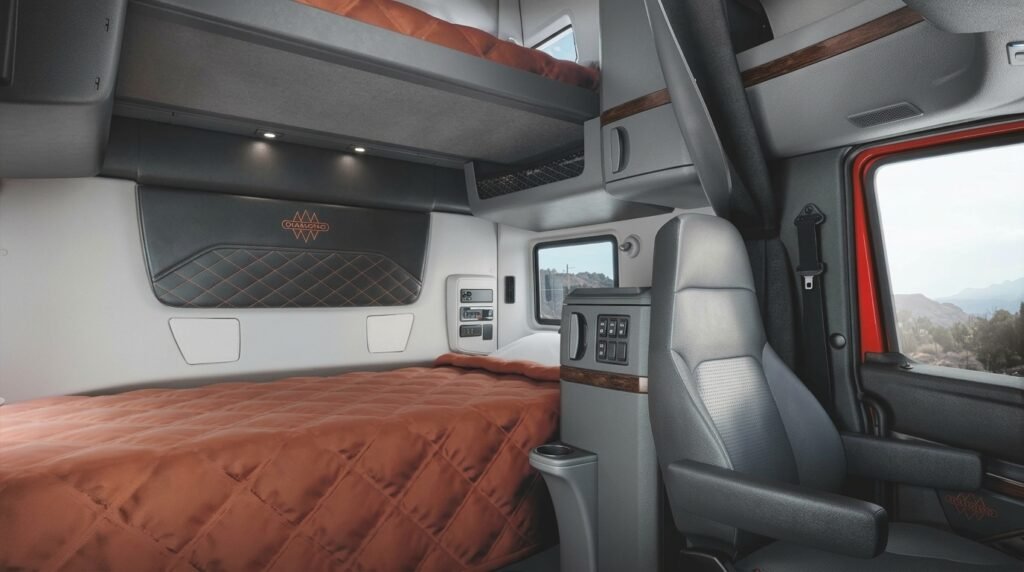
A direct comparison between a 74 inch Volvo sleeper and a 73 inch International sleeper should not be based on the roof measurement alone. The shape of the sleeper, bunk arrangement, available storage, workstation design, and access to climate controls all influence the usable environment. A driver who plans to live in the truck for weeks may prefer a different layout from a driver who spends only occasional nights away from home.
The VNL and LT both offer genuine long haul sleeper choices. The most useful way to compare them is to sit in the actual configurations being considered, examine the storage and bunk arrangements, and evaluate how easily the driver can move between the working and resting areas.
Chassis, Axle Configurations, and Highway Applications
The chassis configuration determines how the tractor carries its equipment and distributes weight across its axles. It also affects traction, stability, wheelbase, fifth wheel placement, and the type of trailer a fleet can operate efficiently. For long haul transportation, the objective is to select a combination that suits the freight without adding unnecessary weight or compromising handling.
International lists 4×2, 6×2, and 6×4 drive configurations for the LT. A 4×2 tractor uses one driven rear axle and is often selected for highway operations where weight and simplicity are priorities. A 6×2 adds a non driven rear axle that can help distribute weight while avoiding the additional driven axle components found in a 6×4. The 6×4 configuration drives both rear axles and can provide more traction in demanding conditions.
The LT uses a heat treated alloy steel frame with a published strength rating of 120,000 PSI. International offers multiple axle and suspension choices, including tandem rear axle configurations rated up to 46,000 pounds in specified arrangements. These numbers describe component ratings, not the amount of freight a particular tractor can legally carry.
Volvo also offers different axle and suspension arrangements across the VNL range. The choice needs to be matched to the truck’s engine, transmission, wheelbase, fuel tank arrangement, fifth wheel, and trailer. A fleet operating mostly on level highways may prioritize weight savings and fuel efficiency, while a carrier regularly encountering steep grades or difficult weather may place greater importance on traction.
The legal weight limit is another important consideration. On the United States Interstate system, a standard five axle tractor trailer combination is generally limited to 80,000 pounds gross combination weight, subject to axle restrictions and applicable exceptions. The actual amount of cargo that can be carried depends on the weight of the tractor, trailer, fuel, equipment, and the distribution of the load.
Neither the VNL nor the LT has one universal payload figure that applies to every configuration. A lightweight sleeper tractor with a particular axle layout will have a different operating weight from a fully equipped truck with larger tanks and additional equipment. Buyers should therefore evaluate actual scale weights and the specification of the vehicle being purchased.
Safety Technology in the Volvo VNL and International LT
Safety technology is an important part of the modern highway tractor. Drivers face changing traffic, long working hours, poor weather, road construction, and situations in which a loaded truck needs a considerable distance to stop. Driver assistance systems can provide additional information and support, but they cannot replace professional judgment or safe driving practices.
Volvo equips the VNL with its Active Safety Platform, which includes several driver assistance technologies. The system includes adaptive cruise control with stop and go capability, forward collision avoidance, pedestrian detection, blind spot detection, road sign recognition, and Volvo Dynamic Steering. Depending on the selected package, additional functions such as lane keeping and lane centering are available.
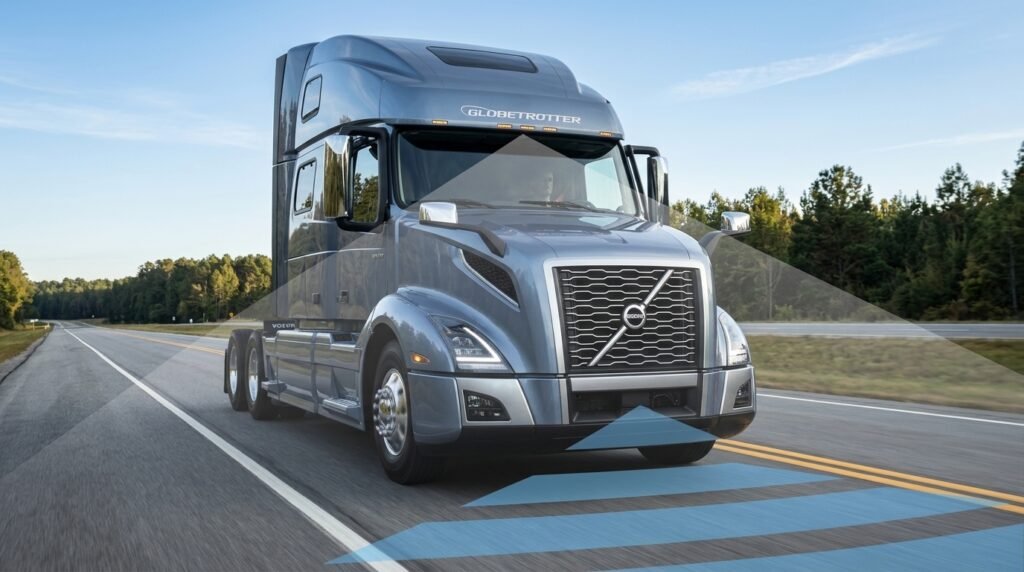
The VNL also includes E Call, which is designed to send an automated emergency call and location information following certain rollover events or airbag deployments. Volvo uses a high strength steel cab structure and passive protection features intended to improve occupant protection during a serious collision.
Another important development is the integrated side curtain airbag. Volvo announced that side curtain airbags became standard equipment on every new VNL and VNR built for the North American market. This is a meaningful addition to the VNL safety package, although anyone buying an older used truck should confirm the equipment fitted to that particular vehicle.
International equips the LT with Bendix Fusion collision mitigation technology. The system integrates functions such as adaptive cruise control, lane departure warning, overspeed alerts, and stationary vehicle braking. These features are designed to help the driver recognize hazards and respond to certain dangerous situations before they develop into more serious incidents.
International also offers additional safety equipment depending on configuration. Buyers should confirm the presence of individual functions on the build sheet rather than assuming that every LT has the same sensors, cameras, or assistance features. The same principle applies to the different Volvo safety packages.
The comparison is therefore about the specific technology installed on each tractor rather than the number of features listed in a brochure. A fleet should examine the available safety packages, train drivers to understand their limitations, and ensure that the selected equipment matches its operating environment.
More information is available through Volvo’s VNL safety system page and International’s LT Series product information.
Connectivity, Maintenance, and Fleet Support
A modern long haul tractor is increasingly dependent on electronic diagnostics and connected fleet services. These systems can help managers monitor vehicles, identify faults, arrange repairs, and manage software updates. Their value is measured not only by the information they provide but also by whether they help prevent unnecessary stops and keep trucks available for work.
Volvo supports the VNL through Volvo Connect, Remote Diagnostics, Remote Programming, and the MyTruck application. Drivers can access selected vehicle information remotely, while fleet managers can review fuel economy, safety reports, fault codes, and vehicle location information. Remote programming allows approved software and parameter updates to be performed without taking the truck to a dealership for every update.
Volvo also describes a diagnostic process that can share fault information and repair recommendations with service personnel. This can help a dealer prepare for an incoming vehicle and reduce the time spent diagnosing certain problems. The actual benefit depends on the type of fault, the required repair, and the availability of parts and technicians.
International provides its own connected vehicle and service tools, including OnCommand Connection and International fleet management services. These systems support diagnostics, vehicle information, maintenance planning, and communication with service providers. For fleets that operate a large number of International vehicles, integration with existing service procedures can be an important part of the ownership decision.
Warranty coverage should also be evaluated by individual component and production year. International’s published LT warranty information lists base vehicle coverage of 12 months or 100,000 miles, subject to the applicable terms. The S13 engine has a base warranty of 24 months with unlimited miles and hours, while the T14 transmission is listed at 60 months or 750,000 miles and the clutch at 36 months or 350,000 miles. The Cummins X15 has separate published coverage of 24 months or 250,000 miles.
Those figures should not be treated as a complete comparison against Volvo’s warranty because coverage depends on the powertrain, model year, contract, and individual component. Buyers should request the applicable warranty documents from the dealer and compare exactly what is covered, including towing, labor, emissions components, and any mileage limits.
The most practical question for a fleet is whether the service network can support the tractor along its regular routes. A truck that is easy to maintain near its home terminal may become more expensive if an important repair requires a long detour or an extended wait for parts. This is particularly relevant to owner operators who may depend on a small number of service providers while traveling across several states.
Volvo’s VNL connectivity services and International’s warranty coverage information provide useful starting points for evaluating fleet support and ownership terms.
Which Truck Is Better for Long Haul Trucking?
The Volvo VNL is a strong choice for fleets and owner operators who prefer Volvo’s integrated highway platform. Its D13 engine and I Shift transmission are developed to work together, while its aerodynamic design, connected services, driver environment, and advanced safety technology give the truck a consistent identity. The newer EPA 2027 D13 adds higher available output and updated emissions technology, making the latest powertrain particularly relevant to buyers considering a new specification.
The International LT is especially attractive to buyers who value engine flexibility. The S13 Integrated Powertrain offers an International developed engine and transmission package, while the Cummins X15 provides a higher available maximum horsepower and torque rating. That choice can be important for a fleet with established Cummins maintenance experience or an operator who needs a particular power level for demanding routes.
The sleeper decision is more personal. Volvo’s VNL 840 and VNL 860 offer large living spaces, while International’s 73 inch Hi Rise and Sky Rise sleepers are designed for drivers who spend extended time away from home. Neither model should be selected by roof measurement alone. The actual bunk, storage, interior layout, and comfort equipment should be examined before purchase.
For a large fleet, service support and consistency across the existing vehicle population may carry considerable weight. A company already standardized around Volvo engines, transmissions, and connected services may find the VNL easier to integrate into its operation. A fleet with a substantial Cummins maintenance infrastructure may see a practical reason to specify the LT with the X15. Operators who prefer a coordinated engine and transmission package may instead focus on the S13 and T14 combination.
The most convincing purchase decision comes from comparing complete specifications rather than model names. Engine rating, axle ratio, transmission, sleeper, fuel tank capacity, trailer type, and route profile all need to match the intended work. A tractor that performs well on a flat regional corridor may not be the most suitable choice for a route with steep grades, heavier freight, and demanding weather.
Final Assessment
The Volvo VNL and International LT are two credible long haul tractors with different engineering strengths. Volvo offers an integrated D13 and I Shift platform supported by aerodynamic development, advanced safety systems, and connected fleet services. International gives buyers the choice between its S13 and the Cummins X15, supported by a configurable chassis and a range of sleeper arrangements.
The VNL is the more natural fit for an operator who wants Volvo’s integrated powertrain and digital service environment. The LT is particularly appealing to buyers who value the choice between an International powertrain and Cummins engine technology. Neither truck deserves a universal victory, because the result changes with the engine, model year, specification, freight, and routes involved.
For a serious buyer, the final step should be to compare two actual build sheets and, where possible, evaluate both trucks under similar operating conditions. That is the most reliable way to determine which tractor will deliver the better combination of productivity, driver comfort, fuel use, and service support. The right choice is not simply the truck with the higher rating or the strongest brochure claim. It is the tractor that fits the operation and continues to earn its place on the road.